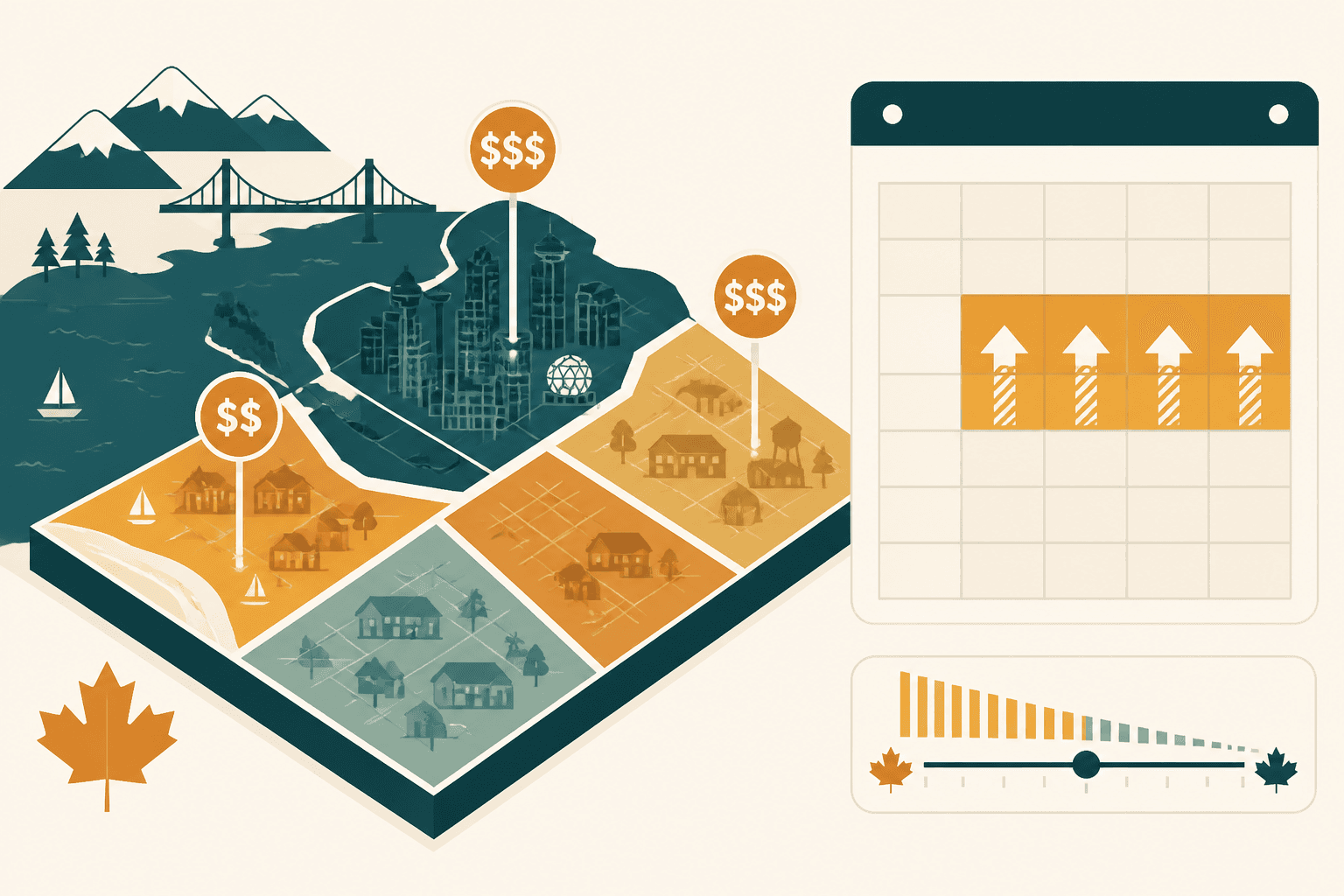
Why September in Vancouver is “peak season” (and how that affects your quote)
In Vancouver, September often feels like the tail-end of the summer moving rush rather than a true “off-season.” Many leases and move-out dates cluster around summer end, and students, families, and professionals relocate as schedules restart. That seasonal demand is intensified by neighbourhood-level reality: near Downtown Vancouver, Yaletown, Coal Harbour, and Mount Pleasant, there are lots of purpose-built rentals and condo towers with tight loading rules, elevators, and booking windows—each one can increase labour time and coordination. Even when the weather is turning (cooler evenings, occasional rain), the calendar stays full, so movers can’t simply “pause” operations.
For vancouver moving costs september 2026, this means your price is less about one single factor (like fuel) and more about how busy the market is on your specific move date. When demand is high, moving companies protect capacity by scheduling fewer jobs per day, reserving crews and trucks earlier, and applying peak-season surcharges—especially for last-minute bookings. The result: similar moves can quote higher in early-to-mid September than they do in late October or February.
What peak season surcharges actually are (and what they cover)
A “peak season surcharge” is typically not a vague label—it’s the industry’s way of covering increased operating costs that rise when everyone wants service at the same time. In September, Vancouver demand can tighten across both weekday and weekend schedules, and that impacts three practical things that show up in your estimate. First, truck and crew availability gets scarce. When fewer teams are free, companies may require a minimum dispatch time, which increases kilometres driven empty or the time spent waiting between jobs.
Second, Vancouver buildings often add coordination overhead when demand is high. Think of the difference between a street-level loading zone near Main Street versus a busy dock/driveway setup common around Downtown, Yaletown, or along the waterfront. Many condo buildings have appointment-based move-in procedures, assigned elevators, or timed loading windows—moving at peak can mean your crew arrives with less flexibility, waits longer for access, or uses a different route to meet the building’s rules.
Third, insurance and administration can scale with higher volumes and tighter scheduling. For vancouver moving costs september 2026, that’s why peak-season pricing can look like a base rate plus one or more add-ons: peak surcharge, stairs/elevator complexity, and sometimes extra labour hours. A good quote will break these elements down so you can compare apples-to-apples.
Dates to watch in September 2026: weekends, early-month moves, and “school-year” timing
When planning vancouver moving costs september 2026, the biggest lever is often not how much you own—it’s when you move. In Vancouver, early September can be especially active because it aligns with common end-of-summer timelines for rental units and personal schedules. Weekend moves are frequently priced higher nationwide, but in Vancouver the difference can be more noticeable because condo move-in/out policies often require booked time slots and elevator reservation windows. If you’re moving from a rental in East Van (like Mount Pleasant or Kensington-Cedar Cottage) into another high-rise in the downtown core, you’ll likely be competing with multiple households for the same limited access windows.
School-year timing can add another layer. Families and students often move during the same weeks to align with classes, co-op terms, and childcare transitions. That can tighten crew schedules even on weekdays. Conversely, late-month moves can be less crowded. As September progresses into cooler autumn weather, fewer people try to complete moves immediately, and availability can improve.
For cost management, treat your moving date like a budget item. If your contract allows flexibility, aim for mid-week and avoid “cluster dates” where multiple households tend to move at once. When you can, book earlier for high-demand days and then look for price breaks on dates when crews have breathing room.
How size, stairs, parking, and elevator booking change September pricing in Vancouver
In September, surcharges raise the baseline, but the final cost is still strongly shaped by the physical job details. Vancouver is known for older walk-ups in neighbourhoods such as Strathcona and Kitsilano, as well as newer towers that require strict elevator scheduling. If your move includes stairs, bulky furniture, long carries from a street-level loading area, or multiple drop-offs, the crew may need additional labour time—turning a “standard” move into a more labour-intensive operation. During peak weeks, crews may be less able to absorb delays because their day is already stacked with scheduled jobs.
Elevator booking is a particularly Vancouver-specific cost driver. Many condos allow elevator use only during reserved time blocks. If the move exceeds the window, you may face additional charges for extra labour time or rebooking. Similarly, parking and loading access matter: if you must wait for a legal loading zone, use an alternate street location, or coordinate with building security, your timeline shifts. In busy areas like Downtown Vancouver and Yaletown, access can be more constrained on peak days.
Size is also a factor: larger homes may require more trips or a larger truck, and in peak season that can mean you’re competing for larger capacity equipment. For vancouver moving costs september 2026, consider asking for a detailed inventory-based quote that clearly separates volume, time, and labour so you understand what’s driving the difference between “small” and “standard” moves.
When discounts still appear in September (and what to ask Boxly for)
It’s true that September can be pricier in Vancouver, but “peak season” doesn’t mean prices are fixed everywhere. Discounts still appear when a move reduces uncertainty or improves scheduling efficiency for the moving company. For example, booking earlier in the season for a later date can sometimes reduce the risk premium because crews can plan routes and truck assignments. Another common discount pathway is flexibility: choosing a mid-week weekday instead of a weekend can lower demand pressure, which can translate into lower rates or reduced peak add-ons.
You can also find savings through better job clarity. If you’re able to provide an accurate inventory, confirm building access rules, and identify any large-item constraints (pianos, safes, oversized furniture), you’ll reduce the chance of change orders. Change orders often happen when discovery occurs during the moving day—like a narrower stairwell or an unexpected elevator capacity restriction. In peak season, moving companies have less tolerance for surprises, so the cost of uncertainty can rise.
Ask Boxly for a quote that shows: (1) a breakdown of base rate versus peak surcharge, (2) estimated hours based on floor count and carry distance, and (3) what can change the price if you adjust your moving date or service level (full packing vs. loading only). For vancouver moving costs september 2026, the best “discount” is often a combination of date flexibility and tight planning—so you pay for efficiency, not for avoidable friction.
Budget planning: a Vancouver checklist to avoid last-minute rate spikes
If you’re budgeting vancouver moving costs september 2026, the goal isn’t only to find the lowest number—it’s to avoid last-minute surprises that inflate final invoices. Start with building rules. Many Vancouver condos and rental buildings require advance notice for elevator bookings, move-in/out reservations, and sometimes certified insurance paperwork. If you learn these rules late, your move date may shift into a higher-demand slot, or you may pay for additional labour time to finish within a smaller window.
Next, manage packing lead time. Packing impacts crew time and number of loading trips. If you need full service packing, schedule it early enough that the moving company can staff the job. If you do partial DIY packing, create a clear “ready-to-load” checklist so the crew isn’t waiting while boxes are sealed. September can bring rain and cooler evenings, which doesn’t prevent moves, but it can slow DIY packing and last-minute errands.
Third, prepare a furniture and route plan. Measure the biggest items and confirm they can clear stair widths, doorways, and elevator dimensions. Pre-plan the “from” and “to” loading routes, including how you’ll access elevators and whether there are bottlenecks. Finally, request transparent pricing: ask whether your quote includes stairs, disassembly/reassembly, and whether the peak surcharge applies to your specific date.
A well-prepared move won’t always be the absolute cheapest day, but it will usually protect your budget against the expensive parts of September logistics.
Frequently Asked Questions
How much more do Vancouver movers typically charge in September compared with off-peak months?
In Vancouver, September often costs more than winter off-peak, but the exact increase varies by date, building complexity, and availability. Rather than relying on a single “percentage,” it’s more accurate to compare quotes for your exact move date and service level (loading-only vs. full service). Peak weeks usually show up as a peak-season surcharge and sometimes tighter scheduling that increases minimum hours. Off-peak months may still have higher prices in certain neighbourhoods due to parking or elevator rules, but overall demand tends to be lower. If you’re comparing, ask movers to price the same inventory and address whether stairs, elevator time blocks, and parking constraints change your estimated labour hours. For vancouver moving costs september 2026, the most reliable approach is to request at least two quotes: one for your preferred week and one for a nearby mid-week date later in the month. That difference will reflect the peak pressure on your schedule without guessing.
Are weekend moves in Vancouver more expensive in September 2026—and by how much?
Weekend pricing is commonly higher in Canada because many households prefer Saturdays and Sundays for convenience, and movers may have fewer openings due to compressed scheduling windows and building rules. In Vancouver, weekend moves can also be more logistically complex around busy areas like Downtown Vancouver and Yaletown, where move appointments and loading access are tightly managed. The “how much” depends on whether your move is a small apartment requiring minimal travel time or a multi-bedroom home that needs additional trips or more labour hours. Instead of searching for a universal number, ask your provider to itemize the estimate: base rate, peak surcharge, estimated hours, stairs/elevator factors, and any minimum charges. For vancouver moving costs september 2026, the practical savings target is often a mid-week move. Even if peak surcharges exist all month, weekday schedules can free up crew availability and reduce waiting time, which can lower your final invoice more than you’d expect.
Do fuel prices or weather changes in September 2026 affect moving costs in Vancouver?
Fuel prices and weather can influence moving costs, but they usually work through operational constraints rather than acting as a single, transparent line item. Vancouver’s September weather can include cooler temperatures and periods of rain; that can slow down loading and unloading, increase care requirements for moving blankets and protection, and affect how quickly a crew can safely manoeuvre carts and dollies. However, the biggest cost drivers in vancouver moving costs september 2026 are typically demand-related surcharges and building logistics (elevator bookings, parking access, and labour hours). Fuel-related adjustments—if used—vary by mover policy, and not every quote will include a separate fuel surcharge. The best way to understand your total is to compare quotes for your date range and ensure the same inventory assumptions are used. If rain is forecast, ask whether additional blankets or protective measures change the labour estimate. Transparency on what is included helps you plan for weather without overpaying.
What should I book first in Vancouver to avoid peak-season problems: the mover, packing, or building elevator access?
Book in this order for the best protection against peak-season surcharges and schedule delays: (1) confirm building move-in/out requirements and elevator/loading access timelines, (2) book your moving service, and (3) schedule any packing add-ons once you know your exact move date and access window. Many Vancouver buildings require advance reservation of elevators and move times; some restrict move hours or require paperwork. If you secure the mover first without verifying access rules, you can end up with a mismatch that forces rebooking or adds labour time to fit within a smaller window—an expensive outcome during September. For vancouver moving costs september 2026, elevator timing is especially important near Downtown Vancouver, Yaletown, and other high-rise corridors. If you also need packing, align it with your readiness date so the crew arrives when everything is boxed, labelled, and staged for loading. A clear plan reduces change orders, which helps keep your final cost closer to the original estimate.
Does the size of my home (studio vs. 2-bedroom) change whether peak surcharges matter most?
Yes—home size changes how strongly peak surcharges translate into your total price, but it doesn’t eliminate them. Peak surcharges are often applied based on date and demand, not only on how much stuff you have. However, larger moves tend to amplify the impact of peak season because they require more labour hours, more trips, or a larger truck. That means that even if the peak surcharge is similar across jobs, the base rate and time-related components grow with inventory volume and the number of items that must be moved. In Vancouver, bigger moves also increase the chance you’ll hit complexity factors like stairs, multiple rooms, disassembly/reassembly, or tight elevator scheduling windows. For vancouver moving costs september 2026, a studio move may still include a peak surcharge, but the overall labour time might stay manageable. A 2-bedroom move can turn into multiple staging and loading cycles, making your estimate more sensitive to any waiting time at the building and any time needed for secure packing or furniture protection. Always request a quote that links estimated hours to your floor plan and item types.
Can I still get a discount in September 2026 if I book late?
Sometimes, but it’s less reliable. Discounts in September typically appear when your booking helps the mover reduce scheduling uncertainty—examples include mid-week dates, a clear inventory, and confirmed building access. If you book very late, the provider may be operating near capacity, which can limit flexibility and make it harder to negotiate peak-season pricing. That said, savings can still happen through choices you control even at the last minute. For instance, switching from a weekend to a weekday, opting for loading-only instead of full service packing, or consolidating items you’re taking versus storing can reduce the labour hours and truck size needed. Another lever is to ensure your move day is execution-ready: fewer changes on the day can reduce the chance of incremental charges. For vancouver moving costs september 2026, the best “late booking” strategy is to ask for transparent options: a quote for your date as-is, then a second quote for the nearest date with better availability, plus alternate service levels. Comparing options can reveal discount opportunities even when demand is high.
How do I compare moving quotes fairly in Vancouver during September?
Comparing quotes fairly is the fastest way to spot whether the price difference is due to true savings—or due to missing details that will appear later. Start by ensuring the estimate assumptions match: same pickup address, same destination, same dates, and similar inventory level (number of rooms and major items). Ask whether stairs are included, whether elevator booking time is assumed, and whether parking/loading constraints are considered. In Vancouver, building access can change the labour estimate substantially, especially in areas like Kitsilano, Mount Pleasant, and downtown towers. Next, request itemized pricing: base rate, peak-season surcharge (if any), minimum hours, and add-ons such as disassembly/reassembly, packing services, or specialty handling. Also compare how each mover defines “truck size” and how they charge for extra time—some quotes are more forgiving, others bill by the hour starting immediately. For vancouver moving costs september 2026, a fair comparison should allow you to isolate only one variable at a time (date, service level, or inventory). If two quotes can’t be normalized to the same assumptions, you’re not comparing apples-to-apples.