Vancouver Moving Costs in 2026: Why $89 to $200 Per Hour Is the Norm
Let me set the scene. Sara needed to move out of her Mount Pleasant condo. She did what most of us do: compared hourly rates, picked a mover at $109 an hour, and figured she was set. But when the dust settled, her bill was almost $1,500—nearly double what her friend paid for a similar move. Why? Rain delays, an elevator slot nobody warned her about, and a 'waiting for parking' fee that came out of nowhere. Suddenly, the cheap rate didn't look so cheap.
Let's be honest: moving in Vancouver isn't cheap. Neither is renting, eating, or even parking. This city has a way of turning every transaction into a negotiation with your future self.
But here's what the numbers actually say. It's not just 'Vancouver is expensive'—the reality is a lot messier.
$89 to $200 per hour. That's the range we found after digging through 384 active Vancouver moving companies. Same service—two movers and a truck. The price gap? You could drive a studio apartment through it.
That spread is bigger than Toronto's. Bigger than Calgary's. And that matters, because more variance means more chances to find a deal—or to get burned.
The median? $127 an hour for two movers and a truck. Moving a 1-bedroom in Kitsilano? Figure on 4 hours—about $508. A 2-bedroom in Mount Pleasant? Budget 5 or 6 hours, so $635 to $762. Suddenly, that hourly rate turns into real money.
Here's the thing most "moving costs Vancouver" guides won't tell you: the city's geography creates pricing complexity that flat hourly rates can't capture. A ground-floor move in suburban Richmond is fundamentally different from a 38th-floor Coal Harbour condo move — even if the hourly rate is identical. One takes 4 hours. The other takes 8. Rain adds wrapping time. Bridges add transit time. Loading docks have wait times.
Vancouver doesn't just cost more. It charges differently. Knowing the difference is what separates a $600 move from a $1,400 shock.
That's what I'm here to break down. I checked the top ten 'moving to Vancouver' guides on Google—not one explains BC Ferries fees in detail, and only two even mention rain protection. Here, you get the real numbers, the patterns, and the Vancouver quirks that explain why your coworker's move cost twice as much as yours.
How Do Vancouver Movers Handle 166 Rain Days Per Year?
Vancouver averages 166 rainy days per year. If you waited for a guaranteed dry day to move, you'd have a roughly 55% chance on any given day between June and August — and closer to 20% between November and March.
Rain isn't the exception in Vancouver. It's the default. Every mover here knows it.
"Rain day protocols" aren't a premium add-on from good Vancouver moving companies – they're a baseline operating procedure. If a mover doesn't mention how they handle rain, that's a red flag, not a savings opportunity.
What proper rain protection looks like:
Picture this: your mover stands in your living room, wrapping your sofa in plastic shrink-wrap before it even gets near the door. Not outside in the rain, not after the couch is already wet—inside, before a single drop hits the fabric. That's the standard in Vancouver: wrap it up before it leaves the building.
Next come the moving blankets. The best crews unroll thick blankets with a layer of waterproof backing or pull out heavy-duty plastic covers to shield everything else, keeping water off wood, fabric, and electronics alike.
The truck matters too. Only fully enclosed, covered trucks make the cut for a proper Vancouver move. Open beds are a rookie mistake in a city where the drizzle can start and stop five times in an afternoon.
At the door, movers lay down tarps to keep puddles and muddy boots from turning your hardwood floors into a costly headache.
Even the way boxes are packed follows a Vancouver playbook. The best movers load boxes last, keeping them by the door so each one goes straight into the truck—spending as little time as possible in the rain. That's how you avoid the dreaded soggy box problem.
Rain damage isn't a maybe—it's real. A soaked couch is ruined, not just 'a bit damp.' Electronics and rain? Forget it. Warped hardwood floors from muddy boots can cost over $2,000 to fix. Suddenly, paying $20 or $50 extra for real protection is a no-brainer.
Atmospheric rivers are now a regular part of Vancouver weather. That means a month's worth of rain in two days. If your move lands during one, talk to your mover about backup plans. Rescheduling is way cheaper than replacing your living room.
Then there's smoke season—July and August. Smoke won't ruin your furniture, but loading a truck in bad air is a real health risk for crews. Some movers add air quality surcharges or pause work if things get bad. Most guides skip this, but it's a real Vancouver problem.
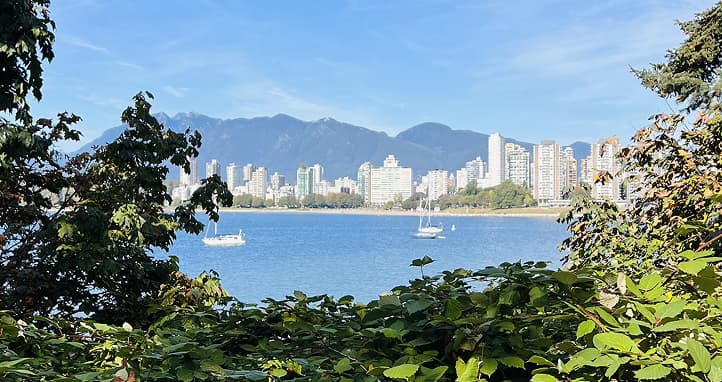
View of the city of Vancouver
Panoramic views of the city, ocean, and mountains.
What Does It Cost to Move Furniture on BC Ferries?
No other major Canadian city faces this: to reach the nearest large city (Victoria, population 400,000+), you need a ferry. Not a short hop — a 90-minute sailing through Active Pass, subject to weather delays, reservation availability, and seasonal schedules.
This single fact reshapes the entire long-distance moving market in British Columbia.
The logistics are non-trivial. A standard moving truck (26-foot) costs $200-$400+ for a one-way Tsawwassen-Swartz Bay crossing, depending on length and season. That's just the ferry fare; it doesn't account for the drive to the terminal, the wait time, or the crew's hours during transit. When your movers are sitting in the BC Ferries parking lot for 90 minutes waiting to board, they're still on the clock. At Vancouver's median mover rate of $127 per hour for a 2-person crew, that 90-minute wait adds nearly $190 to your total bill—all for sitting still while the clock runs. The opportunity cost of delay isn't just frustration; it's cash leaving your pocket. Suddenly, missing a reservation or hitting a ferry backlog translates directly into real dollars.
Route Options:
The Tsawwassen to Swartz Bay sailing (1 hour 35 minutes) is the standard route for moves to Victoria, Sidney, and Saanich — it drops you closest to the capital. If you're heading to Nanaimo, Parksville, or the Comox Valley, the Horseshoe Bay to Departure Bay route (1 hour 40 minutes) saves driving time on the island side. There's also the Tsawwassen to Duke Point crossing (2 hours), which is the preferred route for commercial vehicles headed to Nanaimo — longer sailing, but a more direct dock for large trucks.
Reservations are essential. BC Ferries allows truck reservations, and without one, you might wait two or three sailings during summer. A delayed sailing pushes your entire move timeline — and billable hours — forward. Book ferry reservations as soon as you confirm your moving date.
Why some movers refuse island moves: The truck has to come back. That return ferry fare and the deadhead drive eat into margins. Many Vancouver moving companies simply don't service Vancouver Island because the economics don't work at competitive rates. Of the 384 movers on our platform, only a handful specialize in island crossings.
Vancouver to Victoria moving cost: Budget $2,000-$4,000 for a 2-bedroom move, including ferry costs, crew time during transit, and the move itself. That's roughly double what the same physical move would cost without the water crossing.
Practical advice: If you're moving to Victoria or Nanaimo, find a mover who regularly runs that route. They'll have ferry logistics dialled in, know which sailings to book, and factor transit time into flat-rate quotes rather than billing you $127/hour while they sit on the car deck.
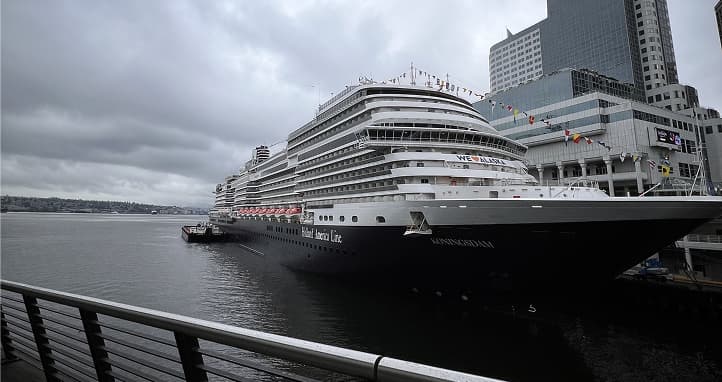
Vancouver Waterfront
An incredible part of the city, filled with ferries and ships, and a beautiful place for a walk.
How Vancouver Compares to Other Canadian Cities
The assumption is that Vancouver movers are the most expensive in Canada. The data tells a different story.
Vancouver's $127/hour median sits mid-pack nationally — and actually cheaper than the nearest major BC city.
Victoria, just a ferry ride away, has a median of $149/hour. That's 17% more expensive. The island premium is real: fewer movers (only 9 on our platform versus Vancouver's 384), less competition, and the logistical overhead of operating on an island where everything arrives by ferry.
Calgary and Toronto? Both sit at $125/hour — just $2 less than Vancouver. If you're relocating from either city, you're essentially paying the same hourly rate. The cost difference in your final bill is due to Vancouver-specific complications (rain, towers, bridges) rather than the base rate itself.
Kelowna at $120/hour is the BC budget option — but with only 9 movers on our platform, selection is limited. Lower rates, less competition for crews, fewer choices if something goes wrong.
Here's the real insight: Vancouver's mover density, with 384 companies competing for business, creates pricing pressure you simply don't find in smaller markets. To put it in perspective, that's about one mover for every 1,725 residents. Compare that to Toronto, with 260 companies for a population of nearly 3 million—roughly one mover per 11,500 residents—or Victoria, where just nine movers serve over 400,000 people, a ratio of one per 44,000. In Vancouver, competition is fierce and every booking matters. Victoria's 9 movers can essentially set prices, but in Vancouver's crowded market, movers truly have to fight for every job.
That competition is your leverage. In a market this dense, the difference between the mover who charges $130 and the one who charges $165 might come down to who needs work this week. The data suggests Vancouver is expensive, not because hourly rates are outrageous, but because the moves themselves are more complex. Two extra hours navigating a service elevator and wrapping furniture against rain adds $254 at the median rate — and that's a Vancouver surcharge no other city pays.
How Much Does It Cost to Hire Movers in Vancouver?
The hourly rate is the headline. The total bill is the story. And in Vancouver, the gap between the two is bigger than in most Canadian cities.
$127/hour means nothing until you understand how many hours your specific move will take. And in a city where a 1-bedroom might be a 450-square-foot micro-suite on the 35th floor of a Yaletown tower, or a ground-floor garden suite in East Van with its own entrance, "1-bedroom" is not a useful category without context.
What Do Most Vancouver Movers Charge Per Hour?
Based on our analysis of 384 Vancouver movers, here's how the market breaks down:
- Under $100/hr: 10 companies — ultra-budget tier, minimal reviews
- $100-$130/hr: 32 companies — the sweet spot for value
- $130-$160/hr: 19 companies — established mid-tier
- Over $160/hr: 9 companies — premium white-glove service
The $100-$130 range represents the densest part of the market. These are companies with enough experience to charge fairly but enough competition to keep prices honest.
A 3-person crew — necessary for most 2-bedroom-plus moves — runs a median of $170/hour (based on 49 companies reporting this rate). That's a 34% premium over the 2-person rate, but a 3-person crew finishes roughly 40% faster.
Quick math: a 2-bedroom in Fairview. Two-person crew at $127/hour takes 6 hours = $762. Three-person crew at $170/hour takes 4 hours = $680. You save $82 by going with the bigger crew. Larger crew, lower total. This dynamic surprises most people.
For a studio, 1-bedroom, or micro-suite, a 2-person crew at $120-$150/hr is the right fit — anything larger is overkill for a space where the movers outnumber the rooms. Step up to a 2-bedroom apartment or a small house and a 3-person crew at $160-$190/hr makes the math work in your favour because the extra set of hands shaves enough hours to lower the total. For 3-bedrooms and up — especially houses in Dunbar or Kerrisdale with stairs and garages — a 4-person crew at $200-$250/hr is standard, and trying to save by going smaller usually backfires in terms of billable hours.
Vancouver Moving Costs by Home Size
These ranges reflect actual moves booked through our platform — not theoretical estimates.
A micro-suite under 500 square feet — the kind Vancouver builds by the thousands in Yaletown and the West End — runs $280-$420 with a 2-person crew over 2-3 hours. A proper studio is slightly more at $300-$550 (2-4 hours, 2 movers). One-bedrooms land at $420-$700 for 3-5 hours of work with a 2-person crew. Jump to a 2-bedroom and you're looking at $700-$1,200 over 5-7 hours — this is where a 3-person crew starts making financial sense. A 3-bedroom house hits $1,100-$1,800 (6-9 hours, 3-4 movers), and a 4-bedroom or larger pushes $1,800-$2,800 across a full 8-14 hour day with 4+ movers.
Notice the micro-suite category. It barely exists outside Vancouver. But in a city with tens of thousands of sub-500-square-foot units, it's a real market segment — and a growing one. A handful of Vancouver movers now specialize specifically in these compact moves, operating smaller trucks and lean crews built for speed rather than scale.
The wide ranges within each category reflect what we call the “Access Complexity Premium.” This is the invisible category that drives prices up or down, even when you're moving exactly the same amount of furniture the same distance. A ground-floor 2-bedroom with driveway parking? Closer to $700. A 2-bedroom on the 30th floor of a Coal Harbour tower with a loading dock wait? Closer to $1,200. Same furniture, same distance, but dramatically different logistics. The Access Complexity Premium comes from everything Vancouver throws between your door and the moving truck: elevators, loading dock schedules, tight hallways, long carries, parking challenges, and waiting time that racks up per-hour charges. If you see one move quoted at twice the price of another, odds are you're seeing the Access Complexity Premium at work—understanding this turns confusing cost ranges into a single memorable concept.
The Calendar Factor
Timing in Vancouver is about more than demand — it's about weather and livability.
June through August is peak moving season. Everyone wants to move when it's not raining. Demand spikes. The best crews are booked weeks out. Negotiating leverage disappears.
October through March is the off-season — and also the rainy season. You'll pay less per hour, but your move requires rain protection: plastic wrapping, tarps, potentially a longer timeline if conditions are bad. The savings are real (10-15% below peak rates), but so are the complications.
The sweet spots are May and September. May offers the first reliable dry weather before peak-season pricing kicks in. September delivers warm days, back-to-school move-outs creating supply, and movers hungry for bookings after a summer of plenty.
Day of the week matters here, too. Tuesday through Thursday are the value days. Month-end – when most Vancouver leases turn over – is chaos. If your lease gives you any flexibility at all, mid-month on a Wednesday is statistically your best bet.
Here's a negotiation script that works: "I'm flexible any day the week of the 15th — what's your best rate and what day works for your crew?" In a market with 384 competitors, that kind of flexibility gets real answers.
Why Do 40th-Floor Vancouver Condo Moves Cost 50% More?
Living in a glass tower—wonder what that really costs on move day? If you've ever gazed out from your Yaletown or Coal Harbour condo and admired the floor-to-ceiling windows, you might not have guessed just how those same beautiful features complicate your move. Let's break down why moving into (or out of) a Vancouver high-rise isn't just expensive, but an entirely different logistical game.
Vancouver is Canada's condo capital by density. And modern Vancouver condos were designed for living, not for moving into.
Floor-to-ceiling windows that look spectacular in listing photos? They limit furniture angles. Hallways designed for sleek aesthetics? Too narrow for a king mattress on its side. Service elevators shared between 40+ floors? Your 3pm loading dock slot might actually start at 4:30pm because the 28th floor is still loading.
Welcome to the glass tower problem – where the architectural features that make Vancouver condos desirable also make them expensive to move into.
Coal Harbour, Yaletown, and Downtown are ground zero. These neighbourhoods are almost entirely composed of high-rises with strict move-in protocols, limited dock access, and rules that add both time and cost to every move.
Elevator Booking: Most buildings require 2-4 weeks' advance notice. Some charge for the booking itself — not just a deposit, but a non-refundable scheduling fee. Miss your window, and your movers wait in the loading dock at $127/hour while you negotiate with the strata.
Deposits: Expect $200-$500 refundable deposits in newer buildings. Older buildings may be fewer in number, but their elevators are smaller. The deposit protects common areas — and you'll lose it if movers scuff the hallway.
Time Restrictions: Typical windows are 9am-5pm on weekdays. Saturday availability varies by building. Sunday? Almost never. Some buildings are restricted to specific 4-hour blocks, so your 6-hour move must span two days.
The Micro-Suite Reality: Vancouver has tens of thousands of units under 500 square feet. For these, traditional movers are overkill. A growing category of micro-suite movers operates with smaller trucks, 1-2-person crews, and rates designed for moves under 3 hours. Specialists in this niche charge as low as $89/hour, precisely because this market demanded them.
Pro tip: Tell your movers your building name before they quote. Experienced Vancouver condo movers know which buildings are nightmares. The quote for a Yaletown tower and a Burnaby low-rise should not be the same — and if it is, someone's going to be surprised on move day.

Downtown Vancouver
The city centre of Vancouver.
Local Movers Vancouver: Neighbourhoods and Service Areas
Whether you're searching for "movers near me" in Kitsilano or need local movers for a Coquitlam relocation, Greater Vancouver's sprawling geography shapes your move in ways most cities don't impose.
Vancouver Proper:
Downtown Core and Peninsula: Downtown, Yaletown, Coal Harbour, Gastown, Chinatown, West End, Fairview, False Creek
Westside: Kitsilano, Point Grey, Dunbar, Kerrisdale, Arbutus Ridge, Shaughnessy, South Granville, Marpole
Eastside: Mount Pleasant, Commercial Drive, Main Street, Hastings-Sunrise, Grandview-Woodland, Strathcona, Renfrew-Collingwood, Killarney, Victoria-Fraserview, Sunset, Riley Park
Greater Vancouver (Metro):
North Shore: North Vancouver (City and District), West Vancouver, Deep Cove, Lynn Valley
East: Burnaby (Metrotown, Brentwood, Edmonds), New Westminster, Coquitlam, Port Coquitlam, Port Moody, Pitt Meadows, Maple Ridge
South: Richmond, Delta (Ladner, Tsawwassen), Surrey (Guildford, Fleetwood, South Surrey, Newton, Cloverdale), White Rock, Langley (City and Township)
Each of these municipalities has its own parking permit rules, traffic patterns, and moving logistics. A "local move" from Downtown Vancouver to North Vancouver is 12 kilometres — but it crosses the Lions Gate Bridge, which can add 45 minutes to an hour of transit time during peak hours.
The Hardest Vancouver Neighbourhoods to Move In
Downtown, Yaletown, Coal Harbour: The triple threat. High-rise buildings with strict protocols, zero street parking, loading docks that require advance booking, and one-way streets that turn a simple truck approach into a logistics puzzle. Budget extra time and extra patience. Even experienced Vancouver movers pad their estimates for these neighbourhoods.
West End: One of Canada's densest residential neighbourhoods. The streets were designed in the 1960s for half the current population. Parking a 26-foot truck on Davie Street during business hours requires a city permit and a prayer. Many buildings lack loading docks entirely. Your movers will be hauling boxes 50 metres from the nearest legal parking spot.
Gastown and Chinatown: Cobblestone streets (yes, they still have them), heritage building restrictions, narrow alleys, and tourist traffic that doesn't care about your moving truck. Building access points often predate the concept of a service elevator.
West Vancouver: Beautiful, but the roads are steep, winding, and sometimes barely two lanes wide. Marine Drive mansions come with driveways that make truck access genuinely challenging. Expect North Shore premium pricing — not because movers are gouging, but because crossing the Lions Gate Bridge and navigating hillside properties legitimately takes more time.
North Vancouver (Lynn Valley, Deep Cove): Similar bridge bottleneck, plus increasingly steep terrain the further north you go. Moving from Deep Cove in rush hour means sitting on Ironworkers Memorial Bridge — on the clock.
Easiest moves: Richmond (flat, wide streets, designed for vehicle access), suburban Surrey (Fleetwood, Cloverdale — new construction with driveways and garages), Langley (township areas with ample parking). These neighbourhoods were built in the era of moving trucks, and it shows.
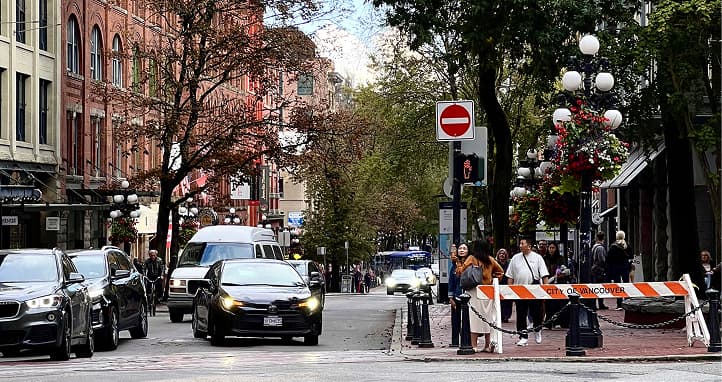
Gastown Vancouver
A lovely area just minutes from downtown.
North Vancouver Movers: Lions Gate, Lynn Valley, and the Bridge Cost Factor
North Vancouver and West Vancouver sit across the Lions Gate Bridge from the rest of Metro Vancouver, and that single geographic fact shapes every aspect of moving to or from the North Shore.
The Bridge Factor: What the Lions Gate Costs You
Every North Shore move involves a bridge crossing. Two options:
- Lions Gate Bridge: The single-lane-each-direction suspension bridge connecting Downtown Vancouver to the North Shore. Peak-hour delays of 30–60 minutes are common. A morning rush crossing that should take 10 minutes can take 50.
- Ironworkers Memorial Bridge (Second Narrows): More reliable during business hours but still subject to significant congestion during commute windows.
Most North Vancouver movers add $50–$100 to North Shore jobs as a flat surcharge — or simply extend their estimated time to account for bridge transit. At $127/hr, a 60-minute bridge delay adds $127 to your bill before a single box moves. When requesting quotes for North Shore moves, ask specifically: "How do you handle Lions Gate Bridge transit time in your pricing?"
North Vancouver Sub-Areas and Their Moving Profiles
- Lower Lonsdale / Central Lonsdale: The most mover-friendly North Shore neighbourhood. Flat streets near the water, newer condos with loading docks, easy access from Ironworkers Memorial Bridge. Lonsdale Quay area towers follow the same condo logistics as Vancouver proper.
- Lynn Valley: Mid-density residential, mix of 1970s–2000s homes. Roads are accessible but narrower than Vancouver's suburban neighbourhoods. Manageable terrain.
- North Vancouver District (Upper): Houses get larger, driveways get longer, roads get steeper. Properties near Highway 1 are completely different from mountain-road homes near Fromme Mountain.
- West Vancouver: The premium sub-market. Marine Drive mansions with steep hillside driveways, long gate-to-door carries, and estate-level moving complexity. Premium movers at $150–$200/hr are the appropriate choice for West Van's complex properties.
- Deep Cove / Indian Arm: Beautiful, remote, and logistically challenging. Residential roads were designed for summer traffic, not moving trucks. Allow extra time and budget $50–$150 in additional access fees.
The Lynn Valley and Deep Cove Terrain Premium
The further north you go, the steeper the terrain gets. Deep Cove is the extreme end: crews may need to park at a road intersection and hand-carry items to the truck. These are not scenarios a Vancouver-based mover without North Shore experience handles smoothly on first exposure.
"West Vancouver Movers" — 140 Searches, KD 5
"West vancouver movers" generates 140 monthly searches at a KD of just 5 — the lowest keyword difficulty of any sub-market query in Metro Vancouver. West Vancouver's moving market is small but premium: estate homes, antiques, and hillside properties. A well-written West Vancouver section captures a near-uncontested query.
Storage Units North Vancouver
"Storage units north vancouver" generates 720 monthly searches. North Shore residents moving between properties often need temporary storage: smaller units mean furniture that doesn't immediately fit, and North Shore's high real estate prices mean bridge-gap situations are common. Several movers on Boxly offer combined moving-plus-temporary-storage packages for North Shore clients.
Compare North Vancouver movers on Boxly and filter by primary service area to find companies that specialize in the North Shore.
Do Vancouver Movers Charge Extra for North Vancouver and West Vancouver?
Yes — and it's legitimate. The Lions Gate Bridge or Ironworkers Memorial Bridge adds unpredictable transit time to every North Shore move. Most companies either add a flat $50–$100 North Shore surcharge or explicitly include bridge transit time in their estimated hours. Ask before booking: "Is North Shore transit time included in your quote?" A transparent mover will answer this immediately. One that hedges may be setting up a larger invoice surprise.
Who Are the Best-Rated Movers in Vancouver?
We analyzed 40,258 reviews across 384 Vancouver moving companies. That volume of data reveals patterns that no individual review can.
The overall average? 4.73 stars. That's high — higher than Calgary's 4.68. Vancouver movers, collectively, deliver solid service. But "solid" covers a range from "they showed up, and nothing broke" to "they wrapped every item in moving blankets and reassembled my IKEA bed frame better than I built it."
"Premium Operators": $139-$200/hour
Established names in the $139-$200/hour range hold perfect 5.0-star ratings across hundreds of verified moves. They've navigated every nightmare building in Yaletown and every narrow staircase in Gastown. They carry comprehensive insurance, answer their phones, and have damage claim processes that actually work.
"Value Contenders": $89-$120/hour
Well-reviewed companies at $89-$120/hour prove that lower rates don't automatically mean lower quality. Some value movers have nearly as many reviews as premium operators, at a fraction of the price.
Our honest take: For a micro-suite or 1-bedroom move in a building with elevator access and decent parking, a well-reviewed value mover at $89-$120/hour is probably the smart play. For a 3-bedroom house with antiques, a piano, and a move from West Vancouver across the Lions Gate to East Van, the premium operators earn their rates through experience with exactly those complications.
What to Look for in the Best Vancouver Movers
With 384 companies to choose from, you need a filter. Here's ours:
Jot these down before you call or email movers—having your filters handy means you can ask the right questions and compare notes instantly.
Reviews that tell stories, not just give stars. Look for 4.5+ stars with at least 50 reviews. A 5.0-star average from 6 reviews means nothing statistically. A 4.8 from 200 reviews? That's a signal.
Rain-readiness. Ask specifically: "How do you protect furniture from rain?" Any hesitation or generic answer ("we're careful") means they don't have a protocol. In Vancouver, this is non-negotiable.
Building experience. The best Vancouver movers know specific buildings by name. They know which loading docks are tight, which elevators are slow, and which strata managers are difficult to deal with. Ask: "Have you moved someone in or out of [your building] before?"
Active insurance. In BC, look for at least $2 million in liability coverage. Premium companies carry $5 million or more in coverage. Ask for the certificate — don't just take their word.
Clear, written pricing. "We'll see when we get there" is not a quote. Professional Vancouver moving companies can estimate your move after a phone conversation or virtual walkthrough. If they can't, they lack experience.
Responsiveness. If getting a quote takes 4 days, imagine trying to reach them when your couch is wedged in a service elevator on the 30th floor.
National Van Lines vs. Independent Vancouver Movers: When the Premium Makes Sense
Vancouver's moving market has a visible split between national carriers and local independents — and the gap in value depends entirely on the type of move.
National van lines ($155–$200+/hr): Built for corporate relocations, employer-reimbursed moves, and long-distance national hauls. They carry enterprise-level insurance, have auditable documentation processes, and operate across provinces. For a local Vancouver condo move, you're paying for infrastructure you may not need. For a move where your employer is reimbursing costs, or where you're shipping across the country, that infrastructure earns its premium.
Small-move specialists ($89–$110/hr): Vancouver has a distinct tier of movers targeting micro-suites, studio apartments, and single-item moves — a natural fit for a city of small units and frequent short-distance relocations. These operators are efficient for low-volume moves but may not be the right fit for a full 2- or 3-bedroom household.
Established local independents ($110–$165/hr): Vancouver's 4.73-star market average — the highest of any major Canadian city — reflects a strong tier of established local companies with deep building-specific knowledge. Several hold 5.0-star averages across hundreds of verified reviews at mid-market rates, proving that premium outcomes are not exclusive to premium prices.
The decision framework: Match the mover category to the move type. National carrier for corporate or long-distance. Small-move specialist for studios and micro-suites. Established local independent for the full range of Metro Vancouver residential moves. Compare all 384 Vancouver movers on Boxly with reviews, rates, and insurance status side by side.
When Is the Cheapest Time to Move in Vancouver?
Vancouver's moving calendar isn't just about demand and pricing — it's about weather in a way no other major Canadian city experiences. You're not choosing between "cold" and "warm." You're choosing between "probably raining" and "probably not raining but possibly smoky."
The dry season is June through September. That's when everyone wants to move. Demand peaks, crews are booked out, and negotiating leverage evaporates. You'll pay the full rate and feel lucky to get your preferred date.
October through March is rain season. This is when 10-15% savings are available, but your move requires weather planning. Plastic wrapping, covered trucks, and floor protection. Some moves get rescheduled due to atmospheric rivers. The savings are real — but so is the hassle.
The sweet spots? May and early June. The rain typically eases by mid-May. Peak-season pricing hasn't fully kicked in yet. Days are long (sunrise before 6am, sunset after 9pm), giving movers extended work windows. This is objectively Vancouver's best moving period.
September's also strong. Summer tourists thin out, back-to-school vacates rentals, and movers transition from peak to normal pricing. Weather remains dry most years.
The Stampede equivalent in Vancouver? July 1st long weekend and BC Day long weekend. Not cultural events that spike demand, but lease turnover dates. July 1 is when a massive number of Vancouver leases begin or end, creating concentrated demand that makes the month-end look calm.
Vancouver Weather and Moving
Winter (November through February) hovers at 5-10°C with near-constant rain — rain protocols are non-negotiable, but you'll pay 10-15% less than summer rates. Spring (March through May) warms to 10-16°C, but conditions are mixed — the infamous "false spring" risk means a gorgeous week gets followed by three weeks of drizzle. Summer (June through August) delivers the best weather at 20-28°C and bone-dry conditions, but you're paying peak prices and contending with wildfire smoke that can ground outdoor work. Fall (September and October) hits the sweet spot at 12-18°C — dry at first, transitioning to rain by late October, with the best balance of weather and pricing you'll find all year.
The "false spring" trap: Every March, Vancouver gets a gorgeous week of sunshine. People book moves for April, assuming spring has arrived. Then it rains for most of April and half of May. If you're booking a spring move, don't trust a warm week in March. Check historical averages, not last Tuesday.
Wildfire smoke season (July-August): BC's wildfire crisis isn't getting better. Smoke events can push air quality to "very unhealthy" levels for days. Loading and unloading a truck in heavy smoke poses a health risk to moving crews. Some Vancouver movers add AQI surcharges or include force majeure clauses for extreme smoke. If you're moving in late July or August, have a smoke contingency conversation.
The rain reality: November through January, expect rain 18-22 days per month. This doesn't mean moves don't happen – Vancouver movers work in the rain routinely. But it means every move requires extra preparation, extra materials, and extra time. Budget 10-20% more time for rainy-day moves.
Best months to move in Vancouver, ranked: (1) September, (2) May, (3) June, (4) October, (5) everything else.

Stanley Park
A stunning park on a peninsula, captured in early autumn.
How Much Does a Long-Distance Move From Vancouver Cost?
The pricing model changes at the edges of Metro Vancouver. Within the Lower Mainland — Burnaby, Richmond, Surrey, Coquitlam, Langley — you're paying hourly rates. Once you cross a certain distance threshold, everything shifts to flat-rate, weight-based pricing.
Local Zone (Hourly Rates):
Everything within Metro Vancouver remains on an hourly billing basis. Burnaby (10-15 km) and Richmond (15 km) are the easiest local runs — flat, close, no bridge drama. North Vancouver is only 12 km from downtown but crosses the Lions Gate or Ironworkers Memorial, so expect a possible bridge surcharge. Surrey (30-45 km), Coquitlam (25 km), Langley (45-55 km), and White Rock (45 km) all charge by the hour, but the longer drive means more time on the clock.
Long-Distance from Vancouver:
Once you leave the Lower Mainland, pricing shifts to flat rates. Victoria (112 km plus the ferry) runs $2,000-$4,000 for a 2-bedroom — the BC Ferries fare alone is $200-$400+. Nanaimo (155 km plus ferry via Horseshoe Bay or Duke Point) comes in at $2,200-$4,500. Heading inland, Kelowna is 390 km on the Coquihalla Highway at $2,000-$3,500, and Kamloops (355 km on the Trans-Canada) runs $1,800-$3,000. The big interprovincial moves get serious: Calgary (970 km, a mountain crossing and 2-day drive) costs $4,500-$8,000, and Edmonton (1,160 km, often combined with a Calgary route) hits $5,000-$9,000. A transcontinental run to Toronto (4,400 km, 5-7 days in transit) lands at $5,000-$10,000. Cross-border to Seattle (230 km) costs $2,500-$5,000 with customs brokerage required.
The Coquihalla factor: Moves to Kelowna, Kamloops, or Calgary cross the Coquihalla Highway — a mountain pass that closes periodically for weather, avalanche control, or accidents. Winter moves on this route carry genuine scheduling risk. Professional long-distance movers factor this in; budget operators sometimes don't.
Of the 384 movers on our platform, only 4 specialize in long-distance moves from Vancouver. Long-distance is a different business entirely — different trucks, different insurance, different logistics. Always verify your mover is licensed for interprovincial transport.
Long-distance pricing: The median rate for weight-based long-distance moves is $0.85 per pound. A 2-bedroom household typically weighs 4,000-7,000 lbs, putting you at $3,400-$5,950 before any additional services. Always get an in-home or virtual estimate — phone quotes for long-distance moves are routinely 20-30% off.
Can Vancouver Movers Handle Cross-Border Moves to Seattle?
Vancouver sits 40 kilometres from the US border. Seattle is 230 kilometres closer than Kelowna. This proximity creates a cross-border moving market that exists nowhere else in Canada at this scale.
But "close" geographically doesn't mean "simple" logistically.
Why cross-border moves are different:
Customs clearance is the first hurdle. Every item crossing the border must be declared. A detailed inventory — right down to individual boxes — is required. The Canada Border Services Agency (CBSA) and US Customs and Border Protection (CBP) have specific requirements for household goods, and mistakes can lead to delays, fines, or the seizure of items.
Bonded carriers are required. Not every Vancouver moving company can legally transport goods across the border. The truck, the driver, and the company must be bonded and licensed for international transport. Of Vancouver's 384 movers, only a small fraction hold the necessary permits.
Duty and taxes: If you're permanently relocating, most household goods enter duty-free under personal effects provisions — but you need the right paperwork, filed in advance. Items purchased recently (within the last year, in some cases) may be subject to duty. Vehicles have separate import requirements.
The Peace Arch crossing (Highway 99) is the most common route for moving trucks. Wait times vary wildly: 15 minutes on a Tuesday morning, 2+ hours on a summer weekend. Your movers' transit hours are billable hours if you're not on a flat rate.
Typical Vancouver-to-Seattle moving costs: $2,500-$5,000 for a 2-bedroom household. The premium over a comparable domestic distance (roughly double) reflects customs brokerage, bonded carrier requirements, and border wait times.
Practical advice: Start the customs paperwork 4-6 weeks before your move. A customs broker ($200-$500 fee) handles the declarations and can help prevent costly errors. Never assume your mover handles customs – ask specifically, and get the broker's name.

View of the ocean from the city
A spot to watch the sunset in Vancouver.
Vancouver Moving Truck Parking Permits
Where will your moving truck park? In suburban Richmond or Langley, this is a non-question. In Downtown Vancouver, Kitsilano, or the West End, it's one of the most important logistics decisions of your move.
City of Vancouver Street Occupancy Permits
If you need to reserve metered spaces or block a section of residential street for your moving truck, you need a Temporary Street Occupancy Permit.
Permit Details:
- Apply through the City of Vancouver website
- Processing: 7-10 business days (don't wait until the last minute)
- Cost varies by zone and duration — typically $50-$150+, depending on location and meter revenue
- "No Parking" signs must be posted 24-72 hours before the move, depending on the permit type
Do You Need a Permit?
- Downtown / West End / Yaletown: Almost always yes
- Kitsilano / Fairview / Mount Pleasant: Usually yes, especially on busy streets
- East Vancouver residential streets: Depends on density — narrower streets benefit from reserved space
- Suburban areas (Richmond, Surrey, Langley): Usually no — driveways and wide streets accommodate trucks
- Condo buildings: The building typically coordinates loading dock access — check with strata management
The real cost of skipping a permit: Vancouver parking enforcement doesn't take days off. A moving truck parked illegally in a metered zone collects $100+ tickets. In some areas, an illegally parked commercial vehicle can be towed within 2 hours. The $100 permit is insurance against $300+ in tickets and the panic of a towed moving truck.
Note for different municipalities: Burnaby, Richmond, Surrey, and other Metro Vancouver cities have their own permit systems. If you're moving across municipal boundaries, check both cities' requirements.
Some premium Vancouver moving companies handle permit applications as part of their service. It's worth asking — and worth paying for if your move is in a permit-heavy area.
Vancouver's 384-Company Market: Why Competition Flattened the Price Curve
Where does today's $127/hour median fit in the broader picture?
Vancouver moving rates increased approximately 22% since 2020. The pandemic drove simultaneous demand — everyone reevaluating their living situation, remote work enabling relocations, rental musical chairs as the city reopened. Movers couldn't hire fast enough. Rates reflected the imbalance.
2021-2023 was the steepest climb. Fuel costs spiked. Labour shortages hit the moving industry hard — physical work, inconsistent hours, and better-paying alternatives in construction and warehousing pulled workers away. Companies that survived raised prices to cover higher wages and fuel costs.
2024-2025 brought stabilization. New companies entered the market aggressively, pricing below established players to build reviews and win market share. Vancouver's mover count grew to 384 active companies — creating the competitive density that keeps prices honest.
The 2026 outlook: Expect the $125-$135/hour range to hold through the year. The market has too many competitors for any significant price increases to stick. Individual companies will continue to differentiate on service quality and specialization (rain protocols, condo expertise, micro-suite focus) rather than racing to the bottom on price.
The inflation context matters. A 22% increase sounds dramatic until you consider that Vancouver's overall cost of living rose similarly. Moving is a labour-intensive service. The crews doing the physical work deserve fair wages — and those wages have risen alongside everything else. At $127/hour for a 2-person crew, you're paying roughly $40-50/hour per worker after truck costs, insurance, and overhead. That's a physically demanding job at a reasonable wage.
For consumers: The current market favours you. More companies, stable pricing, and platforms like Boxly that create pricing transparency across 384 competitors. Compare quotes, check reviews, and let the market's natural competition work in your favour.
How Do You Choose a Reliable Moving Company in Vancouver?
With 384 moving companies in Vancouver, you don't have a shortage of options. You have an overwhelming number of options. The challenge isn't finding a mover — it's filtering out the ones who'll struggle with the things that make Vancouver moves uniquely complicated.
Vancouver-Specific Decision Criteria:
The right questions upfront protect you from surprises at the end. By knowing what to ask—and filtering for real expertise—you turn a “quote” into a final bill that matches expectations, so your $600 move doesn't become a $1,400 shock. Here's how to separate the true pros from everyone else:
Ask about rain day protocols. This is the single most important question for any Vancouver mover. "What happens to my furniture if it's raining on move day?" If the answer is anything vague — "we're careful" or "we use blankets" — move on. You want specifics: plastic shrink-wrap on upholstery before it leaves the building, waterproof-backed blankets, tarps at doorways, enclosed trucks. In a city with 166 rain days a year, rain readiness isn't a bonus feature. It's baseline competence.
Check strata building experience — and ask if they carry their own COI. Vancouver is a condo city, and every strata council has its own rules regarding move-in windows, elevator bookings, damage deposits, and loading-dock access. The mover who knows your building by name — who's dealt with your strata manager before and carries a Certificate of Insurance ready to submit — saves you hours of coordination. Ask: "Have you moved someone in or out of [your building] before?"
Verify ferry booking capability. If there's any chance you'll need a Vancouver Island move (Victoria, Nanaimo, Comox), confirm the mover handles ferry logistics regularly. Can they book a truck reservation on BC Ferries? Do they know which route to take? Do they quote a flat rate that includes sailing time, or will you be billed $127/hour while the crew sits on the car deck? Only a handful of Vancouver's 384 movers do island crossings regularly.
Check bridge route knowledge. A North Shore move isn't just a 12-km drive — it's a Lions Gate or Ironworkers Memorial crossing that can add 45 minutes to an hour during peak traffic. Port Mann timing matters for Surrey-to-Vancouver runs. Ask your mover about their route plan, especially if your move spans rush hour. The experienced ones have timing strategies. The inexperienced ones sit in traffic on your dime.
Ask about the micro-suite and studio experience. Vancouver has tens of thousands of units under 500 square feet. Sending a 4-person crew with a 26-foot truck to move a micro-suite is like hiring a caterer for a sandwich — expensive overkill. Look for movers who offer appropriately sized crews and trucks for compact moves. A growing category of micro-suite specialists exists precisely because this market demanded a right-sized option.
Review their parking strategy for West End / Yaletown. Dense downtown neighbourhoods have zero tolerance for street parking. Does the mover handle their own street occupancy permits? Do they know where to stage a truck in your neighbourhood? Have they dealt with your building's loading dock before? The answers tell you whether they'll spend the first 45 minutes of your move circling the block.
Get 3 quotes minimum. Not to chase the lowest number, but to establish a range. When three quotes come in at $650, $720, and $680 — and a fourth says $400 — that $400 is telling you something (and it's not "great deal").
Red Flags:
- Quotes are dramatically lower than competitors without explanation.
- "We'll figure out the price when we see it."
- No proof of insurance when asked
- No specific answer on rain protection
- Can't name a single building they've moved into your neighbourhood
- Very few reviews, or reviews only from the last month.
On Boxly, most of this information is visible on mover profiles — pricing, insurance status, reviews, service areas. Compare Vancouver moving companies side-by-side to build your shortlist efficiently.
Junk Removal Vancouver: When Your Move Needs More Than Movers
Vancouver's moving and junk removal markets overlap more than in any other Canadian city. With micro-suites, downsizing homeowners, and a strong decluttering culture, a significant share of Vancouver moves involve removal of items that won't be going to the new address.
Why Junk Removal Is Part of the Vancouver Move
Three forces drive this overlap:
- Micro-suite constraints. Moving from a 1,200 sq ft house to a 650 sq ft condo means a lot of furniture isn't coming with you. The couch, the spare bedroom set, the filing cabinet — they need to go somewhere before or alongside the move.
- Downsizing demographics. Vancouver's homeowners moving from houses to retirement communities generate significant junk removal demand alongside moving demand.
- Pre-move declutter logic. The less volume you move, the less your move costs. Professional junk removal before your moving day directly reduces moving time and billing. It's one of the most financially rational things you can do before calling a mover.
What Junk Removal Costs in Vancouver
Most Vancouver junk removal companies charge by truck-space volume — the smaller the load, the lower the cost. Because pricing varies significantly by company, load volume, and access conditions, request a quote from the junk removal service directly. Most offer free on-site or photo-based estimates.
Rates cover pickup, loading, transport, and disposal — most companies include recycling and donation drop-off as part of their service.
Items junk removal services accept: Furniture (sofas, beds, mattresses, tables, chairs, dressers), appliances (fridges, washers, dryers, stoves), electronics (TVs, computers — e-waste disposal), and general household clutter.
Items they won't take: Hazardous materials (paint, chemicals, propane tanks), construction debris, medical waste.
Coordinating Removal and Moving Together
The smartest approach for a major Vancouver move involving decluttering:
- Book junk removal 1–2 weeks before moving day. This removes clutter before you pack, giving you clear visibility of what's actually moving and improving your moving quote's accuracy.
- Ask your mover if they offer same-day removal. Several Vancouver moving companies on Boxly have crews that handle both services. For estate moves or move-outs with abandoned furniture, a combined service is often more efficient than booking two separate companies.
- Donation first, disposal second. Several Vancouver junk removal operators partner with local charities and thrift stores — furniture and household items in usable condition can often be donated at no cost (or even for a small rebate) rather than landfilled.
Moving + Removal Bundle
For moves where significant decluttering is involved — estate moves, downsizing, rental move-outs with leftover furniture — ask moving companies specifically whether they offer combined moving-plus-disposal pricing. Several operators on Boxly handle both, particularly for senior and estate moves.
Find Your Vancouver Mover
In 2026, Vancouver's moving market is large, competitive, and shaped by factors unique to this city. The $127/hour median across 384 companies tells a story of a market with enough competition to keep pricing fair — and enough complexity to make informed choice essential.
The $89-$200/hour range is real. So, the additional costs are: rain protection, glass tower logistics, bridge transit time, ferry crossings, and parking permits. The difference between a straightforward $600 move and a complicated $1,400 surprise often comes down to understanding these Vancouver-specific variables before you book.
We built Boxly because finding trusted movers in Vancouver shouldn't require calling 20 companies and comparing apples to oranges. Compare real prices. Read 40,258 real reviews. See actual insurance status. Filter by your neighbourhood, your building type, and your budget.
Whether you're moving a micro-suite in Yaletown, a family home in Dunbar, or your entire life from Calgary to Commercial Drive, the data is here. The movers are vetted. The comparison is transparent.
Your move doesn't have to be stressful. It just has to be informed.
Ready to see what fair actually looks like? Compare Vancouver movers on Boxly — pricing, reviews, insurance, rain protocols, building experience — all in one place. Find the right fit without spending your weekend on hold.
Boxly: your go-to platform for movers all over Canada
Compare movers and book the right one, all from a single platform.
How We Calculate Vancouver Moving Costs
Understanding how we arrive at these numbers matters. Our methodology isn't rocket science – it's just rigorous data collection and statistical honesty.
Data Sources
According to Boxly's comprehensive marketplace analysis as of February 2026:
- Live pricing from 384 active Vancouver moving companies – verified business licenses, current contact information, active booking systems
- 40,258 verified Google reviews – updated weekly, cross-referenced with Better Business Bureau ratings
- Hourly rates by crew size – 2-person teams, 3-person teams, 4-person teams
- Real booking data from Boxly marketplace – actual transactions from 2024-2026, not marketing claims
- Service area verification – confirmed coverage for Metro Vancouver, Vancouver Island, cross-border routes
Calculation Method
Median pricing, not average – We use median rates because they represent the middle 50% of movers and exclude extreme outliers. The median $127/hr means half of Vancouver movers charge more, half charge less.
70% outlier threshold – According to our statistical standards, any mover charging below 70% of the market median ($88.90/hr or less) gets excluded from rate calculations. Why? These are often bait-and-switch operations or companies missing critical insurance. They skew the data and don't represent legitimate pricing.
Price ranges represent 25th to 75th percentile – When we say $700-1,200 for a 2BR apartment, that's the middle 50% of actual quotes. 25% of movers charge less, 25% charge more. This gives you realistic budget expectations, not best-case fantasies.
Confidence intervals – Statistical ranges like "Median $127/hr (±$18 standard deviation)" mean 68% of Vancouver movers fall within $109-145/hr. The ± shows you the spread, not just the center point.
Update Frequency
We're not publishing stale data and calling it research:
- Pricing data: Updated monthly from active marketplace listings
- Review counts: Updated weekly via automated Google Business Profile API
- Content refresh: Quarterly reviews (January, April, July, October) to catch seasonal shifts
- Last major update: February 2026
According to Boxly's data pipeline, the median rate of $127/hr you see on this page was calculated from pricing active as of February 1-15, 2026. Not last year's numbers, not aspirational estimates – current market reality.
Why This Matters
Transparency builds trust. Other sites show you "average moving costs" without explaining where those numbers come from. We're showing you the methodology so you can judge the credibility yourself. When we say Vancouver's median rate is $127/hr based on 384 active companies, you know exactly what that means – and what it doesn't.
Our goal: Give you enough data to negotiate intelligently. You're not trying to memorize statistics – you're trying to avoid getting ripped off. Knowing that 95% of legitimate Vancouver movers charge between $89-200/hr gives you instant BS detection when someone quotes you $60/hr or $300/hr.
Moving to Vancouver: What Mountains, Rain, and Glass Towers Mean for Your Move
Vancouver's geography — mountains, ocean, bridges, rain — shapes every aspect of moving logistics in ways no other Canadian city matches.
Why people move here (and why 384 movers exist): Vancouver's tech sector (Amazon, Microsoft, Apple, and film production) attracts interprovincial movers, particularly from Alberta and Ontario. International migration adds significant volume. Despite being Canada's third-largest metro, the housing density and turnover rate sustain 384 active movers — a ratio that keeps the $127/hr median competitive.
The glass tower reality: Vancouver's downtown core is dominated by glass-curtain-wall high-rises — floor-to-ceiling windows that limit furniture angles, narrow hallways designed for aesthetics rather than moving, and service elevators that can require 40+ floor trips. Coal Harbour, Yaletown, and Downtown condos present challenges that low-rise markets like Calgary and Edmonton never encounter. The micro-suite phenomenon (units 350-500 sq ft) has created a subcategory of movers specializing in small-space logistics.
The bridge bottleneck: Metro Vancouver is connected by bridges — Lions Gate, Ironworkers Memorial, Alex Fraser, Port Mann, Pattullo. Any move between Vancouver proper and North Vancouver, Burnaby, or Surrey involves bridge crossings. The Lions Gate backs up for hours during peak times, adding $50-$100 in billable delays for North Shore moves. Bridge weight limits also restrict the size of moving trucks — some heavy loads require split trips.
Rain and what it means for your belongings: With 166 rain days annually, every Vancouver move has a moisture risk. Hardwood floors, electronics, upholstered furniture — all are vulnerable. This isn't theoretical damage. Insurance claims for water-damaged goods during moves are measurably higher in Vancouver than in any other Canadian city. The movers who thrive here have rain protocols built into every job, not as an add-on.
Housing stock by area: Vancouver proper mixes pre-war houses (Kitsilano, Dunbar, Kerrisdale) with new-build condos (Yaletown, Coal Harbour, Olympic Village). The East Side (Commercial Drive, Mount Pleasant) features character homes and older walk-ups. Metro suburbs — Surrey, Langley, Coquitlam — are predominantly single-family with driveways and ground-level access.
Growth direction: Metro Vancouver is expanding east (Surrey, Langley) and densifying along SkyTrain corridors (Brentwood, Metrotown, Lougheed). Surrey is now Canada's fastest-growing city by population. This eastward expansion increases the average distance for cross-metro moves — and the associated travel-time charges.
Frequently Asked Questions
How do Vancouver movers protect furniture in the rain?
Professional Vancouver movers use a layered approach: plastic shrink-wrap goes on upholstered furniture inside the apartment before anything moves toward the door. Waterproof-backed moving blankets or separate plastic sheeting covers everything else. Tarps line doorways at both pickup and delivery to protect hardwood floors from tracked-in water. Boxes are loaded last – nearest the truck door – so they spend the least time exposed during loading. Enclosed trucks are non-negotiable; open-bed vehicles should never be used in Vancouver. Some companies charge an extra $25-$75 extra for heavy-rain protocols, while others include it as standard. With 166 rain days per year, ask specifically: "Walk me through your rain-day process." Anything vague means they don't have one.
What's the real cost of moving furniture on BC Ferries?
The ferry fare alone runs $200-$400+ for a standard 26-foot moving truck on a one-way Tsawwassen-Swartz Bay or Horseshoe Bay-Departure Bay crossing, depending on vehicle length and season. But the total cost is much higher: your movers are on the clock during the 90-minute sailing, plus the drive to the terminal, plus any wait time if you miss your reservation. A Vancouver-to-Victoria 2-bedroom move runs $2,000-$4,000 total — roughly double what the same physical move would cost without the water crossing. The ferry is the single biggest cost multiplier in BC moving. Book your truck reservation at bcferries.com the moment you confirm your moving date.
Can my mover take their truck on the ferry to Victoria?
Yes, BC Ferries accommodates moving trucks, but not all movers will do the run. The truck must fit within ferry deck clearance limits, and commercial/oversized vehicle rates apply. Reservations are strongly recommended — without one in summer, you may wait 2-3 sailings while your movers bill hourly in the parking lot. Of Vancouver's 384 movers on our platform, only a handful regularly service Vancouver Island because the economics are tough: the truck has to come back empty, and the return ferry fare eats into margins. Find a mover who does the Tsawwassen-Swartz Bay route regularly — they'll quote a flat rate that factors in sailing time instead of bleeding you at $127/hour on the car deck.
How do strata rules affect my Vancouver move?
Strata rules can add hours and hundreds of dollars to your Vancouver move. Most buildings require 2-4 weeks' advance notice for elevator booking. Many charge a refundable damage deposit of $200-$2,000 (newer Coal Harbour and Yaletown towers sit at the high end). Move-in windows are typically restricted to 9am-5pm weekdays — some buildings limit you to a 4-hour block, meaning a 6-hour move may need to be split across two days. Sunday moves are almost never allowed. You'll need to coordinate with strata management for loading-dock access, and your mover should have a Certificate of Insurance (COI) ready to submit. Tell your mover your building name before they quote — experienced Vancouver condo movers know which buildings are nightmares and price accordingly.
What's the Lions Gate Bridge's weight limit for moving trucks?
The Lions Gate Bridge restricts vehicles over a certain weight and size. Standard moving trucks (26-foot, under 30,000 kg GVW) are generally permitted, but oversized or multi-axle moving vehicles may be restricted or require alternate routing via the Ironworkers Memorial (Second Narrows) Bridge. The real issue isn't weight limits — it's traffic. The Lions Gate is a 3-lane bridge with a reversible centre lane, and congestion during peak hours (7-9am, 3:30-6:30pm) can add 45-60 minutes to a North Shore move. Many Vancouver movers add a $50-$100 surcharge for North Shore jobs specifically to cover this unpredictable transit time. If possible, schedule North Shore moves to avoid rush hour entirely.
How much extra does a 40th-floor Coal Harbour move cost?
A high-rise move in Coal Harbour or Yaletown typically costs 30-50% more than an equivalent ground-floor move — even at the same hourly rate. The premium comes from time: elevator waits (shared-service elevators across 40+ floors), loading-dock scheduling delays, hallway navigation with protective padding, and building-mandated move-in windows. A 2-bedroom on the 40th floor might take 7-9 hours versus 5 hours for the same unit at ground level. At $127/hour, those extra 2-4 hours add $254-$508. Plus the $500-$2,000 refundable strata deposit. Budget $900-$1,500 for a 2-bedroom high-rise Coal Harbour move versus $700-$1,000 for a comparable ground-floor unit.
Are micro-suite movers different from regular Vancouver movers?
Yes — and the difference matters for your wallet. Vancouver has tens of thousands of units under 500 square feet, and a growing category of micro-suite movers operates with smaller trucks, 1-2-person crews, and rates designed for moves under 3 hours. These specialists charge as low as $89/hour precisely because sending a 4-person crew with a 26-foot truck to move a micro-suite is expensive overkill. A micro-suite move typically costs $280-$420 with a specialist versus $500+ with a traditional crew. Match your mover to your space — you wouldn't hire a caterer for a sandwich.
What happens if my Vancouver move runs over the strata time window?
If your move exceeds the strata-approved window, you face several consequences: the building may shut off your elevator access (leaving you mid-move with furniture in the lobby), you could forfeit part or all of your damage deposit, and your strata council may fine you $200-$500 for the overage. Some buildings are strict to the minute; others offer informal grace periods. The solution is prevention: tell your mover your exact building window, pad the estimate by 30%, and if the window is tight (4 hours for a move estimated at 5), negotiate with strata for an extension before move day — not during. Experienced Vancouver condo movers build buffer time into their planning for exactly this reason.
How much does a Whistler move from Vancouver cost?
A Vancouver-to-Whistler move (125 km via the Sea-to-Sky Highway) typically costs $1,500-$3,500 for a 2-bedroom, depending on access at the Whistler end. The Sea-to-Sky is a stunning drive, but it's also a winding mountain highway with elevation changes, occasional rockslide closures, and winter conditions that can add significant time. Whistler chalets often have steep driveways, narrow access roads, and multiple flights of stairs — all of which add labour time. This route stays in the hourly billing zone, so your mover is on the clock for the 2-hour drive each way. Budget the transit time honestly: 4 hours of driving alone at $127/hour is $508 before a single box is lifted.
Do Vancouver movers offer weatherproof wrapping?
They should — and if they don't, that tells you something. Professional Vancouver movers offer plastic shrink wrap for upholstered furniture, waterproof-backed blankets, and heavy-duty tarps as standard or add-on services. Some charge $25-$75 for enhanced rain-day wrapping materials. The real question is whether they apply it proactively. Good movers wrap inside your apartment before anything goes near the door. Cheaper outfits wrap at the truck — after your couch has already been through the rain. Always confirm: "Where do you wrap — inside or at the truck?" The answer tells you everything about their rain experience.
What's the cheapest Vancouver suburb to move to?
From a moving logistics perspective, the cheapest suburbs are the ones closest to Vancouver with easy truck access: Burnaby (10-15 km, no bridges, wide streets) typically adds only 30-60 minutes of transit time. Richmond is similarly close (15 km) and dead flat — no hills, wide streets, driveways designed for vehicles. Surrey (Fleetwood, Cloverdale) is farther (30-45 km) but new construction with ample parking keeps move times predictable. The most expensive: West Vancouver (steep, winding, bridge crossing) and Deep Cove (bridge plus increasingly steep terrain). For a 2-bedroom move, Vancouver-to-Burnaby runs $600-$1,000; Vancouver-to-Surrey $700-$1,200; Vancouver-to-West Vancouver $900-$1,500.
How do I move from East Van to North Shore with the bridge?
East Vancouver to North Vancouver is only about 12 kilometres, but it crosses either the Ironworkers Memorial (Second Narrows) Bridge or the Lions Gate Bridge — both notorious for unpredictable congestion. The Ironworkers is usually the better choice for East Van origins (closer, and slightly more consistent traffic patterns). Schedule the move to avoid rush hours: between 10am and 2pm is ideal. Many movers add a $50-$100 flat surcharge for North Shore moves to cover the uncertainty of bridge transit. At $127/hour, getting stuck in 45 minutes of bridge traffic costs $95+ — so the surcharge isn't unreasonable. Ask your mover which bridge they plan to use and whether they adjust timing for traffic.
Can I schedule a move during a Vancouver atmospheric river event?
Technically yes, but you should have a serious conversation with your mover first. Atmospheric rivers dump sustained, heavy rainfall — sometimes a month's worth in 48 hours — creating flooding risks, road closures, and genuinely hazardous conditions for loading and unloading. Most reputable Vancouver movers have atmospheric river clauses that allow penalty-free rescheduling during Environment Canada weather warnings. If you choose to proceed, expect your move to take 20-30% longer, require maximum rain protection, and potentially encounter road disruptions. The math: rescheduling costs $0-$200 in deposits versus risking $2,000+ in water-damaged furniture. Rescheduling almost always wins.
What's the parking situation for moving trucks in Kitsilano?
Kitsilano ranges from manageable to maddening depending on your exact block. Streets near the beach and 4th Avenue are heavily metered with limited space for a 26-foot truck. Residential side streets are easier but often narrow, with cars parked bumper-to-bumper. A City of Vancouver street occupancy permit ($50-$150, applied 7-10 business days in advance) reserves metered spaces and posts "No Parking" signs, ensuring your truck has guaranteed access. Without one, your movers may park a block away and carry everything, adding $50-$150 in long-carry fees and significant time. For apartment buildings on busy corridors, a permit is essentially mandatory.
How do Yaletown loading dock schedules work for moving day?
Most Yaletown towers operate a single shared loading dock with timed reservations managed by the strata or property management. Slots are typically 4 hours (e.g., 8am-12pm or 1pm-5pm), and peak moving dates — month-end weekends and July 1st lease turnovers — book out 3-4 weeks in advance. Only one move at a time is allowed on the dock, so if the crew ahead of you runs late, your movers wait at $127/hour in the lane. Some buildings on Hamilton Street and Mainland Street have dock entries on narrow one-way lanes where a 26-foot truck blocks all other traffic, adding time pressure. Confirm your dock reservation, the exact entry point, and any truck size limits with the building before booking movers — experienced Yaletown movers will ask for this information upfront.
How much more does a rainy-day move cost in Vancouver?
Rain adds $50-$200 to a typical move through multiple channels: plastic wrapping materials ($25-$75), 10-20% more time for careful handling and floor protection, and tarps at both locations. However, off-season rainy moves (October-March) are 10-15% cheaper on base hourly rates due to lower demand. The net math usually favours rainy-season booking: a $127/hour mover might charge $115/hour in November, and even with $75 in rain protection materials, your total bill is lower. The real cost risk isn't light rain — it's atmospheric rivers, which can force rescheduling entirely. Always confirm your mover's rain protection is included in the quote, not billed as a surprise add-on.
How much does a condo move cost in Vancouver?
Vancouver condo moves cost $500-$1,500+ in 2026, depending on floor level, building logistics, and unit size. A micro-suite (<500 sqft) on a low floor: $280-$420. A 1-bedroom on the 20th floor in Yaletown: $600-$900. A 2-bedroom in Coal Harbour: $900-$1,500. Add $200-$2,000 in refundable strata building deposits. High-rise moves take 30-50% longer than ground-floor moves due to elevator waits, loading dock scheduling, and hallway navigation. Always tell your mover your building name — experienced Vancouver condo movers know which buildings add significant time and will price accordingly.
How much does it cost to move from Vancouver to Victoria?
Moving from Vancouver to Victoria costs $2,000-$4,000 for a typical 2-bedroom household in 2026. This includes the BC Ferries crossing ($200-$400+ for a moving truck on the Tsawwassen to Swartz Bay route), crew time during the 90-minute sailing, and the move itself at both ends. The ferry component nearly doubles the cost of the move over the same distance on land. Book ferry reservations immediately when you confirm your moving date — summer sailings fill up, and missing a reservation can delay your move by hours. Only a handful of Vancouver's 384 movers service the island regularly.
What are the hardest Vancouver neighbourhoods to move into?
Downtown, Yaletown, and Coal Harbour top the difficulty list — strict strata protocols, loading dock waits, and zero street parking. The West End is challenging due to extreme density, one-way street grids, and older buildings without loading docks. Gastown and Chinatown have heritage buildings with narrow access and cobblestone streets that punish dollies. West Vancouver has steep driveways and winding two-lane roads where a 26-foot truck barely fits. North Vancouver is reached via the Lions Gate or Ironworkers Memorial bridges, adding 30-60 minutes of unpredictable transit time. Easiest: Richmond (flat, wide, designed for vehicles), suburban Surrey (Fleetwood, Cloverdale — new construction with driveways), and Langley.
How far in advance should I book movers in Vancouver?
For local Vancouver moves: book 2-3 weeks ahead during the rainy off-season (October-April), 3-4 weeks during peak dry season (May-September), and 4+ weeks for July 1 and month-end lease turnovers. For island moves requiring BC Ferries: book movers and ferry reservations simultaneously, 4-6 weeks ahead in summer. Long-distance moves to Calgary, Toronto, or cross-border to Seattle: 4-6 weeks minimum. Vancouver's 384 companies create more last-minute availability than smaller markets like Victoria (9 movers), but peak-season walk-ups remain difficult for the best-reviewed crews.
Is it worth hiring movers in Vancouver?
For most Vancouver moves, the answer is yes — and more emphatically than in other Canadian cities. DIY moving costs $350-$600 (truck rental, fuel, equipment, friends' goodwill), but doesn't include knowledge of rain protection, strata building experience, or insurance. Professional Vancouver movers cost $500-$1,200 for a typical 1-2 bedroom move. The $200-$500 premium buys you: rain-day wrapping protocols, condo elevator and loading dock navigation, proper liability coverage, and completion in 4 hours instead of 10. In a city where every condo has strata rules, parking requires permits, and it rains 166 days a year, the professional advantage is bigger than anywhere else in Canada.
How does wildfire smoke season affect Vancouver moves?
Wildfire smoke season (typically July through September) creates Air Quality Index spikes that directly impact moving logistics. When the AQI exceeds 150, most reputable Vancouver movers will either offer to reschedule penalty-free or adjust operations — shorter outdoor exposure for crew, more frequent breaks, and N95 masks provided. Smoke doesn't damage furniture the way rain does, but it slows crews by 10-15% and makes outdoor loading uncomfortable. If you have a choice, avoid scheduling moves during active smoke advisories. Check the BC Wildfire Dashboard before confirming your date. Unlike atmospheric rivers, smoke events are harder to predict more than 48 hours out.
What should I know about moving to UBC campus housing?
UBC campus (Point Grey) is technically within Vancouver city limits but functions like a separate municipality for moving purposes. Access via University Boulevard is straightforward, but campus roads are narrow, parking is permit-only, and residence buildings have their own move-in schedules — typically a 3-day window at the start of each semester. UBC charges $100-$300 for elevator reservations in graduate housing towers. Loading zones are limited and shared with delivery trucks. September move-in is the worst: 12,000+ students converge simultaneously. Budget $600-$1,000 for a studio-to-1BR on campus, and request a morning slot to avoid afternoon campus traffic.
How much does it cost to move from Vancouver to Kelowna?
A Vancouver-to-Kelowna move (390 km via the Coquihalla Highway) costs $2,500-$5,000 for a typical 2-bedroom household. The Coquihalla adds complexity: it climbs to 1,244 metres elevation, winter conditions require chains or winter tires from October through April, and the highway has been subject to closures from weather events and mudslides. Moving trucks fully loaded handle mountain grades differently than passenger vehicles — experienced long-distance movers factor this into timing. Summer moves are straightforward (5-hour drive); winter moves may require a stopover in Kamloops. Weight-based pricing typically applies: roughly $0.80-$1.00 per pound for a full household.
What are the strata insurance requirements for Vancouver moves?
Most Vancouver strata corporations require your moving company to provide a Certificate of Insurance (COI) naming the strata corp as additional insured, with minimum coverage of $2-$5 million in commercial general liability. This isn't a formality — without it, the concierge or property manager can refuse elevator access on move day. Budget movers under $95/hr sometimes lack qualifying insurance coverage, which means they can't legally move you into or out of most Vancouver condos. Ask your mover: "Can you provide a COI for my strata council within 48 hours?" If the answer is anything other than "yes, we do this daily," that's your signal to keep looking.
How do SkyTrain construction zones affect moving in Vancouver?
The Broadway Subway extension and future SkyTrain expansions have created moving headaches along the Broadway corridor from VCC-Clark to Arbutus. Road lanes are reduced, truck access is rerouted, and temporary no-parking zones shift weekly. If you're moving near Broadway between Main and Arbutus, your movers need to check current construction routing 48 hours before the move — access that was fine last week may be blocked this week. Some blocks have lost all curbside parking to construction barriers, forcing long-carry distances of 50+ metres. Ask your mover if they've done recent jobs on Broadway and whether they factor construction routing into their time estimates.
What does a West End apartment move cost in Vancouver?
The West End — Davie Village, Denman, and the English Bay corridor — is one of the densest residential neighbourhoods in Canada, and that density makes moving expensive. A 1-bedroom West End apartment move runs $500-$800 in 2026. The complications: no driveways, permit-only street parking on one-way streets, 1960s-era buildings without loading docks or service elevators, and walk-up stairs in low-rise apartments. A 3rd-floor walk-up on Davie adds $75-$150 in stair fees. Street parking permits from the City of Vancouver ($50-$150, 7-10 business days to process) are effectively mandatory. Movers who know the West End plan their truck positioning before they arrive — the wrong spot costs 30 minutes of reparking.
Can Vancouver movers handle cross-border moves to Bellingham?
Some Vancouver movers handle the 90-km run to Bellingham, Washington, but cross-border moves add customs documentation, potential duty charges, and border wait times that turn a simple 1.5-hour drive into a 4-6 hour ordeal. Your mover needs a valid customs bond, an ACE (Automated Commercial Environment) manifest, and your inventory must clear US Customs and Border Protection. Personal effects are duty-free for returning US citizens, but non-residents may face complications. Most Vancouver movers who do cross-border work quote flat rates — typically $1,200-$2,500 for a 1-2 bedroom — because the border uncertainty makes hourly billing unfair to both parties. NEXUS cards don't help commercial trucks at the border.
How much does it cost to move a piano in Vancouver?
Piano moving in Vancouver costs $300-$800 for an upright and $600-$1,500+ for a grand piano, depending on access and floor level. Vancouver's combination of condo elevators (some too small for a baby grand turned on its side), rain (requiring full climate wrapping), and steep terrain (West Vancouver driveways, North Shore hills) makes piano moves here among the most expensive in Canada. Only a handful of Vancouver's 384 movers have specialized piano boards, air-ride suspension trucks, and trained crews. Never let a general mover handle a grand piano as an afterthought — dedicated piano movers carry $50,000+ in specialized insurance. The savings from a general mover evaporate with one damaged soundboard.
What is the best time of year to move in Vancouver?
March through May is Vancouver's moving sweet spot — the heaviest rains taper off, summer peak pricing hasn't started, and availability is strong across the 384-company market. September through November offers the second-best window: rates drop 10-15% post-summer while weather is still mild enough for outdoor loading. June through August is peak season with 15-25% rate premiums and tight availability. December through February brings the heaviest rain and occasional snow events, but the deepest discounts (10-20% off). The smartest strategy: book a mid-week date in April or October, request a morning start, and your total bill should be 15-20% below peak-season rates.
How do I move from Vancouver to the Sunshine Coast?
Moving to the Sunshine Coast (Gibsons, Sechelt, Pender Harbour) requires the Horseshoe Bay to Langdale ferry — a 40-minute sailing. Unlike the Tsawwassen-Swartz Bay route, the Horseshoe Bay terminal has tighter deck space, and large moving trucks may not fit on every sailing. Truck fares run $150-$300 one-way depending on length. The Sunshine Coast highway is two lanes with limited passing opportunities, adding transit time. A 2-bedroom move runs $1,800-$3,500 total, including crew time during the sailing. Very few Vancouver movers regularly service the Sunshine Coast, so you may get better pricing from a Sechelt-based company doing a return trip. Book ferry reservations immediately — summer sailings sell out for large vehicles.
Do Vancouver movers charge extra for New Westminster?
New Westminster is only 25 km from downtown Vancouver, but its heritage housing stock and steep hills create moving complications. The Queens Park neighbourhood features century-old homes with narrow staircases, low ceilings, and no driveways — similar challenges to The Annex in Toronto. Queensborough, built on an island in the Fraser River, has newer townhouses with better truck access but adds a bridge crossing. Most Vancouver movers don't charge a specific New Westminster surcharge, but the older housing stock typically adds 1-2 hours over a comparable modern condo move. Budget $700-$1,200 for a 2-bedroom Queens Park home versus $500-$900 for a similar-size Burnaby apartment.
What permits do I need for a Vancouver street move?
The City of Vancouver requires a Street Occupancy Permit for moving trucks that need to park in metered or permit-only zones. The permit costs $50-$150 depending on duration, requires 7-10 business days to process, and includes temporary "No Parking" signs that must be posted 24-72 hours before your move. Without a permit, your truck risks a $100-$250 ticket from parking enforcement — and in high-density areas like the West End, Kitsilano, or Commercial Drive, enforcement is aggressive. Some established Vancouver movers handle the permit application as part of their service for an additional $25-$50 convenience fee. Always ask when booking.
How does the Alex Fraser Bridge affect South Vancouver moves?
The Alex Fraser Bridge connects Richmond and North Delta/Surrey and is the busiest crossing in the Lower Mainland. If your move involves a South Vancouver to Surrey or Delta route, peak-hour traffic on the Alex Fraser can add 30-60 minutes each way. The bridge has no toll, but the congestion penalty is real: at $127/hr, a 45-minute delay costs $95 per trip. Movers typically make 1-2 trips for a 2-bedroom household, so the bridge can add $190-$380 to your total. Schedule loading to depart before 7am or between 10am and 2pm to avoid the worst congestion. Alternate routes via the Pattullo or Port Mann add distance but may save time.
How do Langley and Abbotsford moves compare to Vancouver city moves?
Langley (50 km) and Abbotsford (75 km) are technically in the Greater Vancouver metro but function as separate markets for moving. Travel time from downtown Vancouver is 45-90 minutes depending on Highway 1 traffic, and some movers charge from the moment the truck leaves their depot — meaning 1.5-3 hours of billable time before the first box is loaded. Movers based in Langley or Abbotsford charge $90-$120/hr (10-20% less than downtown Vancouver crews) and skip the travel premium. For a local Langley-to-Langley move, budget $400-$800 for a 2-bedroom. For Vancouver-to-Abbotsford, $900-$1,600 depending on crew origin.
What should I know about moving during Vancouver winter storms?
Vancouver averages only 10-15 snow days per year, but when snow hits, the city grinds to a halt — most streets are not salted or ploughed beyond major arterials. Moving during a winter storm means icy walkways (liability nightmare without proper preparation), reduced traction for dollies, frozen truck ramp hinges, and drastically reduced road speeds. Most reputable movers offer free rescheduling during Environment Canada winter storm warnings. If you proceed, expect 25-40% longer move times. Hills become impassable for loaded trucks — Capitol Hill, Burnaby Mountain, and any North Shore route can close entirely. Flat-terrain moves in Richmond or East Vancouver are safest during snow events.
Are there movers who specialize in Gastown heritage buildings?
Gastown and Chinatown heritage buildings present unique challenges: narrow doorways (pre-1920 construction), no elevators, steep wooden staircases, and cobblestone lanes that damage dolly wheels. Very few of Vancouver's 384 movers actively market Gastown specialization, but experienced downtown crews know the buildings well. Ask specifically: "Have you moved someone out of this building before?" The right crew brings padded stair straps instead of dollies, knows which doors need to come off their hinges, and understands the heritage-building rules about wall protection. Budget 30-50% more time for a heritage building compared to a modern condo. A 1-bedroom Gastown move runs $550-$800 versus $400-$600 in a comparable modern building.
How much does it cost to move from Vancouver to Calgary?
A Vancouver-to-Calgary move (1,050 km via the Trans-Canada Highway) costs $3,500-$7,000 for a typical 2-3 bedroom household in 2026. Pricing is weight-based for long-distance: roughly $0.80-$1.00 per pound. A 2-bedroom household weighs approximately 4,000-6,000 lbs, putting the load cost at $3,200-$6,000 before insurance and packing supplies. Transit time is 5-10 business days depending on whether your load shares the truck with other shipments. The route crosses Rogers Pass — winter moves (November through March) face chain requirements and potential highway closures. Full-service door-to-door with packing adds $1,500-$3,000 to the base price.
What happens if my Vancouver strata denies my move-in date?
Strata councils can restrict but generally cannot outright deny a move — they can, however, limit you to specific dates and time windows. If your preferred date is unavailable (common at month-end), you have three options: negotiate an alternate date within the same week, request the earliest available slot and adjust your mover accordingly, or escalate through BC's strata dispute process (Civil Resolution Tribunal). In practice, being flexible by even 1-2 days usually resolves availability conflicts. The more expensive problem is when strata imposes a very tight window (e.g., 4 hours) that your mover says isn't enough. In that case, negotiate the window length first — a written approval for 6 hours costs nothing but saves you from rushing the crew.
Do Vancouver movers handle hot tub and spa moves?
Hot tub moves are a specialty service in Vancouver — the combination of backyard access (often through narrow side gates), weight (300-500 kg empty, up to 2,000 kg filled), and disconnect/reconnect requirements puts this firmly outside standard moving services. Dedicated hot tub movers in the Lower Mainland charge $400-$1,200 for a local move, which includes draining, disconnecting electrical, crane or dolly transport, and reconnection. Standard movers who attempt hot tub moves risk damage to decks, fences, and the unit itself. If your hot tub needs to go over a fence or through a tight gate, a crane service adds $500-$1,500. Get a site assessment before quoting — photos aren't enough for hot tub logistics.
How does the Port Mann Bridge toll-free status affect moving costs?
Since tolls were removed from the Port Mann Bridge in 2017, it has become the preferred route for moves between Vancouver/Burnaby and Surrey/Langley — faster and wider than the Pattullo, with no additional cost. For movers making 2-3 trips on a large job, this saves $15-$45 in former toll charges per trip. The bigger impact is routing efficiency: the Port Mann feeds directly into Highway 1 in both directions, making it the fastest crossing for Surrey, Langley, and Abbotsford moves. Peak-hour congestion (7-9am, 3-6pm) still adds 20-40 minutes compared to off-peak. For a Surrey-to-Vancouver move, scheduling departure before 6:30am or after 10am via Port Mann saves meaningful billable time.
What is the best neighbourhood in Vancouver for an easy move?
From a pure logistics standpoint: Richmond. It's flat (no hills for loaded dollies), has wide streets designed for vehicle access, newer buildings with proper loading docks, and driveways in most residential areas. Within Vancouver proper, the Olympic Village and Southeast False Creek developments have modern loading infrastructure. Marpole has a mix of older detached homes with driveways and newer apartments with underground parking. The common thread: ground-floor access or modern elevator systems, dedicated truck parking, and minimal special permits. The worst-case moves happen when you combine height (40+ floors), age (pre-1970 no-elevator walk-up), and density (no parking within 50 metres) — which describes much of the West End and Gastown.