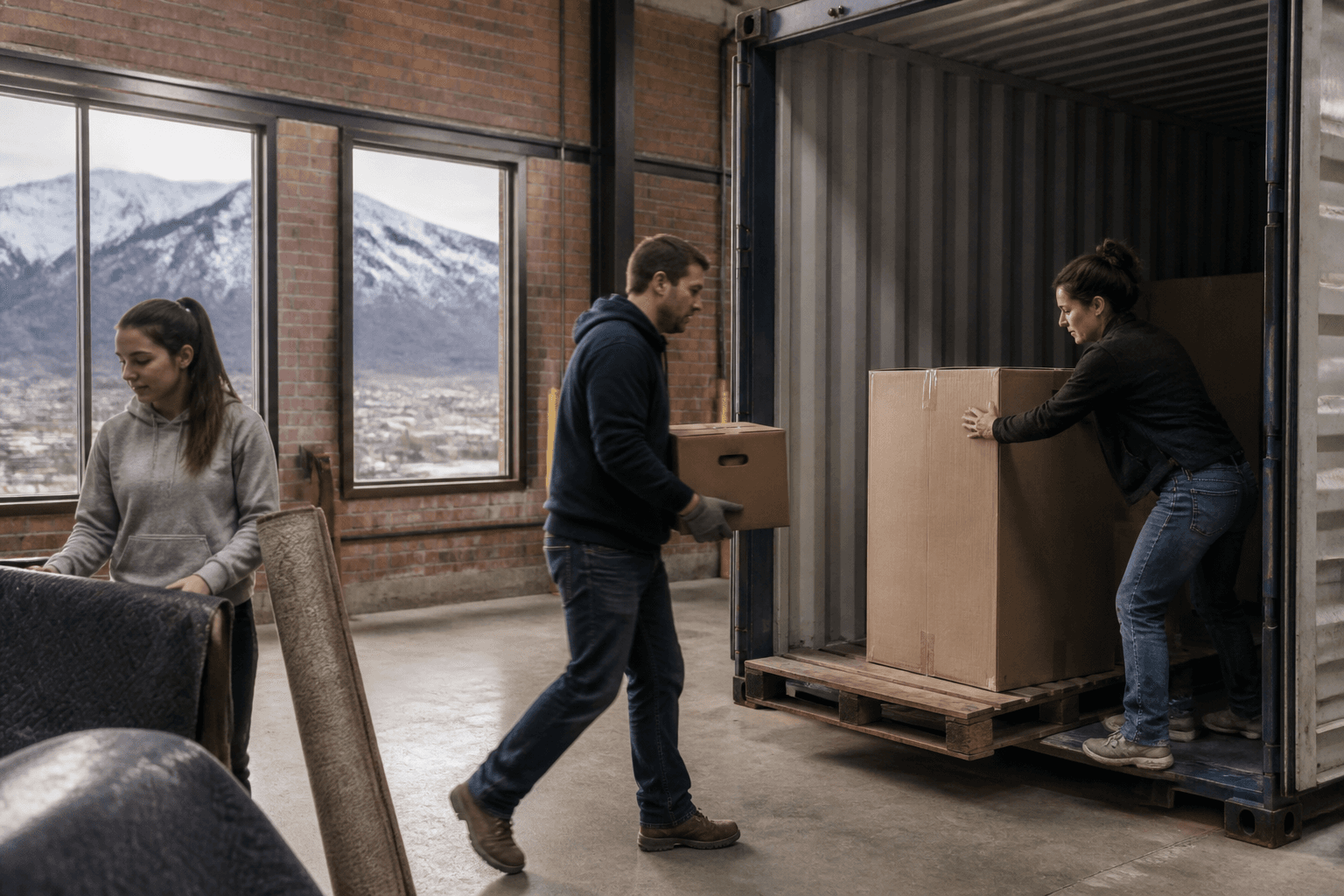
What is a moving and storage container, and is it right for your move?
A moving and storage container combines pickup, secure storage, and delivery—ideal for flexible timelines, downsizing, or bridging moves across Canada.
A moving and storage container is a secure, weather-resistant unit delivered to your home for loading, then picked up and stored until you’re ready for delivery to your next address. In most Canadian setups, you can keep the container on your driveway for a short staging window, load at your own pace, and avoid the tight scheduling of a traditional truck-and-crew move. This option is especially useful when your move date doesn’t line up—like when you’re waiting for a new rental, completing renovations, or selling and buying in different weeks. Compared across Canada, the fundamentals are similar, but timing and access rules vary by city and building type. If you need flexibility rather than speed, a moving and storage container can reduce stress, protect belongings from typical weather exposure, and let you move room-by-room instead of all at once.
How much does a moving and storage container cost in Canada?
Costs depend on container size, how long you store, and local delivery logistics; plan for container rental plus transport and storage fees.
Pricing for a moving and storage container in Canada typically comes down to a few variables: the container size, the length of the storage period, and delivery logistics (distance, access, and any need for on-street placement). In general, short-term container rentals are often priced per month or per storage cycle, with delivery and pickup included or charged separately depending on provider structure. Publicly available moving cost guidance in Canada commonly shows that full-service moves scale quickly with distance and volume, while storage add-ons can become the expensive part if you rent from a facility by the month. With a container, you’re paying for a mobile unit plus storage in a controlled yard or warehouse environment, and you often gain time flexibility. Because fees vary by region and season—especially in major markets during peak moving months—request a quote with your exact move timeline, access details, and approximate household volume. That way you can compare like-for-like, rather than guessing on container size.
Container size guide: how to choose the right fit for your home
Start with volume: measure key rooms, count larger items, then select a container size that leaves space for stacking and safe packing.
Choosing the right moving and storage container size is less about how many rooms you have and more about how much “stuff” you can pack efficiently. Begin by listing your biggest categories: couches, mattresses, wardrobes, appliances, boxes of books, seasonal items, and bulky décor. If you can, measure each area’s approximate dimensions or at least estimate the number of large pieces. In cross-Canada usage, people commonly overestimate how much fits because they assume furniture can be stacked like Tetris. Practically, you need space for safe loading, air gaps where moisture can matter, and room to consolidate boxes without crushing. As a rule of thumb, if you’re moving from a studio or one-bedroom with moderate belongings, a smaller container often works; for larger homes, multiple rooms filled, or long-term storage, you’ll likely need a bigger unit or multiple units. A good approach is to plan conservative: aim to pack up to a level that still protects corners and keeps heavier boxes on the floor.
Delivery, pickup, and timing: what to expect from start to finish
Expect a staged workflow: delivery to your address, loading window, pickup to storage, then re-delivery to your new home.
Most moving and storage container workflows follow the same pattern: delivery to your address first, a loading period while the container stays on-site, pickup, storage, and finally delivery to your destination when your dates align. The key advantage for Canadians is control of the loading schedule. Instead of booking a moving crew for a single day, you can load over multiple evenings or a weekend—helpful if you’re organizing belongings, packing gradually, or coordinating with roommates, tenants, or family members. Timing can be tighter in urban cores where permits or building rules may affect where a container can sit. Many places require an arrangement for on-street placement or coordination with a property manager if you’re in a condo or apartment. Because weather in Canada can affect access—snow, ice, and freeze-thaw cycles—schedule your loading early when you can. Communicate entry restrictions, stairs, elevator availability, and parking limits so pickup and re-delivery can proceed without delays.
Packing for storage: protect belongings from moisture, damage, and weight shifts
Use durable boxes, wrap items well, label clearly, and pack to prevent movement—especially for longer storage periods.
Packing for a moving and storage container is different from packing for a same-day truck transfer, because you’re planning for time in between. While storage is generally secure, your main risks are moisture exposure during loading/unloading, condensation from temperature swings, and damage from shifting weight. Use a moisture-resistant approach: wrap electronics, disassemble bed frames if possible, and keep items in sealed bins when feasible. For boxes, choose strong moving cartons, reinforce bottoms with tape, and avoid overfilling—collapsed boxes are common when weight shifts. Heavier items should go on the floor of the container; lighter, fragile items should be stacked higher with cushioning. Leave a buffer between the container walls and delicate belongings to reduce scuffing and potential abrasion. Label every box by room and contents so you can retrieve items later without pulling everything apart. For upholstered items, consider breathable protective covers to reduce dust accumulation. If you’re storing seasonal clothing, include moisture absorbers and bag items to keep them clean and organized.
Safety and access: permits, building rules, and outdoor placement across Canada
Rules vary by municipality and property type—plan for driveway space, condo permissions, and possible on-street placement requirements.
Safety and access are what make or break a smooth moving and storage container experience in Canada. The practical first step is to confirm where the container can be placed: on a driveway, in a designated loading zone, or on-street where permits may be required. Single-family homes often have easier access, but even then, you may need to clear snow and ensure the ground can support the container during autumn and winter. In dense cities and neighborhoods, building rules can add complexity. Condos, townhomes, and apartments may require written approval from the property manager, insurance details, or scheduling to avoid blocking fire lanes and entrances. If the provider needs to place the container in front of a building, on-street regulations vary by municipality and can require a permit. Because these rules change by city and sometimes by street, don’t assume universal access. Instead, share your address context during quoting: driveway width, distance to the door, elevator or stair details, and whether you can keep the path clear. Planning ahead helps prevent last-minute reschedules that can ripple through your moving timeline.
Why use a moving and storage container instead of renting a truck or self-storage?
Container moves trade some flexibility in parking for stronger timeline control and simpler end-to-end logistics than traditional options.
Many Canadians compare a moving and storage container against renting a truck, hiring movers, or using a traditional self-storage unit. Renting a truck can be cost-effective for short local moves, but it usually comes with a tight schedule: you still have to load everything quickly, drive, unload, and repeat if you need storage. Full-service movers remove labour but can be less flexible when your move dates don’t match. Self-storage is flexible on paper, yet you still need multiple trips between your home and the storage facility, which adds fuel, parking, and physical workload—especially if you live in a multi-floor building or far from the facility. With a moving and storage container, you load directly from your home, then handle only one handoff at pickup and one at re-delivery. That can reduce trips and help you keep packing systems consistent from day one. If you’re bridging a gap between leases, waiting for repairs, or downsizing gradually, the container model often matches real life better than a one-time truck rental. The best “fit” is your timeline: if you need flexibility and want to minimize repeated travel, containers are a strong option.
Common mistakes to avoid when using a moving and storage container
Most problems come from wrong sizing, weak packing, poor labeling, and underestimating access or weather conditions.
Even though a moving and storage container is designed for simplicity, Canadians run into predictable issues. The first is container size mismatch—either too small (forcing you to cram and damage items) or too large (paying for space you don’t use). A second common mistake is skipping packing basics for long storage: forgetting proper wrapping, using fragile boxes, or packing items that can shift and crush. Another frequent error is weak labeling. When you don’t mark boxes by room and contents, retrieving essentials later becomes time-consuming, and you may end up unpacking more than necessary. Access issues are also high on the list. People underestimate how much clearing is required for a driveway in winter conditions or how building rules limit placement time. Also, many households forget to plan for heavier items—pianos, large appliances, and oversized furniture—where moving method and protection matter. Finally, avoid leaving perishable or flammable materials inside. If you’re storing cleaning chemicals, paints, or propane-related items, confirm permitted items with your provider. A little planning reduces the biggest friction points.
Frequently Asked Questions
How long can I keep a moving and storage container in Canada?
In Canada, the “how long” question usually depends on the provider’s pricing structure and storage cycle. Many moving and storage container services charge per storage period (commonly monthly), meaning you can keep the unit for weeks or several months based on your plan. The practical recommendation is to book based on when you truly need your belongings accessible, not only on your move date. For example, if you’re between leases, a container can cover the gap until you have keys for your new place and space to unpack. If you’re renovating, you might store longer, then schedule re-delivery when flooring is complete and furniture can be moved safely indoors. When requesting a quote, share your estimated earliest and latest “delivery ready” dates. That helps match you with the best storage window and can reduce the chance you outgrow the timeframe. Also plan for seasonal loading: in autumn, snow can arrive early in many provinces, so schedule loading when access is most reliable.
What items should I never store in a moving and storage container?
For safety and legal compliance, you generally should not store prohibited or hazardous materials in a moving and storage container. While exact restrictions vary by provider and local regulations, common exclusions include flammables (such as gasoline and many aerosols), explosives or fireworks, and certain chemicals like large quantities of corrosives or solvents. Perishable items should also be avoided, since temperature and ventilation conditions aren’t suitable for food storage. If you’re unsure about a specific product—paint, stain, pool chemicals, pesticides, or propane-related materials—check directly with the container company before loading. Another practical consideration is moisture sensitivity: avoid leaving items that can mildew without protection, like unsealed cardboard boxes in damp conditions or mattresses wrapped in a way that traps condensation. For electronics, use protective wrapping and keep chargers, cables, and accessories organized. The safest plan is to pack items you’d reasonably expect to store long-term with proper packaging, and verify anything hazardous or questionable during booking.
Do I need a permit for a moving and storage container in my city?
Often, permits are city- and situation-dependent, not universal. In many cases, if the container is placed on your private driveway or within your property line, a permit may not be required. However, if the container needs to be placed on-street or in a designated public space, some municipalities can require a permit to ensure the parking/loading space is regulated. Condo and apartment properties may also require approval from the property manager even if no municipal permit is needed. In Canada, rules differ widely between cities and sometimes between streets, so you can’t rely on a single “Canada-wide” answer. The best approach is to provide your address context when you request a moving and storage container quote: whether you’ll place it on your driveway, whether there’s room for vehicle access, and if there’s any chance the container must go on-street. With that information, a provider can often tell you what documentation or steps are typically required. Planning for a permit early avoids schedule gaps if your move date is tight.
How do moving and storage container services handle winter conditions?
Winter planning matters because Canada’s weather can affect both access and packing comfort. In many provinces, autumn transitions into snow and ice earlier than people expect, and that can limit driveway placement if the surface isn’t cleared or if the ground is uneven. A moving and storage container service will typically deliver and pick up based on access and safety, so you should plan your loading when the area is easiest to reach. For packing, focus on moisture management: keep boxes sealed well, wrap items to reduce scuffing, and avoid leaving cardboard unprotected if snow or slush could be tracked in. If you’re storing items that are sensitive to temperature swings—like some textiles or paper goods—use sealed plastic totes where possible. Also, be realistic about how quickly you can load in cold weather; evenings may be darker and less comfortable, so consider splitting packing into shorter sessions. When you book, share your province and approximate dates. Providers can often advise on best practices to reduce delays caused by weather-related access constraints.
Can I load a moving and storage container myself, or do movers do it?
Most moving and storage container setups are designed for self-loading, meaning you can load the container on your timeline—room by room, evening by evening, or over a weekend. This is one reason the service can be a good fit for Canadians who want control and flexibility. That said, many companies also offer optional services depending on availability, such as help with packing or additional labour. If you’re dealing with heavy items (large appliances, safes, or oversized furniture), you may prefer professional assistance to reduce risk of injury and damage. Whether you self-load or arrange movers, the packing expectations are similar: protect fragile items, secure boxes so they don’t tip, and distribute weight evenly. It’s also important to consider your staging plan—moving items from upstairs rooms to the loading area, ensuring hallways stay clear, and confirming the path from your door to the container is safe. If you’re new to packing, start with a checklist and label everything early. Even in a self-load model, good preparation is what makes storage feel organized instead of chaotic.
How does a moving and storage container compare to self-storage in cost and convenience?
A moving and storage container often wins on convenience because you load directly at home and avoid repeated trips to a storage facility. With traditional self-storage, you typically need at least one trip to transfer belongings, another trip to retrieve them when your new place is ready, and sometimes multiple trips if you can’t fit everything in one go. That means additional costs for truck rentals, fuel, parking, and time off work, which can add up quickly across Canada. Cost-wise, self-storage is usually charged by unit size and time (commonly monthly), and you may also pay for access/administrative fees depending on the facility. A moving and storage container merges storage and transport into one streamlined workflow—delivery to your address, then pickup to storage, then re-delivery. The container’s pricing can be very competitive when you value time and want to reduce physical labour. If you’re only storing a short period and you live near the storage facility, self-storage might be simpler. If you’re bridging a move, downsizing gradually, or coordinating renovations, container storage usually reduces friction and keeps your move system organized.
Do I get access to my belongings during storage?
Access during storage can vary by provider and by the type of storage arrangement. Some moving and storage container services operate like a single delivered unit that stays on-site in secure storage, meaning direct access might not be available on demand. Others may offer scheduled access or additional options depending on logistics and inventory handling. The most reliable way to answer is to ask during the booking process whether “retrieval while stored” is available, how far in advance you must request it, and whether access changes your delivery timeline. In many Canadian move scenarios, people don’t need frequent access; they primarily need storage until their new home is move-in ready. Still, it’s smart to plan ahead by packing an “open first” box or tote for essentials—like documents, basic kitchen items, toiletries, chargers, and a few days’ clothing—so you’re not scrambling if you can’t access the container. If you expect to need items mid-storage, mention it upfront so your provider can recommend the best container size, packing method, and timing plan.