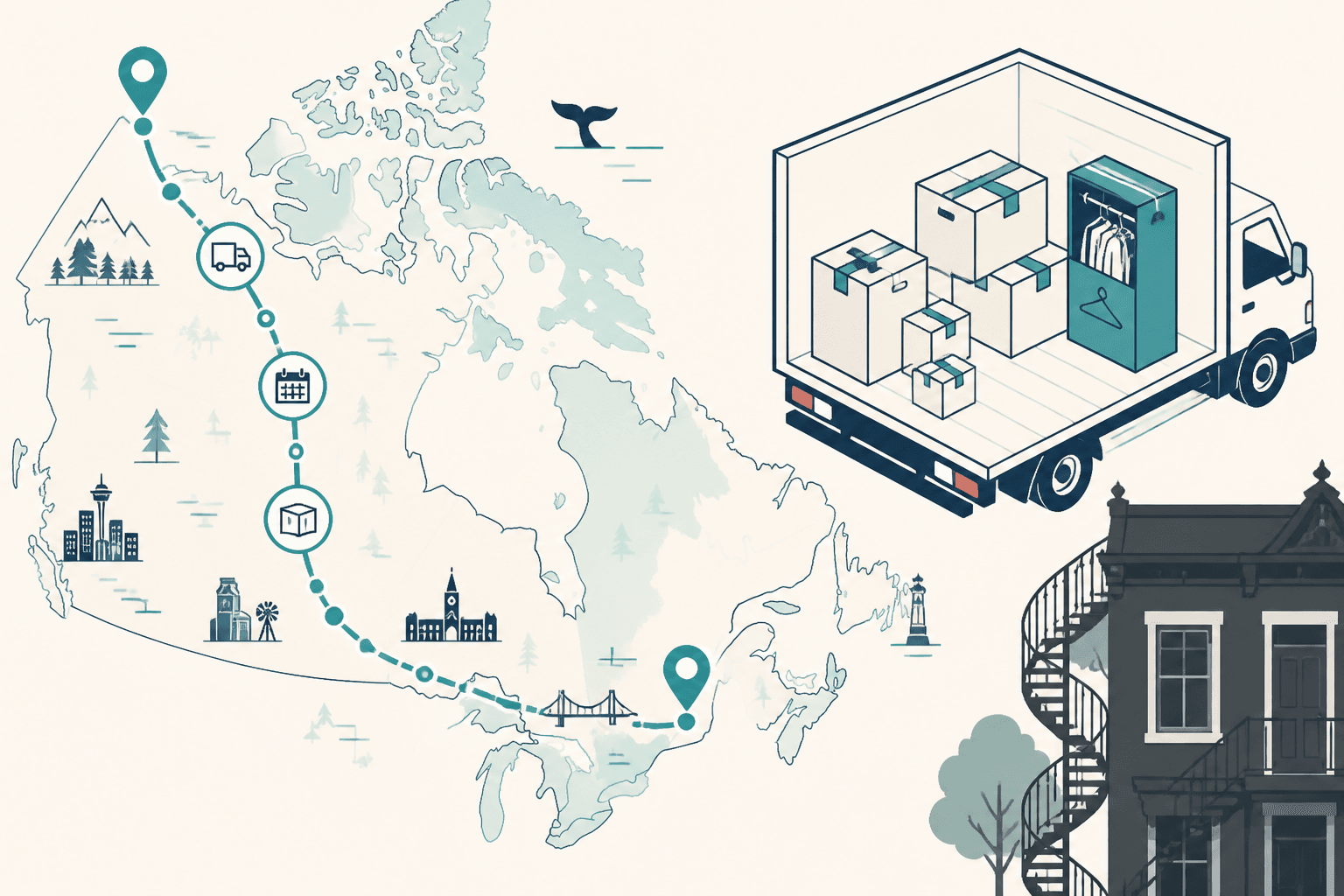
What is container moving and storage—and why choose it?
Container moving and storage uses a delivered shipping container to pack, move, and store your belongings—often with simpler timelines and fewer handling steps.
Container moving and storage is a relocation method where a moving company delivers a container to your home, you (or their team) packs your items, and the container is then transported—either directly to your new place or into secure storage until you’re ready. For many Canadians, this approach reduces the back-and-forth that comes with traditional truck-and-crew moves, because your goods stay in one container rather than being repeatedly loaded, unloaded, and re-staged. It’s also a strong fit when your move dates don’t align with your lease start date, when renovations are underway, or when you’re moving across provinces and want more control over the “in-between” period. Compared with full-service moving, container moving can offer a more flexible experience. Compared with self-storage units, it can feel more streamlined, since items can be packed directly into the same container used for transport.
How the container moving process works in Canada (step by step)
Expect a delivery/pickup workflow: quote → container delivery → packing → transport to destination or storage → delivery when ready.
In most Canadian container moving and storage journeys, the process begins with a quote based on container size, distance, access at your property (driveway width, stairs, and parking constraints), and the timing you need. Next, the company schedules container delivery to your current address. On delivery day, the container is placed in an accessible spot—often on a driveway or near the curb—so you can pack at your pace. In many cases, you can either pack yourself or use professional help, depending on your service plan. Once packing is complete, the container is collected and moved. If your new home isn’t ready, it can go into secure storage within the container system. Then, when your move-in date arrives, the container is delivered again (or redirected, if needed). This workflow matters because it supports changing timelines without requiring multiple partial moves. It also helps reduce the number of handling events, which is one reason people like container moving and storage for fragile items and boxes packed in a careful order.
Container sizes, costs, and what affects pricing
Pricing depends on container size, distance, access, storage duration, and insurance—compare quotes and confirm what’s included.
Container moving and storage costs in Canada vary widely based on what you’re moving and how long you need storage. Container size is typically the biggest driver: you’ll generally pay more for larger containers, and your container choice is influenced by how much you own and how you pack. Distance also matters—moving within a province versus cross-country transport can change costs significantly. Pricing can be further affected by access requirements (tight streets, limited parking, stairs, or long carry distances from the container placement point). Storage duration is another variable. Many storage-related charges are time-based, and the total can rise if you need the container held for weeks or months. Real-world budgets are also shaped by what’s included in the quote—some services include basic insurance coverage, while others require additional coverage or specify valuation terms. Because Canadian weather can affect loading windows (rain, snow, and ice), the schedule flexibility you choose can influence operational costs. When comparing options, ask for an itemized quote and clarify container delivery date, pickup date, storage pickup windows, and any fees for extended access or re-delivery.
Storage timing: short hold vs long-term, and common scenarios
Choose storage based on your lease and renovation timeline—many moves go smooth when container storage bridges date gaps.
Storage timing is where container moving and storage often shines, because it’s designed for “not yet ready” situations. Common scenarios include waiting for a condo closing, bridging a gap between selling and buying, storing items during renovations, or traveling for work while your home is staged for viewings. For short holds, customers typically need a secure place for items for days to a few weeks—often around moving date overlap. For long-term needs, customers may require storage for several months while they finalize documents, complete repairs, or wait out seasonal construction schedules. In Canada, this planning step helps you avoid expensive rush logistics. It’s also easier to keep your packing organized: you can load items by room priority, seal boxes clearly, and note what needs to be accessible first when you’re ready. When you request storage, confirm whether you’ll have temperature or humidity controls (if offered), and ask about access policies. Even if you’re not planning repeated access, knowing storage handling standards and security measures can reduce stress and improve confidence, particularly when moving valuables like seasonal sports gear, electronics, or heirlooms.
Packing tips that protect your belongings during container transport
Use solid box selection, label clearly, pack heavy items low, and create a protection plan for breakables and electronics.
Packing is one of the biggest levers you control in container moving and storage. Start by choosing sturdy moving boxes and supplies like packing paper, bubble wrap, foam corner protectors, and strong tape. Reinforce box bottoms and avoid overfilling; a box that’s too heavy can fail during handling. For breakables (glassware, ceramics, mirrors), use a wrap-and-layer approach: individually wrap items, place them with cushioning, and fill empty spaces so nothing shifts. For electronics, keep original packaging if possible, or use sturdy cartons with anti-static protection and extra padding. When packing kitchen and pantry items, remember that many storage customers pack only dry goods; liquids and foods can create safety and odour issues—confirm restrictions with your provider. Make a “first-open” box for essentials needed immediately at your new address. During container packing, place heavier items low and toward the center, and keep fragile items higher with protective barriers. Label boxes by room and by handling needs (“FRAGILE,” “THIS SIDE UP”). Finally, keep documents, keys, and valuables with you rather than in stored containers. The better the pack, the smoother the unpack—especially when container moving and storage includes a storage phase.
Container moving and storage vs truck-only moving and vs self-storage
Container moves reduce repeated handling; self-storage can require extra trips; truck-only moving needs tighter date alignment.
When deciding between container moving and storage, truck-only moving, and self-storage, it helps to focus on date flexibility and handling frequency. Truck-only moving typically works best when you have aligned move dates: the same crew loads items and delivers them to your new home with minimal in-between time. If your dates don’t match—like when you’re waiting for a key handover—truck-only approaches can lead to extra coordination, temporary staging fees, or multiple transport steps. Self-storage can help with flexibility, but it often involves extra driving and multiple loading sessions: you move items into a unit, then later move them out again. With container moving and storage, your belongings stay in the container from packing to transport to storage (and later to delivery), which can reduce repeated handling and help keep your packing order intact. Across Canada, customers often prefer container systems when they have limited parking, need a planned loading window, or want one organized container rather than many trips with a rental van. Still, the best choice depends on your timeline, access constraints, and whether you want to pack yourself or prefer professional packing help.
Cross-Canada considerations: winter access, insurance, and service expectations
Canadian winter changes loading conditions; confirm insurance and access requirements for safer, more predictable deliveries.
Canada-wide moves come with unique realities—especially in winter. Even if container moving and storage offers flexibility, you still need safe placement for the container at both origin and destination. Snow, ice, and frozen ground can affect whether a container can be set at your driveway or how crews manage moving carts and dollies. In regions like Quebec and Atlantic Canada, plan for weather delays and ask about scheduling policies for severe conditions. For long-distance moves, confirm whether your provider coordinates the full route or relies on regional partners, and how they handle cross-province transit timelines. Insurance is another critical consideration: container moving and storage quotes may include basic coverage, while additional valuation options can be available for higher-value items. Ask what the coverage covers (loss, damage, theft), what documentation is required, and how claims are processed if something arrives damaged. Service expectations should be clarified in writing: container delivery and pickup windows, re-delivery fees if the destination isn’t accessible, and storage handling standards. The goal is simple—make your move predictable across seasons, not only in fair-weather months.
Frequently Asked Questions
How much container moving and storage do I need—what size container should I choose?
Choosing the right container size is usually about estimating volume, not just the number of rooms. Start by taking inventories room-by-room (living room, bedrooms, kitchen, office, basement, and any bulky items like mattresses). Then consider how you pack: if you use space efficiently (vacuum bags for soft items, tight packing for books, and well-built cartons), you may fit more into a smaller container. If you expect winter gear, sports equipment, or a lot of seasonal décor, that can change your estimate quickly. Most Canadian providers let you select from a range of container sizes, but availability and exact dimensions can vary. The most reliable approach is to request a container moving and storage quote with your inventory or photos, and ask the provider to recommend a size based on typical load patterns for your home type. If you’re between sizes, it can be safer to size up—overstuffed containers can be harder to secure and may increase the risk of shifting during transit.
Is container moving and storage cheaper than traditional moving in Canada?
Container moving and storage can be cheaper than traditional moving for some Canadians, especially when your move needs date flexibility. Traditional full-service moves are often priced around an hourly crew schedule and timing constraints, which can lead to higher costs when you need storage, multiple staging steps, or extra coordination. Container systems can reduce repeated handling because your items remain in one container through transport and storage. That said, “cheaper” depends on your situation: if you have aligned move dates, a truck-only move may be straightforward and cost-effective. If you need long storage, the container approach can still be competitive, but storage duration and access requirements will influence the total. To compare fairly, ask each provider for an itemized breakdown: container delivery, packing help (if any), transport, storage fees, re-delivery fees, and insurance options. Look for hidden variables like carry distance from the street, stairs, or the need for parking permits. A trustworthy quote will clearly separate move and storage costs, so you can judge value instead of guessing.
What are the typical storage durations for container moving and storage?
In Canada, container moving and storage customers commonly fall into two broad timing patterns. First are short holds—often used when your lease start date or condo closing is close but not exact. These can range from about a few days to several weeks, depending on how quickly keys, elevators, and access are confirmed. Second are longer holds—common during renovations, job relocations, or multi-step real-estate timelines—where storage may last a few months. There isn’t one universal standard because cities, property rules, and closing schedules differ. The practical question to ask is how storage billing works for your plan: is it per month, per week, or based on a minimum term? Also ask whether the provider offers any flexibility for extending storage if your dates shift again. In Quebec City, for example, street access, parking rules near old neighbourhoods, and building loading constraints can affect when you can schedule container delivery and pickup—so building a buffer into your timeline can reduce last-minute changes. Always confirm the pickup window and any fees for changing schedules after booking.
Do I have to be home during container delivery, and what do I need to prepare?
Most container moving and storage arrangements require someone available at the address when the container is delivered and later when it’s picked up. This is because the crew needs to confirm placement conditions, access routes, and that the container can be safely positioned and secured. You’ll typically want the area where the container will sit to be clear—snow cleared if possible in winter, debris removed, and vehicles moved so crews can access driveways or curb areas. If you live in a multi-unit building, you may need to coordinate with property management about elevator bookings, loading zones, and any permits. Even when the container is placed outdoors, the safest placement still depends on driveway width, slope, and overhead clearance. Prepare by having a simple plan for pack order and by keeping essentials accessible: keys, documents, and items you’ll need immediately after moving. Label boxes clearly so your container is packed logically, which matters when you’re transitioning into storage. If your provider offers packing assistance, confirm whether they bring materials, and whether they need you to designate “fragile” zones or document access steps in advance.
How does insurance work for container moving and storage in Canada?
Insurance terms vary by provider, but in Canada you should treat insurance as a negotiation point, not a checkbox. Many container moving and storage quotes include basic coverage, while additional protection may be available based on declared value. Ask what the baseline coverage includes (damage, theft, or both) and what limitations apply (for example, exclusions for certain item categories). Also confirm how damage is assessed—whether there’s a claims process requiring photos, inventory lists, or delivery condition reports. A helpful step is documenting your items before packing: take photos of major electronics, artwork, and any high-value items. Keep an inventory list with box labels so you can identify what’s affected if a claim is needed. For fragile items, ensure they’re packed properly, because improper packing can sometimes affect liability. If you’re storing items for months, ask whether storage conditions are covered under the same insurance terms. Finally, clarify who files the claim and the expected timelines. A provider that answers these questions transparently is usually the most reliable one to choose.
Can I access my stored items during the storage period?
Access policies for container moving and storage vary by company and by the way the container is stored. Some customers want to open the container to retrieve specific items during the storage period, while others prefer to leave everything sealed to minimize handling. Ask whether your provider allows access, and if so, how it works: does access require an appointment, does it require you to be present, and are there fees for additional visits? Also confirm whether the provider can re-secure the container afterward and how they manage internal reorganization (for example, whether they return items to the original layout). If you need intermittent access—like seasonal clothing, a bike, or documents—your packing plan should reflect that by creating a “retrieval list” and placing those items at an accessible point early. In winter across Canada, repeated access can create scheduling and safety considerations due to weather conditions, so it’s wise to plan ahead. If your priority is security and predictability, many Canadians choose not to access until delivery to the new home. Either way, confirm policies clearly in your contract or booking details.