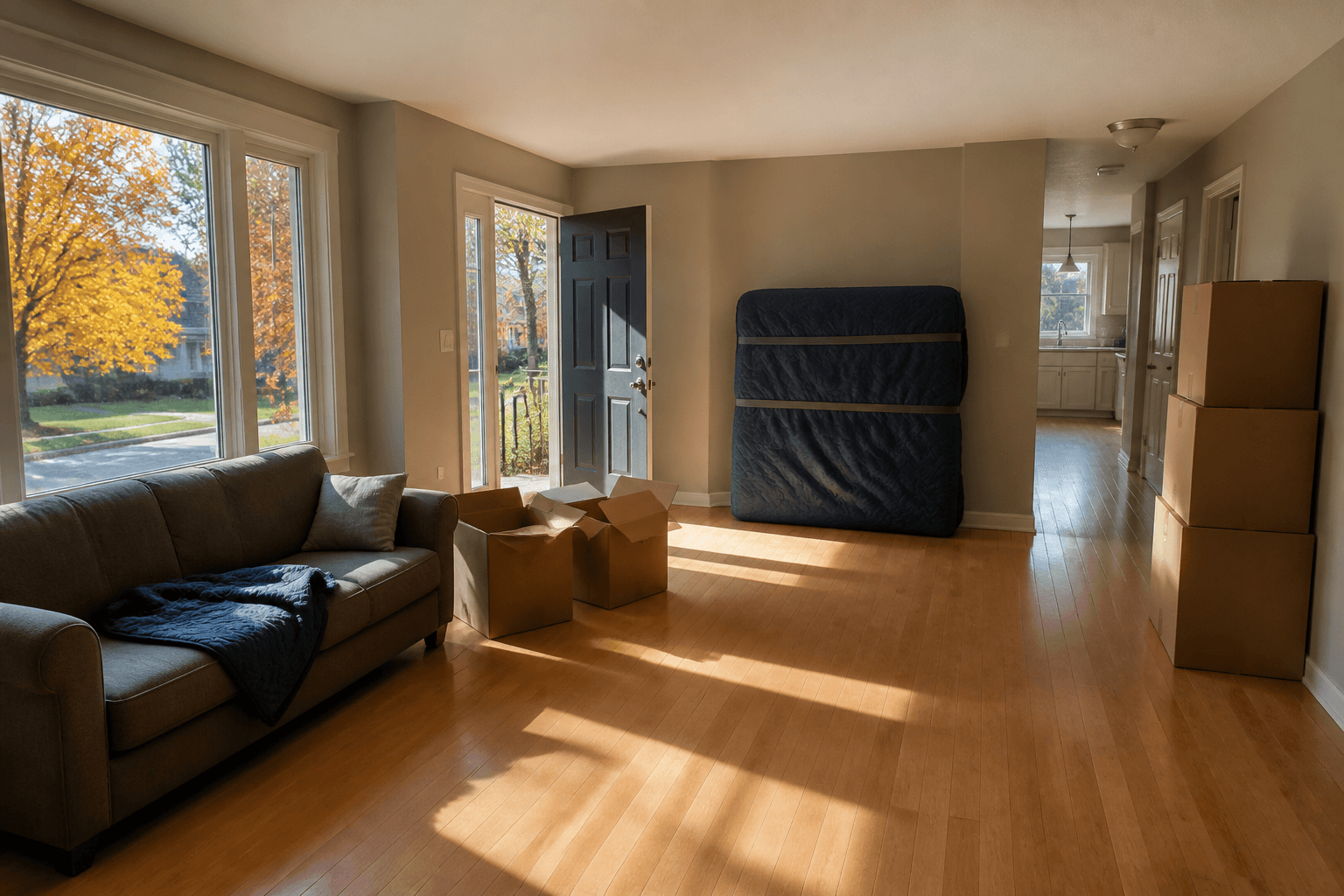
How Sherbrooke’s July 1 timing changes what truck size you actually need
Sherbrooke’s July 1 (Canada Day) moving weekend can feel straightforward—until timing pressure hits. Many leases end around the first of the month, and move-outs cluster between late June and July 1, especially in neighbourhoods like Fleurimont, Bromptonville, Rock Forest–Saint-Élie–Deauville, and Lennoxville. That means elevators, loading zones near Sherbrooke’s downtown core and the industrial corridors off Route 201, and even access to apartment buildings can get booked or limited. In practical terms, if your belongings don’t fit in one trip, you may need a second run—which costs time and can require a different truck size than you originally planned.
To choose the right moving capacity, start with the “how many loads” reality. A truck that’s slightly too small often leads to overflow: boxed items stacked in hallways, extra trips for smaller items, or last-minute courier add-ons. For July 1 2026, plan for worst-case conditions: crowded schedules, slightly longer staging time at pickup, and potential parking constraints. Your goal is to pick a truck size that allows a single, orderly move with room for packing materials, mattress protection, and securement space.
Studio to 1-bedroom: when a small truck is enough in Sherbrooke QC
For a studio or compact 1-bedroom move in Sherbrooke, the “moving truck size needed studio 3 bedroom sherbrooke 2026” question often comes down to how much bulky furniture you own. A typical studio household includes a bed (often a queen or double), a sofa or compact loveseat, a small dining set, a desk, a few dressers, and a moderate number of boxes. If most items are already boxed and disassembled—like taking apart bed frames and removing table legs—the smallest truck sizes can be enough for a one-trip move.
That said, July 1 is when people often combine moving with quick upgrades: new mattresses, more storage bins, or last-minute furniture deliveries. If you’re relocating from an apartment in central areas near King Ouest or around Lennoxville, narrower hallways and elevator timing can make efficient loading critical. Overstuffed compartments can cause delays because movers may need to re-stack to access fragile items.
A good rule is to target a truck that allows you to keep aisles clear—especially for kitchen boxes, media, and items you want protected near the front. If you’re using professional packing or have lots of small items in uniform boxes, you’ll also benefit from extra cubic space for packing paper and cushioning. With the right plan, studios and small 1-beds typically land in the smallest truck category that still supports a safe, single-trip load.
1-bedroom to 2-bedroom: the tipping point where truck size impacts cost
Moving from a 1-bedroom into a 2-bedroom in Sherbrooke is where capacity decisions start to matter financially and operationally. A 2-bedroom usually adds at least one more full room’s worth of furnishings: a second bed, larger wardrobes, a fuller living-room set, and more kitchen and storage items. Even when square footage doesn’t increase dramatically, storage habits do—closets, basements, and seasonal bins can add volume quickly.
On a July 1 moving weekend, the tipping point shows up as scheduling constraints. If the first truck load is close but not complete, you can’t always “just run back” immediately because the building, loading zone, and elevator access may be tied to other moves. That’s why a truck that is only marginally larger than your estimate can save the difference between one trip and two. For moves originating in neighbourhoods like Rock Forest–Saint-Élie–Deauville or around industrial zones near Autoroute 610/Route 216 connections, the loading and staging realities can also affect how quickly you can complete a turn.
In the field, movers typically plan not only for the volume of furniture but also for the protective space required for mattresses, moving blankets, and boxed breakables. A fridge often needs safe distance from box stacks and padding, and tall items (bookcases, wardrobes) require secure anchoring. As you step from 1-bedroom to 2-bedroom, build slack into your capacity decision so your move stays efficient—especially in July 1 2026 when demand is high.
2-bedroom to 3-bedroom: how to size a truck for the whole move, not just furniture
A 3-bedroom move is rarely “just bigger.” In Sherbrooke, the difference between a smooth single-truck day and a messy, multi-trip timeline usually comes from what’s stored rather than what’s visible. Many 3-bedroom households include a primary bedroom set plus a second bed, a third bedroom that may function as an office, and a living room with additional seating. Add in dining storage, pantry items, and seasonal décor, and you get a lot of boxed volume that isn’t obvious during a quick walkthrough.
This is the core answer to moving truck size needed studio 3 bedroom sherbrooke 2026: you need a truck capacity that can hold both large furniture and the boxed “filler” that accumulates. Kitchen boxes often become denser than expected. Books, small appliances, and storage bins can take up more cubic space than a sofa by volume. On July 1, the risk isn’t only overflow—it’s the time lost to re-stacking and re-accessing items you can’t reach once the load is closed.
A professional approach is to inventory by room type: (1) bulky items (sofa, beds, tables), (2) tall items (dresser stacks, wardrobes), and (3) boxed volume (kitchen, books, décor, linens). Then choose a truck size category that leaves room for protective padding and for loading strategy—mattresses near the door, heavier items low and secured, lighter boxes higher. When you plan that way, you reduce the chance that a few “extra boxes” trigger a second trip that disrupts your July 1 schedule.
Truck size guide: practical capacity ranges for studio, 1-, 2-, and 3-bedroom moves
To translate household size into a practical moving truck size, think in categories rather than a single number. In Canadian moves, capacity planning usually aligns with how much furniture you have plus how tightly boxes are packed. For a studio, a compact truck or small moving van is often sufficient if your furniture is minimal and you’ve disassembled beds. For a 1-bedroom, you may still fit in a small-to-medium truck, depending on whether you have a full dining set and whether closets are packed.
For 2-bedroom moves, many households require a larger truck because volume increases in both bedrooms and common areas. A second bed size, additional dressers, and more kitchen storage push the total cubic footprint beyond what a small truck handles comfortably. For 3-bedroom moves, you typically want a larger truck that can accommodate multiple mattress sizes, heavier furniture, and a large number of boxes and storage totes.
Because this topic is about moving truck size needed studio 3 bedroom sherbrooke 2026, you should adjust based on two variables that strongly affect actual load: (1) how much is boxed vs. already in furniture (professional packing usually increases count of boxes but also organizes them efficiently), and (2) whether you have “overflow volume” such as storage lockers, garage bins, or seasonal décor. If your move includes items stored in a basement or garage, increase your planned truck capacity.
Finally, remember that safe loading matters. Even if everything could physically fit, poor space planning can force you to leave gaps for aisle access and for securement. For July 1, where timing is tight, it’s better to choose a capacity that gives you working room than a truck that forces you to gamble on stacking.
How to estimate your load fast (and avoid “it fit last time” mistakes in Sherbrooke)
If you want to choose the right moving truck size without overpaying or underplanning, you need a fast estimation method that reflects how volume behaves on moving day. In Sherbrooke, where moves often occur on the same weekend for many households, guesswork can be costly because availability and scheduling are limited. “It fit last time” is especially risky because last time’s layout, packing level, and the presence of stored items might have been different.
Start with a room-by-room tally that anyone can do in 30–45 minutes. List each bulky item and approximate its footprint: bed sizes, sofa length, dining table size, dresser dimensions, and the presence of wardrobes or shelving. Next, estimate boxes by category: kitchen (often denser), books (high density), linens (bulky but light), and misc (tools, décor). If you know you have seasonal storage—Christmas bins, winter coats, or garage items—count them as a separate line item.
Then account for protection. Mattresses need space for blankets and securement; fragile items need padding; and you must avoid compressing boxes that contain glass or electronics. This is where many moves fail: they count only “furniture volume” and ignore how much space packing materials occupy.
Finally, align your estimate with the reality of Sherbrooke buildings. Elevators and narrow stairwells in older Lennoxville or near parts of Bromptonville can limit how you stage items. A truck size that helps you load in a calm sequence can be more valuable than squeezing out a few extra cubic metres. Use your estimate to select a capacity range that supports one clean run, not a stressful near-fit.
Frequently Asked Questions
What truck size should I book for a studio move in Sherbrooke on July 1, 2026?
For a studio move in Sherbrooke on July 1, 2026, most households do best when they book a small-but-capable truck that can handle a queen or double bed, a sofa, a few dressers, and the typical wave of boxed kitchen and décor items. The goal isn’t only “everything fits,” but “everything fits without crushing boxes or blocking access to the front of the truck.” If you’re moving from a condo or apartment in areas like central Sherbrooke or around Lennoxville, elevator timing and loading access can be tight on holiday weekend days, so a smooth single trip matters.
Before you book, confirm whether your bed can be disassembled, whether you have a full dining set, and roughly how many boxes you expect (kitchen boxes and books tend to fill space quickly). If you’re using professional packing, you may end up with more boxes, but they’re usually uniform and stackable. In that case, small truck categories can still work if you don’t have extra bulky storage items from a basement or garage.
How do I choose the right truck size for a 2-bedroom move from Rock Forest–Saint-Élie–Deauville?
A 2-bedroom move from Rock Forest–Saint-Élie–Deauville often includes more volume than people anticipate because closets, seasonal décor, and storage bins add “quiet cubic metres.” On a July 1 moving weekend, that extra volume can push you from one-trip to two-trip capacity—especially if building access or staging is constrained. When selecting a truck, prioritize room for both bulky furniture and boxed materials, not just the biggest items.
Start by listing the second bedroom’s contents: another bed frame, a dresser, and any shelving. Then estimate box volume in categories. Kitchens in Canadian homes can generate many dense boxes (small appliances, pantry, cookware, glassware). Books also absorb space. If you have winter wardrobes, sports gear bins, or storage tote collections, add them as additional volume because they’re often the last items to be packed and the first items to cause overflow.
If you want one clean move day in Sherbrooke, choose capacity that leaves slack for packing paper and moving blankets. That slack reduces re-stacking and protects fragile items during loading and unloading.
Do I really need a larger truck for a 3-bedroom move in Bromptonville?
In Bromptonville, many 3-bedroom households discover that “larger truck” is less about the bedrooms themselves and more about what’s stored between the bedrooms and the rest of the home. A 3-bedroom typically means multiple mattress sizes or a mix of beds and sofa sleepers, plus a fuller dining and living-room set. Even when furniture looks manageable, boxes from the kitchen, linens, and any home office storage can be the difference between one trip and two.
On July 1 weekend, that difference matters because scheduling and loading access can be less flexible. If you underbook capacity, the overflow boxes can force you to leave items for a second run at the exact moment you can least afford downtime. To avoid that, plan for protective space: mattress padding, blanketed furniture, and securement room around heavier items. This is where truck size decisions based only on furniture can fail.
A larger truck also supports better loading order, which helps movers work efficiently in tight spaces. If your move includes basement or garage bins, consider increasing the capacity category even further, because that volume tends to surface late in packing.
What’s the cost impact of choosing the wrong truck size in Sherbrooke?
Choosing the wrong truck size in Sherbrooke can increase costs in a few common ways—mostly indirectly through time and logistics. The biggest financial risk on a July 1 move is not “a little extra effort,” but triggering additional trips. When a truck is too small, you may need a second load, which can add fuel, extra labour time, and additional scheduling coordination with both pickup and delivery windows.
Another cost impact is the effect on packing and staging. If a truck arrives and you realize boxes and furniture won’t fit as planned, you may lose time re-stacking, reorganizing, or even temporarily relocating items. That can also increase the chance of damage if items are forced to be stacked too tightly or placed in awkward positions.
To minimize cost impact, compare truck capacity to your real load, including storage bins and the protection required for mattresses and fragile items. Use a room-by-room inventory and plan for slack. If you’re booking through a moving marketplace like Boxly, you can also compare multiple mover options for capacity and scheduling so you aren’t forced to settle for an under-sized vehicle close to July 1.
Should I disassemble furniture to fit a smaller truck in Sherbrooke?
Disassembling furniture can absolutely help you fit a smaller truck more efficiently, and it’s often worthwhile for studio-to-2-bedroom moves. In Sherbrooke, where summer moving demand is high around July 1, better loading efficiency can prevent overflow. However, it’s not a “make any size truck work” solution. Some items still require enough overall volume, not just reduced dimensions.
Practical items to disassemble include bed frames (especially queen and larger), table legs, and any shelving that can be safely detached. Use consistent labelling so assembly isn’t delayed at the destination. For drawers and dressers, you can keep them closed during loading to reduce the risk of loose hardware, but some movers may prefer emptying for weight distribution—ask your crew.
Even with disassembly, you still need space for protection: mattresses wrapped, fragile boxes cushioned, and securement for heavier pieces. If your estimate is already tight—especially for 2- or 3-bedroom moves—trying to force it into a smaller truck can lead to overflow and, ultimately, to more time and potentially additional trips. The best approach is to disassemble to improve fit, while still booking a capacity range that can comfortably handle boxed volume.
What should I do if my belongings don’t fit the truck size I booked?
If you discover mid-day that your belongings don’t fit the truck size you booked, treat it as a planning problem first, not a packing failure. In Sherbrooke on a July 1 move, the priority is to protect your schedule and reduce the chance of damage. The most effective fix is usually a capacity adjustment: either moving the overflow items to another truck/load, or selecting a larger capacity option if available. This is exactly why pre-move estimation matters.
Before making changes, confirm what is actually causing the overflow. Is it a few bulky items (e.g., large sofa sectional, bed frame, or tall bookcase), or is it boxed volume from kitchens, books, and storage totes? If it’s a couple of bulky pieces, disassembly and rearranging may solve it—provided there’s still safe space for securement and aisle access.
If boxed volume is the issue, you may need to move overflow items separately because forcing too much compression tends to risk damage. Document what’s left and ask your crew for a realistic plan: whether a second run is needed, or whether a larger truck can be arranged quickly. If you booked through a marketplace, you can compare options, but act fast—holiday-weekend availability moves quickly.