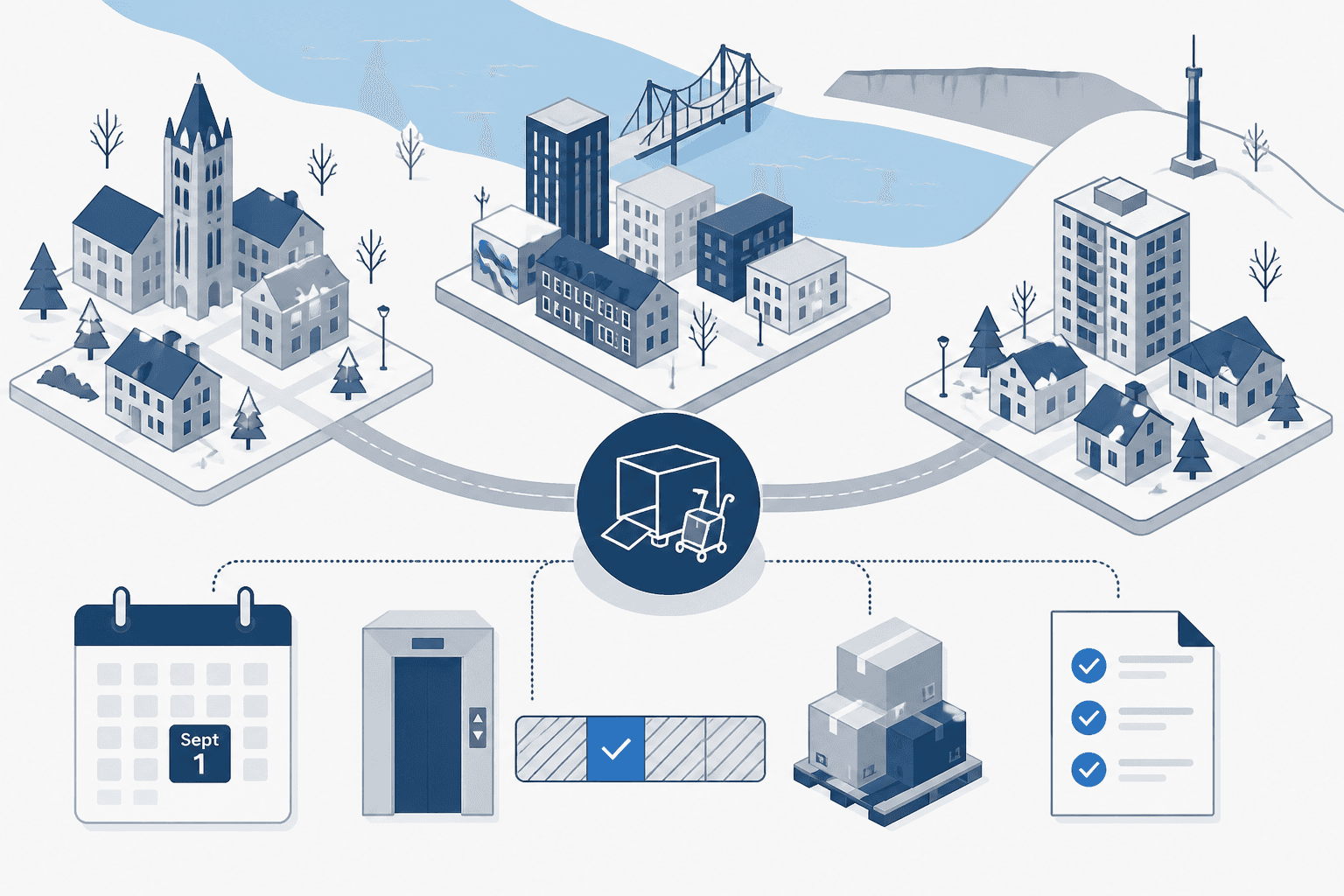
Why Sept 1 matters: elevator reservation timing and forms that buildings require
Hamilton lease-day demand often spikes around September 1, especially in areas like Westdale, the Hamilton Mountain, Corktown near the downtown core, and around McMaster University. Most multi-unit buildings in Hamilton and Kitchener require tenants (or the moving company) to secure an elevator reservation window before any furniture carts roll through the lobby. That request typically needs notice in advance because buildings schedule elevator use, freight access, and sometimes elevator protection (pads) to protect floors and manage traffic.
The real risk on Sept 1 isn’t just availability—it’s paperwork. Many properties require a completed moving request form, proof of insurance, a contact name/phone number for move-day coordination, and specific time-window confirmation. When you don’t submit building forms early, you may lose the time slot, face a reschedule fee, or be prevented from loading/unloading at all. A clear plan removes those bottlenecks by aligning your moving crew, your elevator booking, and the required building documents.
Elevator reservation moving building forms Hamilton Kitchener: what to request first
To get an elevator reservation moving building forms Hamilton Kitchener process right, begin with one call or email to your building’s superintendent, leasing office, or property management. Ask for: (1) the moving policy for September 1 (including allowed move-day hours), (2) the specific form(s) required for elevator use, (3) whether the building books the elevator directly or requires you to submit a request and confirmation, and (4) the documentation they require. In many Ontario condos and apartments, the moving request form includes the move-in/move-out date, unit number, estimated number of hours, vehicle access instructions, and the names of the person(s) coordinating with the carrier.
Also ask what proof they expect. Common requirements include a certificate of insurance (COI) naming the building as additional insured and showing the moving company’s liability coverage. Some properties require your moving crew to follow building rules such as loading from a specific entrance, using a freight elevator only, or placing floor protection. Finally, confirm whether there are blackout periods on move day (for example, other construction or maintenance windows). Getting these answers first prevents last-minute rejections.
Step-by-step checklist: elevator reservation for your exact move time window
A strong Sept 1 plan means you don’t treat the elevator reservation as a single checkbox. Instead, build a time-window workflow that matches building operations. Start by comparing your lease start time (often tied to an end-of-month handover) with realistic travel and move durations. In Hamilton and Kitchener, urban traffic around downtown and University areas can add delays, so plan for a buffer. Then request at least one “primary” elevator reservation time slot and one backup slot in case your building’s form processing or confirmation arrives late.
Next, create a move-day logistics sheet you can share with the building and the moving company: move-in date, unit number, elevator reservation confirmation code, loading dock or curb access details, and entry instructions. If your building uses a booking system, confirm who enters the reservation—the tenant, the moving company, or the superintendent—and when the building expects final confirmation. Ask for the exact rules on elevator occupancy (for example, whether only certain elevator types can be used for move-in). When you have these details in writing, you reduce the chance of arriving to find the elevator unavailable or the crew unable to begin loading.
Building forms & documents: what to prepare to avoid reschedules
Most move-related building forms exist for one purpose: to ensure safe, coordinated use of shared infrastructure and to protect the property. For elevator reservation moving building forms Hamilton Kitchener, your best approach is to assemble a “move packet” and submit it as soon as the building allows requests. A move packet commonly includes: tenant name(s), unit number, move date and time window, the moving company name and contact details, and sometimes the approximate number of items or rooms being moved. Many buildings also require a signature acknowledging their rules for hallways, elevators, and noise or pickup/drop-off procedures.
Insurance documentation is often the largest friction point. Buildings frequently request a certificate of insurance that matches the moving company’s coverage and lists the building as additional insured (or provides a valid COI showing sufficient liability coverage). If you’re hiring a marketplace or service partner like Boxly, ensure your COI request is handled so you don’t scramble right before Sept 1. Also prepare the coordinator contact: the person the superintendent can call if the elevator reservation needs adjustment. Submit the packet early so the building can approve your reservation without last-minute delays.
Hamilton & Kitchener neighbourhood move realities on Sept 1 (parking, freight access, timing)
Sept 1 move-day conditions differ by neighbourhood. In Hamilton, areas near McMaster University and around Westdale can see heavier pedestrian and traffic activity, while the downtown core and nearby neighbourhoods like Corktown commonly involve more constrained curb access. On the Hamilton Mountain, buildings may have their own loading-door limitations or require strict compliance with designated entrances. In Kitchener, proximity to the University of Waterloo area (and nearby rental clusters) often means more frequent congestion and competing building schedules, especially on weekdays at the start of the lease cycle.
Because elevators are limited and building staff are coordinating multiple moves, parking and loading access matter as much as your elevator booking. Confirm whether you need a reserved parking spot, whether you should use a specific loading entrance, and where the truck should stage during elevator loading. Some buildings limit move-in traffic to set hours and require a move coordinator to meet the crew at the property. If your moving team can’t access the loading zone within the reserved elevator window, you risk wasting the elevator slot even when the reservation is confirmed. Build your plan around access—then the elevator reservation becomes the tool that keeps your move on track.
How Boxly helps you coordinate elevator reservations and approvals without missing paperwork
On September 1, the “success” of your move depends on coordination—not just hiring a truck. Boxly helps you plan with clarity so you can align the key elements that buildings require: the elevator reservation, the moving window, and the building paperwork package. Since many properties in Hamilton and Kitchener ask for proof of insurance and specific move-day confirmations, a structured booking process reduces the chances of missing documents that cause delays.
In practical terms, a coordinated approach means you can confirm what your building needs, then match it to the moving service you select. That includes ensuring the moving crew can work within the building’s rules (for example, using the designated elevator and respecting the approved hours). It also helps you set expectations: you know what information you must provide, when you need it, and who the building can contact to verify the move-in timeline.
If you’re moving into or out of a multi-unit building, the best time to get organized is early—before the Sept 1 rush. With Boxly, you can streamline approvals so the elevator reservation moving building forms Hamilton Kitchener workflow doesn’t become a last-minute scramble.
Frequently Asked Questions
How early should I request an elevator reservation for September 1 in Hamilton or Kitchener?
For September 1, request an elevator reservation as early as your building accepts move scheduling—often several weeks ahead—because the most in-demand time windows fill quickly. Hamilton and Kitchener rental towers and mid-rise buildings usually receive many requests around the same period, and staff may only confirm approvals during business hours. If you wait until the week of move-in, you may discover that only certain windows are available or that the building needs time to process forms and insurance documentation.
A good rule is to submit your moving request packet immediately once you know your move date and have your move-in unit details. Then follow up for written confirmation of your elevator slot and the specific move window rules (such as allowed hours, which entrance to use, and whether floor or elevator protection is required). For a Sept 1 move, also arrange a backup time window with your moving provider so a late approval doesn’t force a reschedule.
What exact documents are commonly required with elevator reservation moving building forms in Ontario buildings?
While every property is different, many buildings in Hamilton and Kitchener commonly request a consistent set of items as part of elevator reservation moving building forms. Typically that includes your unit number, move-in or move-out date, reserved time window, and a tenant contact name and phone number. Buildings also often ask for the moving company name and phone number, plus the name of a day-of coordinator who can meet the crew at the property.
Insurance documentation is frequently the biggest requirement. Many buildings ask for a certificate of insurance (COI) demonstrating liability coverage and sometimes listing the building as additional insured. Some properties may also require you to confirm whether the moving company will provide and install elevator/floor protection materials. If you’re moving a large item, the building may ask for special handling details.
To avoid delays, compile your move packet as one email or submission: unit info, move window, moving company details, and COI request status. Then ask the building to confirm receipt so you don’t assume approval without documentation.
If my building doesn’t confirm the elevator reservation, can my movers still load on Sept 1?
In most cases, no—if your building’s policy requires an approved elevator reservation and completed move forms, the movers may be asked to stop loading if the reservation isn’t confirmed. Many Hamilton and Kitchener multi-unit buildings enforce the policy to manage elevator wear, hallway congestion, and safety. If the superintendent or property manager isn’t able to verify your booking, you can lose time waiting at the entrance, which can quickly cascade into a reschedule.
The safest approach is to ensure you have written confirmation of the move window before the truck arrives. If confirmation is pending, contact the building and ask how they want to receive notice (email reply, online portal status, or a confirmation call). Also confirm day-of check-in instructions: where the crew should stage and what contact person they should ask for when they arrive.
If you find yourself without confirmation, treat it as a scheduling issue, not a “show up and hope” situation. Contact your moving provider immediately and request a contingency plan so you’re not stuck with an unused elevator window or an unworkable move-day timeline.
How do I handle insurance and COI requests when booking movers for a building that requires it?
Start by asking the building exactly what they require for insurance—specifically whether they want a certificate of insurance (COI), and if they need the building named as additional insured. For elevator reservation moving building forms Hamilton Kitchener, this information is often included in the moving policy or a separate insurance requirements page. Contact the building early so you have clear instructions on timing and the correct email address for COI submission.
Then, coordinate with your moving provider to ensure the COI is issued for the correct moving date and matches the building’s required coverage. Many delays happen because people request the COI too late or don’t provide the building’s full legal name and address as listed in the policy. You’ll want to double-check these details before requesting the document.
Finally, confirm receipt. Don’t rely on the assumption that an email was received. Ask the building to confirm the COI has been accepted. Doing this well before Sept 1 helps you protect your elevator reservation and reduces the chance of last-minute denial due to missing or incorrect paperwork.
Do I need floor protection and elevator protection on Sept 1 moves, and who provides it?
Whether floor and elevator protection is required depends on your specific Hamilton or Kitchener building policy. Many multi-unit properties require moving crews to use protection materials to avoid scuffing, damage, and excessive wear on elevator floors and hallway surfaces during high-volume move days like September 1. Some buildings provide guidelines but expect tenants or their movers to follow them; others may have on-site requirements about what materials must be used and where they should be placed.
When you request elevator reservation moving building forms Hamilton Kitchener, look for explicit references to elevator pads, floor runners, or protection rules. Ask: does the building provide the protection, or does the moving company supply it? Are there minimum standards for coverage and placement? Are there restrictions on dragging items through common areas?
To avoid surprises on Sept 1, include these questions during your initial booking and confirmation process, and ensure your moving provider can comply with the stated requirements. If the building expects protection, confirming it ahead of time helps keep your approved elevator window productive—rather than pausing for last-minute supplies.
What should I do if there are multiple move-ins in the same building on September 1?
It’s common for buildings in Hamilton and Kitchener to experience multiple move-ins on September 1, and that’s exactly why elevator reservations and form approvals exist. If multiple tenants are moving at once, the building may restrict move-in hours, limit how many trips are allowed, or require strict time-window adherence. Your best strategy is to confirm your specific reservation window in writing and understand the building’s traffic-flow rules.
Start by asking the building whether there are any sequencing rules—such as which units move first, whether freight elevator use is staggered, or whether there are hallway capacity limits. Then coordinate with your moving provider on the timing inside your window: if your move needs more hours than allotted, you may need an additional reserved slot or your items could be left in a staging area.
Also, request clear check-in instructions and confirm where the truck should stage during your time block. If curb access is limited, staging outside the window can cause you to miss the elevator reservation even if you have paper approval. Planning for concurrency keeps your move organized and reduces friction caused by shared building schedules.
How can I plan around late-summer weather and traffic for a smooth Sept 1 move?
September 1 in Ontario can bring variable conditions, and traffic patterns can make move timelines unpredictable. While late-summer weather isn’t reliably “winter,” you can still prepare for damp sidewalks after rain, heavier congestion during commuting hours, and the overall rush of lease-day moves. In Hamilton and Kitchener, especially near downtown and university-adjacent neighbourhoods, you may face tighter curb access and more competition for loading zones.
Build your plan around buffer time. Confirm the truck staging and loading entrance with your building rules, and consider scheduling your elevator reservation for a window that allows for small delays—particularly if you’re crossing town from one side of the city to the other. Also keep a simple contingency: identify what you’ll do if the first load finishes late (for example, stacking smaller items first so you can prioritize the largest pieces within the elevator window).
Finally, remember that buildings enforce reserved time blocks. Weather and traffic delays are common, but the way to protect your move day is to plan ahead with a backup slot and clear staging instructions. That’s how your elevator reservation moving building forms Hamilton Kitchener strategy turns into an on-time move.