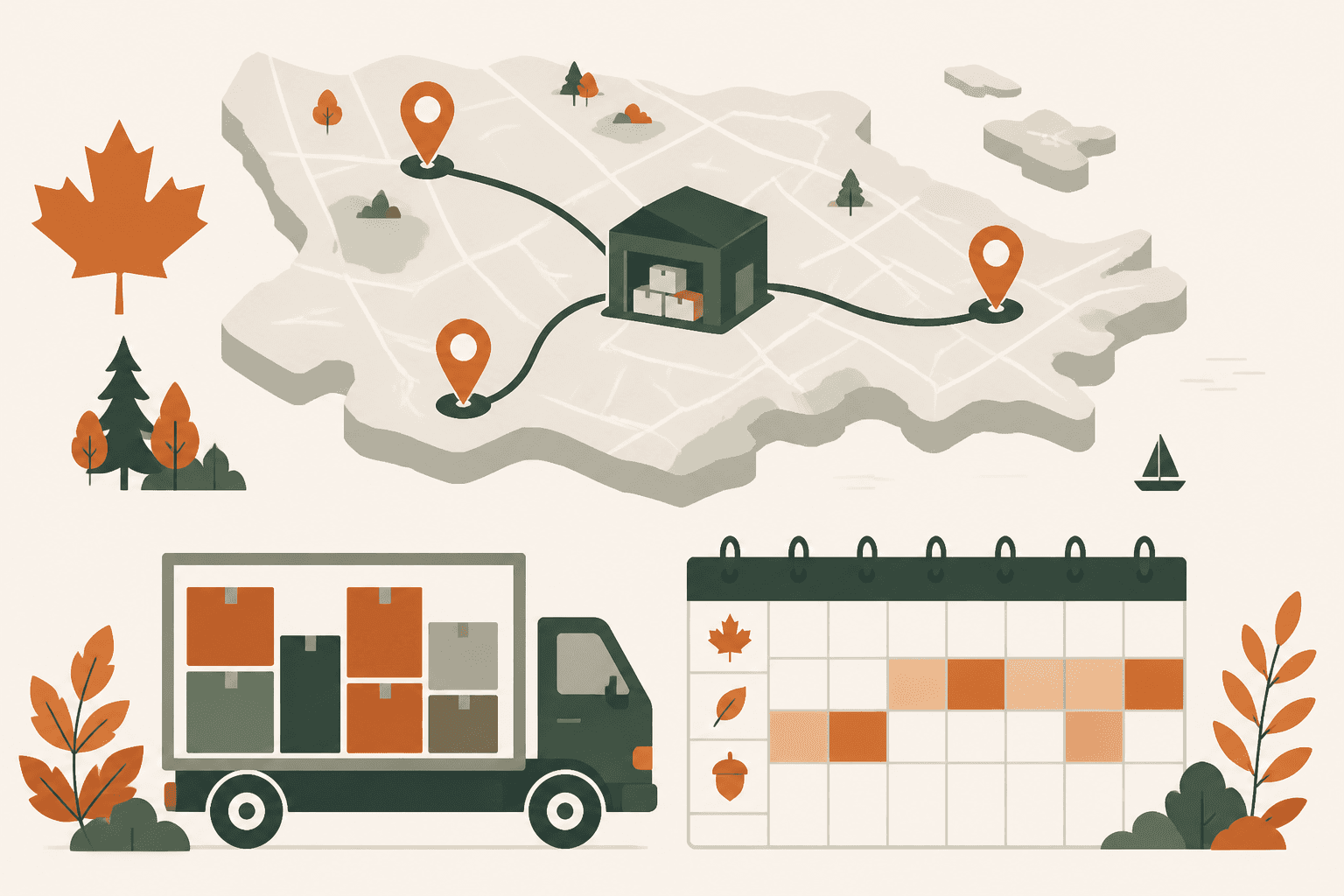
Victoria neighbourhood-by-neighbourhood: why your quote changes
If you’re relocating in victoria, bc—say from Fernwood or James Bay to Oak Bay or Royal Oak—the first cost driver is usually access. Movers charge for the time it takes to load and unload safely, and in Victoria, that time often varies by block: narrow streets, limited curb space, and strict parking rules near hotspots like downtown and the Inner Harbour can increase wait time and labour. Building realities matter too. Many older homes in neighbourhoods like Fairfield or Rockland involve stairs from street level, while condos in areas closer to Cook Street or Ten Mile Point may add elevator or reservation requirements. These factors don’t show up in a simple “2-bedroom” estimate, but they affect the billable hours.
In 2026, “moving prices victoria 2026” still come down to how long crews work. When you compare quotes, ask whether they included parking assumptions, floor level, and any need for stairs/elevators. A small difference in these details can create a large difference in the total.
Distance and schedule: local moves vs. longer routes in 2026
Victoria moves aren’t just “local”—they have rhythm. A move from Saanich to Victoria (or from Victoria out toward Langford/Colwood) can be billed differently than a neighbourhood-to-neighbourhood transfer because time includes travel, setup, and on-site handling. In 2026, moving prices victoria 2026 will generally reflect the number of crew hours required and the logistics between pickup and drop-off. For example, a same-day move within the city typically costs less than a route that requires longer driving time, extra time windows, or coordinating two buildings with separate access rules.
Schedule is also a practical pricing lever. Weekends, month-end, and popular moving days tend to be higher because movers are booked. If you can choose a mid-week day and a flexible time window, you may reduce the “busy day” premium. Season matters too: autumn weather can be unpredictable, and crews may need to go slower when surfaces are damp or when rain affects driveway access. That doesn’t mean you should avoid movers—it means your quote should account for conditions and access.
When requesting quotes in 2026, be specific about whether the move is within Victoria proper, between Victoria and the broader Capital Region, or part of a longer provincial route.
What movers charge in Victoria: the biggest components of 2026 pricing
In 2026, “moving prices victoria 2026” typically come from several components rather than a single flat fee. Most reputable Canadian movers calculate based on labour time (how many movers and how many hours), the size/type of truck needed, and the effort required to handle your belongings safely. Packing and disassembly can be separate line items: if you need wardrobe disassembly, mounting removal, or full packing, your estimate should reflect that scope. Storage (even short-term), specialty items, and extra trips can also change the total.
A practical benchmark in Canada is that labour-intensive moves frequently land in the “hundreds to low thousands” range depending on size, distance, and complexity—though the exact number varies by workload and access. The key is to compare apples to apples: two companies can quote similar ranges, but one might include stair carries, blanket wrap, and adequate padding while the other might not.
To get clarity, ask for an itemized estimate: number of movers, estimated hours, truck size, and what’s included for packing materials. If stairs or elevator time is involved, confirm whether those details were included in the quote. For Victoria homes and condos, this is often where the real difference shows up.
Packing, materials, and supplies: where costs add up (or you can save)
Packing is a major lever in 2026 moving prices victoria 2026, because it directly changes crew hours and the cost of supplies. If you choose professional packing, the mover’s labour covers boxing, wrapping, and labelling, which can protect items and reduce your stress. If you pack yourself, you can lower cost—but only if you have time, boxes, packing paper, and a plan for fragile items. In Victoria, many households have a mix of seasonal outdoor gear, electronics, and collectibles, and those categories often require extra protection.
Moving supplies also aren’t optional. At minimum, you’ll need sturdy boxes, tape, padding (paper or bubble wrap), and wardrobe cartons for clothing. Canadian moving companies often price packing materials either as a bundled option or as an additional charge per box/carton. The cost impact is highest for smaller moves where packing time doesn’t scale down as much as your furniture does. In other words, a small condo can still require extensive protection for dishes, books, and décor.
A cost-saving approach is to combine services: hire movers for loading/unloading and heavy items, and pack non-essentials yourself. Ask the company what they can do safely without packing your whole home. A clear scope reduces surprises and keeps your total aligned with the estimate.
Stairs, elevators, parking permits, and building rules in Victoria
One of the most overlooked factors in moving prices victoria 2026 is access. In Victoria, building rules and curb constraints can turn a straightforward move into an extended job. Older homes around Fairfield and Rockland may involve multiple stair flights, narrow landings, or long carry distances from curb to doorway. Meanwhile, many condo buildings—especially those with secured entrances in downtown, near the Inner Harbour, or along busy corridors—require elevator bookings, specific delivery windows, and sometimes proof of insurance or a moving plan.
Parking is another practical cost issue. If a crew can’t park close to your entrance, time increases for every trip and every load/unload cycle. In some parts of Victoria, curbside parking may be limited, and you may need to arrange temporary parking/loading solutions. Even when a permit isn’t required for a private move, the reality of finding safe parking can affect schedule adherence. Crews may need to wait for clearance or adjust the route, which affects billable time.
To avoid quote gaps, provide your moving date, building address, floor level, and whether there are stairs/elevator(s). If the building has rules, ask the property manager what’s required for move-in/move-out. The clearer your access plan, the less likely your final total will drift from the estimate.
Specialty items, insurance, and risk: what can change the final total
Not all belongings are equal in a movers’ workload, and that’s why moving prices victoria 2026 can rise even when your “mover size” doesn’t change. Specialty items—pianos, large safes, oversized artwork, antiques, hot tubs, pool tables, or bulky outdoor furniture—often require extra equipment and careful handling. Canada-wide, movers must manage risk: more careful steps can mean more time, additional protective materials, or specialized team members.
Insurance and valuation terms also matter. Many Canadian moving agreements include basic liability terms, but the exact coverage can vary by contract. If you want added protection, companies may offer valuation options or additional insurance at extra cost. This can be especially relevant if you’re transporting high-value items across Victoria, where you may have to secure items in different environments: tight condo hallways, steep entryways, or uneven driveways.
Finally, add-ons like disassembly/reassembly (beds, desks, wall-mounted TVs), appliance servicing disconnection, and stair carries should be declared upfront. If a quote didn’t include these, you may see an increase later.
To keep your quote accurate, list specialty items and confirm the handling method. For insurance, ask what the default coverage includes and what additional coverage costs if you need higher protection.
How to get accurate estimates in Victoria (without price surprises)
If you want reliable moving prices victoria 2026, the fastest path is consistent estimating. Start by requesting in-home or virtual visual assessments where possible—especially for stairs, tight access, or complex condos. Provide a clear inventory: furniture list, number of bedrooms, large items (sofa size, bed frames, desks), appliances (fridges/freezers), and any specialty items. For Victoria neighbourhoods like Vic West or Gonzales, access and parking can vary block by block, so a photo and floor-level details can significantly improve estimate accuracy.
Then, ask for an itemized quote. A high-quality quote states the number of movers, estimated hours, truck size, whether stairs/elevator travel is included, and what packing materials (if any) are included. Also confirm whether the quote assumes a standard route within Victoria or includes travel time to the Capital Region. Finally, ask about what triggers extra charges: additional labour time, extra trips, long carries, or delays.
A practical tactic: prepare to reduce variability. Choose a moving window, ensure elevator booking (if applicable), and clear entryways before the crew arrives. If you’re storing items temporarily, clarify whether storage is short-term, climate-controlled, and the timeline for pickup.
When you compare quotes, compare the scope—not just the bottom line. The quote that’s more detailed is often the one that better predicts your final total.
Frequently Asked Questions
What’s the typical price range for local movers in Victoria in 2026?
For local moves in Victoria in 2026, pricing commonly depends on size (studio/1-bedroom/2-bedroom), access complexity (stairs vs. elevator), and the estimated crew hours. In Canada, many residential moving quotes for local moves often fall into the “hundreds to low thousands” range depending on move volume and labour time, with bigger homes and heavier access challenges landing toward the higher end. However, there’s no one universal number—two 2-bedroom moves can differ sharply if one is ground-floor with easy curb access and the other is a condo requiring elevator scheduling plus multiple stair flights.
To estimate your own range responsibly, focus on the components: number of movers, total hours, and whether packing supplies/materials and disassembly/reassembly are included. Ask for itemized assumptions for parking, stairs, and what items are considered specialty. If you’re moving from or to neighbourhoods like Fernwood, Fairfield, or downtown near the Inner Harbour, mention access and delivery constraints early so the quote reflects real conditions.
Do moving prices victoria 2026 increase on weekends or month-end?
Yes—generally, moving prices victoria 2026 can be higher on weekends and around month-end because demand increases. In many Canadian markets, households coordinate moves with lease end dates, which often cluster at the start or end of each month. In Victoria specifically, weekends are common for move-ins because people can coordinate building access and parking. When demand is high, availability shrinks and movers may charge a higher rate or require minimum hours.
If you can move mid-week or choose a flexible time window, you may reduce the premium. Another lever is booking earlier: late summer through autumn can be busy as families relocate between school and seasonal schedules. Autumn in Victoria can also mean occasional rain, which can slow loading/unloading if driveways or walkways are wet or slippery—so it’s helpful to communicate whether you have covered entryways or protective flooring.
When requesting quotes, ask whether your date/time is considered “peak” and whether the quote includes waiting time. A realistic schedule reduces the chance of extra charges.
How do stairs and elevator rules in Victoria affect my movers’ cost?
Stairs and elevator rules can significantly change the final cost because they impact how long it takes to load and unload safely. In Victoria, many older homes and heritage-adjacent streets can involve stairs from the street or from an entry landing, while condos may require elevator reservations, specific time windows, and adherence to building procedures. If a crew can’t use the elevator immediately, they may wait while the elevator is booked for other deliveries. That wait time translates into billable labour or additional hours depending on the contract.
Stairs also increase handling effort. Carries require careful team coordination, additional padding, and sometimes more movers to keep loads safe—especially for large items like couches, dressers, and mattresses. The difference between “ground-floor” and “multiple flights” is often why quotes vary.
To avoid surprises, provide your floor level, number of stair flights, and whether there’s a carry path that’s wide enough for larger furniture. If your building requires a move-in/move-out permit, confirm the process with management before moving day.
Is it cheaper to pack myself, or pay movers to pack in Victoria?
It can be cheaper to pack yourself, but the savings depend on your time, your packing supplies, and the amount of delicate or high-risk items. If you pack yourself, you reduce labour costs, but you must still buy or source boxes, packing paper, tape, and cushioning. If your home has many fragile items—dishes, glass décor, collectibles—poor packing can increase damage risk, which may lead to claims or replacement costs that outweigh any labour savings.
Professional packing typically costs more up front, but it shifts the work to the moving team and can reduce total time. In many Canadian moving scenarios, movers charge separately for packing materials and packing labour, so you can reduce costs by using a hybrid approach: hire movers for heavy lifting and loading/unloading, while you pack non-essentials (books, décor, off-season items). This approach keeps the move efficient without requiring you to pack everything.
If you’re unsure, ask for a quote that separates “packing” from “moving.” That lets you compare options clearly against moving prices victoria 2026.
What extra charges should I ask about for specialty items?
When budgeting moving prices victoria 2026, you should ask specifically about specialty items and how they’re handled because they can add time, materials, and equipment. Common add-on categories include: large appliances (like refrigerators or freezers), items requiring disassembly or extra protection, and oversized furniture that can’t be carried through standard doorways. Pianos, safes, hot tubs, pool tables, and large wall units often require more careful planning and may be priced differently.
Extra charges may also come from long carries (distance from curb to door), additional trips, or the need for protective barriers in hallways. In Victoria, building corridors can be narrow, and some condos have rules about how items can move through shared spaces. If you have a specialty item, ask whether the quote includes padding/wrapping and whether there are any requirements for hoisting or alternative handling.
For accuracy, list dimensions and confirm access. If you’re bringing artwork or TVs, ask about disconnection/remounting services. Clear specialty-item details upfront help keep your final price aligned with the estimate.
Do I need moving insurance in Canada, and what’s the difference between coverage options?
In Canada, many moves include some baseline liability in the moving contract, but the exact coverage terms can vary by provider and agreement. Some customers choose added valuation or additional coverage for higher-value items because standard coverage may not fully reflect the replacement value of certain belongings. This matters when you’re moving fragile or high-cost items—electronics, antiques, collectibles, or designer furniture.
Rather than assuming, ask the mover what the default coverage includes and what triggers any limitations. Also confirm whether items are covered for damage during packing, loading, transit, and unloading. If you’re moving within Victoria between neighbourhoods like James Bay, Rockland, and Oak Bay, your risk profile depends on access (stairs/elevator), time spent on site, and how items are packed.
Added coverage can increase the overall moving price, but it can also reduce financial risk if damage occurs. To make an informed decision, request coverage details in writing and ask about claims processes and documentation requirements (e.g., item lists or photos).
How can I compare mover quotes fairly for moving prices victoria 2026?
To compare quotes fairly for moving prices victoria 2026, compare scope and assumptions—not just the final number. Start by asking for the same format from every company: an itemized estimate that states crew size, estimated hours, truck size, and what’s included for packing materials, wrapping, and disassembly/reassembly. Ensure each quote uses the same inventory assumptions (what’s included and the size/weight of major items). If one quote assumes you will pack yourself and the other includes full packing, the price difference won’t reflect “better value”—it reflects different work.
Next, standardize access details. Provide floor level, stair flights, elevator availability, and parking constraints so each estimate accounts for similar on-site time. In Victoria, downtown and Inner Harbour-adjacent areas may involve stricter parking and tighter loading windows, while suburban areas may have longer driveways or different curb access. These differences can impact labour hours.
Finally, ask about what can change the quote: additional time due to delays, extra trips, or specialty-item handling. A reliable mover will explain policies clearly. When you compare on the same basis, you’re far more likely to avoid price surprises.