
Winnipeg Moving Costs in 2026: The $100 to $175 Reality
The closest big city? 575 km away. That's four hours on the Trans-Canada with nothing but prairie and maybe a few cows. This isn't just a map quirk—it's why your moving options (and prices) look nothing like Toronto or Calgary.
Rates
83 active moving companies serve the Winnipeg market, maintaining a collective 4.65-star average across 9,848 Google reviews. The median hourly rate is $125 for a two-person crew and truck, with rates ranging from $100 to $175 per hour.
Crew Sizes and Market Structure
That $75 price gap is actually pretty tight for a city this size. Why? Because Winnipeg's so cut off, there's no Toronto discount chains swooping in, and no Calgary crews doing weekend side hustles. It's just 83 local companies, all playing by their own rules.
So what do you get for $125 an hour? For a typical 2-bedroom, you're looking at 5 to 6 hours—so $625 to $750, give or take. If your place is a standard 2-bedroom, that's your starting point.
Studio or 1-bedroom near U of M? That's 3 to 4 hours, or $375 to $500. If that's you, congrats—you've got one of the quickest, cheapest moves in town.
Moving a 3-bedroom in River Heights or Fort Richmond? Plan for 7 to 8 hours and $875 to $1,000. Bigger house, older layout—budget extra for the hassle.
Got a big house or a ton of stairs? Only 7 movers even offer a 3-person crew, and it'll cost you—$218/hr, almost double. Sometimes it's worth it for speed, but your wallet will feel it.
The number that should genuinely concern you: zero long-distance movers are currently listed for Winnipeg. In a city of 834,000 people (Statistics Canada's 2021 Census recorded the CMA population at 834,678 — a 6.3% increase from 2016, outpacing the national average of 5.2%), there is no marketplace option for someone moving to Calgary, Toronto, or Vancouver. Every interprovincial move requires sourcing from a national carrier or the destination city's market.
We analyzed all 83 active companies through Boxly's marketplace in February 2026, reviewing hourly rates (Boxly, Feb 2026), Google review scores (Boxly, Feb 2026), insurance status, and BBB accreditation across the Winnipeg metro area.
The price distribution tells a story of concentration: only 1 company prices below $100/hr, 4 companies sit in the $100–$130 range, 1 company falls in the $130–$160 bracket, and 3 companies charge above $160/hr. The remaining companies cluster tightly around the median. With 30 of 83 movers BBB-accredited (36%) and the same 30 carrying verifiable insurance, vetting matters here more than in most markets — Manitoba has no specific mover licensing requirement, unlike Ontario's CVOR system.
How much do movers charge per hour in Winnipeg?
The median rate across 83 Winnipeg movers is $125/hr for a two-person crew and truck. Rates range from $100 to $175/hr. A 3-person crew (offered by only 7 companies) runs at a median of $218/hr. These rates are current as of February 2026 marketplace data.
575 km to the Nearest Major City: How Does Isolation Shape Winnipeg's Moving Market?
Pull up a map of Canada and find Winnipeg. Now draw a circle with a radius of 500 kilometres. Inside that circle, there is no major city. No significant moving market. No competition.
This is the defining characteristic of Winnipeg's moving industry — and it's something no other major Canadian city experiences at this scale. Toronto is 68 km away. Calgary is 300 km. Even Edmonton, often called isolated, is within reasonable driving distance of Calgary. Winnipeg has nothing.
The distances are punishing:
The closest city with any mover presence is Saskatoon — 831 km by road, with only 4 movers listed and a median rate of $123/hr. Regina is 575 km away but has zero movers on any major marketplace. Thunder Bay sits roughly 700 km east and serves as the gateway to Ontario — but it's a small market serving a population of about 110,000. Calgary is 1,328 km west, and Toronto is 2,100 km east.
What isolation does to a moving market:
First, it eliminates long-distance competition entirely. Winnipeg's 83 local movers don't face pressure from Toronto companies offering weekend runs, or Calgary firms picking up moves on the way through. Every mover here lives here, works here, and prices for this market alone.
Second, it makes one-way truck rentals expensive. If you're doing a DIY move from Winnipeg to Calgary, that U-Haul or Penske truck needs to be driven back. Rental companies build repositioning costs into Winnipeg outbound rentals — you'll pay a premium that someone in Toronto moving to Hamilton simply wouldn't.
Third, it creates a genuine market gap. Zero long-distance movers are listed for Winnipeg on Boxly. In a metro area of 834,000 people, anyone planning an interprovincial move must source from national carriers or tap the destination city's market. The local movers don't leave.
If you're staying local, Winnipeg's isolation actually helps. The city's compact—Exchange District to Bridgwater is just 20 km. Some movers will even go out to Steinbach, Selkirk, or Brandon, but always double-check their pricing for those runs before you book.

Downtown Winnipeg
Sweeping panoramic views of the city.
Moving in the Coldest City on Earth: What Does -40°C Do to Your Move?
Edmonton calls itself cold. Calgary gets Chinooks. Vancouver worries about rain. Winnipeg is in a different category entirely.
This is the coldest major city in the world with a population over 600,000. That's not marketing — it's meteorological fact. Environment Canada's climate normals show January averaging -16.4°C, with wind chill regularly reaching -40°C to -50°C. By July, those same streets bake at +26°C to +35°C. The annual swing — roughly 75 to 80 degrees Celsius — is one of the most extreme ranges of any inhabited city on the planet.
For moving companies, this creates operational challenges that go far beyond "dress warm":
Equipment failures are structural. Hydraulic truck lifts freeze at -30°C. Ramps become ice sheets. Diesel engines won't start without block heaters plugged in overnight. Air brakes can freeze while the truck is parked at your loading dock. These aren't edge cases — they're November-through-March reality for every mover in the city.
Thermal shock threatens your belongings. Moving a flat-screen TV from a heated home into -40°C air and back into a heated truck can crack LCD panels. Piano soundboards contract violently in extreme cold. Oil paintings, wine collections, anything with moisture content — all at risk during the 5-to-15-minute exposure between door and truck. Professional movers use insulated blankets and heated compartments, but not all 83 companies invest in that equipment.
Human factors slow everything down. Crews work in insulated coveralls, heavy gloves, and face coverings. Grip strength drops, dexterity disappears, and break frequency increases. Realistic productivity loss: 30 to 40% compared to summer moves. December and January offer roughly 8 hours of usable daylight (sunrise 8:24 AM, sunset 4:20 PM) — a full 8 hours less than June. A 5-hour move in July takes 7 in January.
Here's the weird part: nobody wants to move at -40°C, so demand tanks from November to March. Some movers slash prices by 15 to 25% just to keep their crews busy. February is the cheapest month by far. If you can handle the cold and plan for the chaos, winter moves in Winnipeg are actually a bargain.
Do Winnipeg movers charge extra in winter?
Most Winnipeg movers do not add a formal winter surcharge. Demand drops so sharply in -40°C conditions that prices actually trend 15–25% below summer rates. However, some companies add equipment fees for heated trucks or block heaters. Always ask whether winter conditions affect the quoted rate.
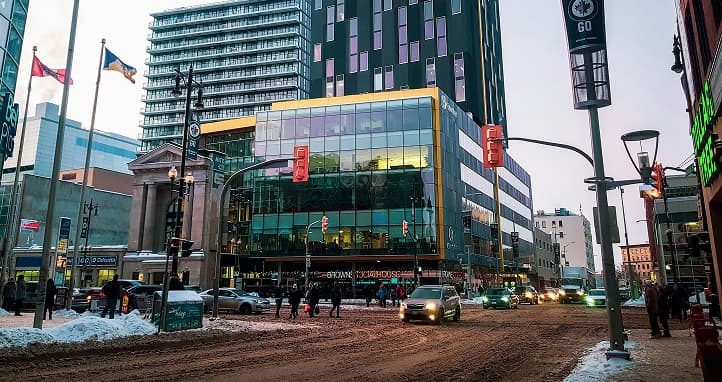
Winnipeg's City Center
City streets during winter.
Winnipeg vs Prairie Cities: How Do Moving Costs Compare?
Prairie moving prices don't play by the usual rules. Bigger city? Doesn't always mean higher rates. Distance? Barely matters. The numbers are weird.
Winnipeg: $125/hr (83 movers, 4.65 stars, 9,848 reviews)
Compare that across the prairies:
Calgary comes in at exactly $125/hr — an identical median with 47 movers and a metro population of 1.6 million. How does a city nearly twice Winnipeg's size land on the exact same number? Different market forces, same equilibrium: Calgary's larger population creates more demand, but its 47 movers (vs Winnipeg's 83) create proportionally less competition per capita.
Edmonton is the clear outlier at $139/hr — $14/hr more than Winnipeg. That premium isn't random: Edmonton's oil economy inflates wages across every service sector. When rig workers earn $100,000+, moving crews demand higher pay too. A 6-hour Winnipeg move at $125/hr costs $750; the same move in Edmonton costs $834.
Saskatoon edges in at $123/hr — $2 cheaper than Winnipeg. But with only 4 movers listed, that median is based on a tiny sample. Four companies don't create a competitive market; they create a near-monopoly where a single pricing change shifts the entire median. Saskatoon's rate tells you what 4 companies charge, not what a market equilibrium looks like.
Regina has zero movers on any major platform — 575 km from Winnipeg and effectively invisible to the moving marketplace. Anyone moving from Winnipeg to Regina sources from Winnipeg's local market or national carriers.
Bottom line: Winnipeg's $125 rate has nothing to do with Calgary's, even though they're identical. That's what happens when you've got 575 km of nothing between you and the next big city.
What Does Your Winnipeg Move Actually Cost by Home Size?
Winnipeg's geography gives you an advantage that most cities don't: flat terrain and a grid street layout. No hills for trucks to navigate, no winding suburban crescents, and predictable routing from neighbourhood to neighbourhood. The result? Moves here generally take less time than equivalent-sized moves in Calgary (hills, suburban sprawl), Montreal (spiral staircases), or Toronto (elevator waits, underground parking).
But Winnipeg has its own time-sucking traps—basement suites. Almost every older neighbourhood has them, and moving furniture down steep, twisty stairs with low ceilings is a guaranteed time-eater.
The cost breakdown at $125/hr median:
Studio or 1-bedroom (near U of M, downtown, Osborne Village): 3 to 4 hours, totalling $375 to $500. Small, efficient, usually apartment-to-apartment with elevator or ground-floor access. The fastest and cheapest move type in the city.
2-bedroom apartment or condo: 5 to 6 hours, totalling $625 to $750. This is the most common move in Winnipeg. Add 1 hour if either location involves a basement suite. Add 30 minutes for walk-up buildings without elevators.
3-bedroom house (River Heights, Fort Richmond, Transcona): 7 to 8 hours, totalling $875 to $1,000. Older River Heights homes with mature trees may require longer carry distances from the truck to the door. Transcona's wider streets and newer construction typically move faster.
4-bedroom or bigger (think Tuxedo, Charleswood, or old North End): 8 to 10 hours, $1,000 to $1,250. Add 1-2 hours if there's a full basement. North End heritage homes with tight stairs and heavy walls? Slowest moves in Winnipeg, hands down.
3-person crew option: Only 7 companies offer a 3-person crew at a median of $218/hr. For a 3-bedroom home, this cuts time from 7-8 hours to roughly 5-6 hours, costing $1,090 to $1,308 — faster but not cheaper.
How much does it cost to move a 3-bedroom house in Winnipeg?
A 3-bedroom house in Winnipeg typically takes 7–8 hours with a 2-person crew at the $125/hr median, totalling $875–$1,000. River Heights character homes with narrow lots take longer than suburban Transcona properties. A 3-person crew ($218/hr, 7 companies) cuts time to 5-6 hours but costs $1,090–$1,308.
Red River Flood Zones: How Does Spring Flooding Affect Your Move?
No other city on this platform deals with spring flooding the way Winnipeg does. Vancouver has rain. Ottawa has ice jams on the Rideau. Winnipeg has the Red River — and a flood history that shapes real estate decisions, insurance premiums, and moving logistics every April.
The Red River flows north. This is the critical geographical fact. Snow melts first in North Dakota and southern Manitoba, sending water toward a still-frozen north. The result: ice jams, backup, and flooding along a corridor that runs directly through the city.
The Floodway changed the calculus — mostly. The Red River Floodway is a 47 km diversion channel that routes floodwater east of the city. Built in the 1960s and expanded between 2005 and 2014 for approximately $665 million, it now handles up to a 1-in-700-year flood event. For most of Winnipeg, this means spring flooding is manageable.
But not everywhere.
St. Norbert sits near the Floodway inlet control structure — the point where the province decides to activate the diversion. During high-water events, this area sees restricted road access, temporary dike construction, and, in severe years, evacuation notices. Moving to or from St. Norbert in April requires checking river levels and road closures daily.
Riverview occupies the junction of the Red and Assiniboine rivers. Low-lying streets along the riverbank flood first. Wellington Crescent and nearby streets may see water on roadways before the Floodway is even activated.
Kingston Crescent and nearby streets along the Red River south of the Assiniboine junction face similar exposure. These are some of Winnipeg's most desirable addresses — mature trees, river views, heritage homes — and also among the highest flood-risk areas.
Parts of East St. Paul lie outside the Floodway's full protection zone and are at risk of spring flooding each year.
For movers, the practical implications are:
Schedule April and May moves in flood-prone areas with extreme caution. Check the province's flood forecast (released late March) before committing to dates. Build buffer days into your timeline — a scheduled Monday move may need to shift to Thursday if road access is cut. Ask your mover: "Are you familiar with spring access restrictions in Riverview/St. Norbert?" If they look confused, find someone who isn't.
In basement storage, flood-prone areas pose a higher risk of water damage. If you're moving into a Riverview or St. Norbert home, avoid storing irreplaceable items in the basement until the spring flood window has passed.
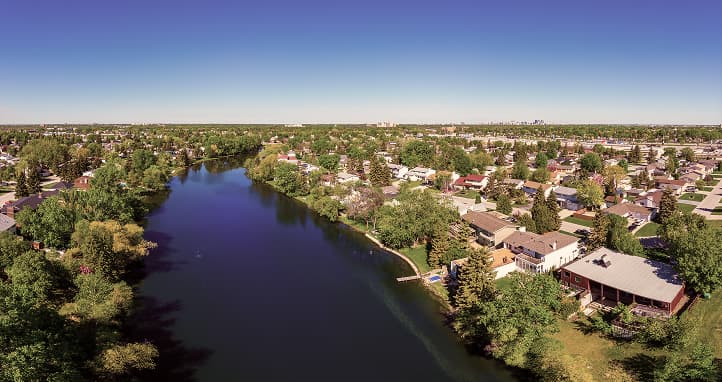
Red River. Winnipeg
Flows through the city, offering scenic views and riverside trails.
From River Heights to Transcona: Which Winnipeg Neighbourhoods Are Hardest to Move Into?
Winnipeg's grid layout is a gift for movers compared to cities with winding suburban crescents. Streets run predictably north-south and east-west, with Portage Avenue and Main Street as the primary axes. But the neighbourhoods themselves vary enormously in their level of complexity.
River Heights — The tree-lined streets and 1920s-1950s bungalows make this one of Winnipeg's most desirable areas. For movers, it's challenging: mature elm canopies can obstruct truck access, narrow 25-33 foot lots mean tight parking, and most homes lack driveways or attached garages. Wellington Crescent properties feature long carry distances from the curb to the door. Budget an extra hour compared to suburban moves.
Wolseley — Heritage homes on narrow lots with community activism around noise and truck traffic. Many properties rely on back-lane access only — confirm with your mover that they can access from the rear. Arts and Crafts architecture means heavy original woodwork and plaster.
St. Boniface — Winnipeg's French quarter east of the Red River. Older building stock along Provencher Boulevard, but generally good truck access. Some narrow residential streets near the cathedral. Good bridge access from downtown via Provencher Bridge.
North End — The most architecturally challenging neighbourhood for movers. Heritage homes built in the 1890s-1920s feature narrow staircases (often less than 36 inches wide), small doorways, heavy plaster walls, and frequently no driveways. These are the slowest residential moves in Winnipeg — expect a 2-bedroom North End character home to take the same time as a 3-bedroom in Transcona.
Transcona — Suburban, post-war and newer construction, wider streets, attached garages, and excellent truck access. The easiest and fastest moves in the city. If both your origin and destination are in Transcona, your move will cost less than the citywide average simply because access is straightforward.
Fort Richmond / South Winnipeg — Near the University of Manitoba, this is a mix of 1970s-80s suburban homes and newer development. Good access, moderate lot sizes, and student population demand. Straightforward for movers.
Exchange District — Winnipeg's National Historic Site features warehouse-to-loft conversions with 12-16 foot ceilings, freight elevators, and industrial loading docks. These moves are completely different from suburban residential — freight elevators accommodate large furniture, loading docks give trucks direct access, but narrow streets create parking challenges, and building management often restricts move-in hours.
Tuxedo — Large luxury homes, wide lots, established landscaping. Piano moves, antique furniture, and high-value items are common. These moves take longer because of item count and handling requirements, not access difficulty.
Bridgwater (Waverley West) — Master-planned community in southwest Winnipeg with 10,000+ homes at buildout. Wide streets, new construction, attached garages. Among the easiest moves in the city, alongside Transcona.
Beyond Winter: Winnipeg's Full Weather Calendar for Movers
Most moving guides tell you summer is best. In Winnipeg, the answer is more nuanced — because every season here comes with a genuine asterisk.
Winter (November through March): The survival season
January averages -16.4°C, with wind chill regularly reaching -40°C to -50°C. December and January offer roughly 8 hours of usable daylight. Snowfall averages ~110 cm across the season. Moving trucks need block heaters plugged in overnight, hydraulic lifts freeze, and crews lose 30-40% productivity in insulated gear.
The upside: demand collapses. Movers who keep crews working through winter often offer discounts of 15-25%. If your schedule is flexible and you can tolerate the logistics, winter is genuinely the cheapest time to move in Winnipeg.
Spring (April through May): Flood and mud season
The Red River begins its annual rise in late March. By April, road closures in flood-prone areas (St. Norbert, Riverview, East St. Paul) can completely restrict access. Even non-flood areas deal with mud on gravel roads and frost heave on residential streets — heavy moving trucks can damage weakened pavement. May improves significantly as flood risk subsides, but the transition is unpredictable.
Summer (June through August): Peak season with caveats
This is when Winnipeg moves. Long daylight hours (16+ in June), temperatures between +20°C and +35°C, and dry conditions create ideal moving weather. But summer brings its own risks: Manitoba lies within the northern extension of Tornado Alley. Severe thunderstorms with hail are common from June through August, and a hail event can damage furniture sitting in an open truck. July 1 is traditionally the peak — both the Canada Day holiday and a cultural moving date in Manitoba.
Fall (September through October): The sweet spot
September averages about +17°C — comfortable for physical work, no flood risk, past peak-season pricing. University of Manitoba starts in September, creating some demand in Fort Richmond and the Pembina Highway corridor, but citywide competition is lower than in the summer. October is the last window before winter sets in — shorter daylight, but still manageable.

Winnipeg in winter
A panoramic view of the city in winter.
Month-by-Month: When Should You Move in Winnipeg for the Best Price?
Winnipeg has the most compressed peak season and the deepest off-season discounts of any city on this platform. That's a direct consequence of the climate — when you have 6 months of brutal winter, the "ideal" moving window shrinks to essentially June through August.
The deep winter discount (January-March): -15% to -25%
February is the cheapest month to move in Winnipeg — and it's not close. At -25% below average, a move that costs $750 in a neutral month drops to roughly $563. January (-20%) and March (-15%) follow. These discounts exist because demand genuinely collapses when temperatures remain below -20°C for weeks at a time. Movers who keep crews working through winter need to fill calendars.
The spring transition (April-May): -5% to +5%
April is complicated. Temperatures start rising, but flood risk peaks. The -5% variation reflects both the lingering off-season and the flood-related access challenges that make some moves logistically difficult. May (+5%) marks the real start of the moving season — flood risk subsides, temperatures become comfortable, and availability tightens.
Peak season (June-August): +20% to +30%
July is the most expensive month, with prices +30% above average. The combination of warm weather, long daylight, the July 1 moving tradition (deeply embedded in Manitoba culture), and university-related demand creates a 3-month peak that's intense but short. In Toronto, peak season runs May through September. In Winnipeg, it's essentially 12 weeks.
The sweet spot (September-October): 0% to +15%
September at +15% is the best strategic option — still warm enough for comfortable moving conditions, past the July-August peak pricing, and before winter descends in November. October (0%) is neutral but brings shorter days and the first hints of cold.
Early winter (November-December): -10% to -15%
Demand drops sharply once temperatures consistently fall below freezing. December combines holiday scheduling conflicts with cold to create a -15% discount — a less extreme option than February for anyone who wants savings without -40°C conditions.

Winnipeg in summer
Sunny days, vibrant festivals, and outdoor activities along its rivers and parks.
Popular Winnipeg Moving Routes and What They Cost
Winnipeg's long-distance moving situation is unlike any other major Canadian city: there are effectively no marketplace options for leaving. Ready to move out of Winnipeg? If you're facing this gap, your next step is to request three quotes from national carriers (Atlas, United, Allied) today. Acting now gets you on the calendar before the busy season and turns concern into progress.
Zero long-distance movers are listed for Winnipeg on Boxly. In a metro of 834,000 people — Canada's 8th largest — every interprovincial move requires sourcing from a different channel. This is the direct consequence of geographic isolation: Winnipeg's 83 local movers built their businesses for a local market, and the distances to other cities make casual long-distance service economically unfeasible.
Winnipeg to Calgary (1,328 km) — The most popular interprovincial route, driven by oil-and-gas sector migration. No local Winnipeg mover handles this run. Source from national carriers (Atlas, United, Allied) or check Calgary's mover marketplace for companies that service the Winnipeg corridor.
Winnipeg to Edmonton (1,354 km) — Similar distance, similar sourcing challenge. Edmonton movers at $139/hr median may offer Winnipeg corridor service — check for prairie-route experience.
Winnipeg to Saskatoon (831 km) — The shortest interprovincial option. Some Winnipeg local movers may handle this as a "long local" run, especially those covering Brandon (215 km) as part of their normal service area. Saskatoon's market has only 4 movers at $123/hr, so options from both ends are thin.
Winnipeg to Thunder Bay (~700 km) — The gateway to Ontario. This corridor through the Canadian Shield is long, remote, and has no major stops along the way. Not a route local movers take casually.
Winnipeg to Toronto (2,100 km) — The major eastern corridor. A 3-4 day drive, exclusively handled by national long-haul carriers. Expect quotes based on weight and distance, not hourly rates.
Intra-city routes are where Winnipeg's compact geography comes into play. North End to Fort Richmond: ~15 km. Exchange District to Bridgwater: ~20 km. Transcona to Wolseley: ~15 km. Most local moves stay under 25 km, keeping travel time minimal — a significant cost advantage over sprawling cities like Edmonton or Calgary, where 40 km cross-city moves are common.
Residential Moving in Winnipeg: Which House Types Affect Your Quote?
The type of home you're moving from — and into — affects your Winnipeg moving quote more than most people expect. Same amount of furniture, same distance, but dramatically different access conditions.
Heritage North End Homes (1890s-1920s)
These are the most challenging residential moves in Winnipeg. Two-storey wood-frame construction with narrow staircases (often less than 36 inches wide), small doorways that won't accommodate modern furniture without disassembly, heavy plaster-and-lathe walls that don't flex, and frequently no driveways for truck parking. A 2-bedroom North End character home can take as long as a 3-bedroom in Transcona — the access difficulty eats the time savings of smaller square footage. Add 1-2 hours to any estimate.
River Heights Character Homes (1920s-1950s)
One-and-a-half-storey bungalows with established elm canopies. The trees are beautiful — and they block truck access. Narrow 25-33 foot lots mean parking a 24-foot moving truck requires precision. Most homes lack attached garages, extending carry distances. Renovated interiors in original footprints mean modern furniture in homes designed for smaller pieces.
Basement Suites — Winnipeg's Signature Moving Challenge
This is where Winnipeg truly differs from other cities. The city has among the highest rates of basement suite conversions in Canada — the 2018 Secondary Suites By-law eased legalization, but thousands of suites existed informally before then. Almost every older residential area has homes with converted lower-level apartments. The moving implications: steep stairs with 90-degree turns, ceilings as low as 6'6", small windows and doors that require furniture disassembly, and separate exterior entrances that become icy death traps in winter. Expect stair surcharges of $50-$100+ per location.
Exchange District Warehouse Lofts
A completely different moving experience. These heritage warehouse conversions in Winnipeg's National Historic Site feature 12-16 foot ceilings, freight elevators large enough for any furniture, and industrial loading docks that give trucks direct access. The challenges are administrative: building management restricts move-in hours, narrow heritage streets limit parking, and floor weight restrictions may apply in some buildings. But for large furniture? These moves can actually be faster than suburban homes.
Modern Suburban (Bridgwater, Sage Creek, South Pointe)
New construction, wide streets, attached double garages, and standard doorways. These are the fastest and cheapest moves in Winnipeg — the $125/hr median buys the most efficiency here because access is never the bottleneck.
Should You DIY or Hire Professional Movers in Winnipeg?
The DIY vs pro debate in Winnipeg comes with a giant seasonal asterisk you won't find anywhere else in Canada. No hills to navigate a loaded truck on. No winding suburban crescents. Predictable, straight-line routing from any neighbourhood to any other neighbourhood. In June through September, with 14-16 hours of daylight and temperatures between +20°C and +30°C, DIY moving in Winnipeg is among the most viable options in Canada.
The DIY cost calculation:
A 16-foot truck rental from U-Haul or Penske runs approximately $50 to $100 per day, depending on the season. Add fuel ($40-$60 for a local move), insurance ($20-$30), and supplies ($30-$50 for boxes, tape, blankets). Total DIY cost for a 2-bedroom move: roughly $150 to $240 in direct expenses plus a full day of physical labour.
Professional movers for the same 2-bedroom at $125/hr median over 5-6 hours: $625 to $750.
You really can save $400–$500 on a 2-bedroom if you go DIY. Whether that's worth the sweat, time, and risk? That's up to you.
Winter DIY: The prairie danger
At -40°C, the DIY math doesn't just change—it falls apart.
Truck ramps? Pure ice. You'll need to load and unload with bare hands in frostbite weather. Your friends who were all-in at 9 AM will be hiding in the truck by 11. Suddenly, you need block heaters, battery boosters, and gear you've never touched. That 6-hour July move? It's 10 hours in January—and every extra hour is miserable.
Pros have block heaters, heated trucks, and know how to work in weather that would send the rest of us running. That $625–$750 for pros in winter? You're paying for safety and sanity.
The isolation premium on truck rentals
One more Winnipeg quirk: one-way truck rentals cost a lot more here. U-Haul and Penske tack on extra because every truck leaving Winnipeg has to be driven back—usually from hundreds of kilometres away. A Toronto-to-Hamilton rental (68 km) is cheap. Winnipeg to Saskatoon (831 km)? Not so much. Don't assume DIY is cheaper for long hauls.
Is it cheaper to hire movers or do it yourself in Winnipeg?
It averages roughly $400–$500 on a 2-bedroom — but only in summer. Truck rental runs $50-$100/day vs $625-$750 for professionals. In winter, the safety and efficiency gap makes professionals the practical choice. For long-distance, isolation-driven truck rentals, the premium narrows the savings significantly.
How to Choose a Winnipeg Mover: The 83-Company Framework
Eighty-three movers are a lot to sort through. Here's how to cut the list fast, using Winnipeg-specific filters that actually matter.
Checklist for Choosing a Winnipeg Mover:
-
Confirm winter gear and experience. Ask: Does your crew have experience moving in -40°C conditions? Do your trucks have block heaters, heated compartments, and thermal blankets for cold-sensitive items? This is crucial if your move might happen between November and March.
-
Verify insurance is in place. Only 30 of 83 Winnipeg movers (36%) carry verifiable insurance. Ask for the Certificate of Insurance directly—don't accept "yes, we're insured" as an answer. Insist on seeing proof. This step eliminates 53 companies immediately.
-
Check Google reviews and BBB accreditation. Look for companies with 50 or more reviews and a rating of at least 4.5 stars. Companies with perfect 5.0 ratings but under 20 reviews are too new to evaluate reliably. BBB accreditation tracks with insurance at 30 insured companies, making it a useful cross-check.
-
Ask about flood zone experience. If your move involves Riverview, St. Norbert, Kingston Crescent, or East St. Paul between April and May, confirm your mover knows which roads may close and how to plan for high water.
-
Confirm basement suite experience. Winnipeg has among the highest rates of basement suites in Canada. Ask: How do you handle the stairs to the basement suite? What are your stair fees? Do you assess for low ceilings and tight turns?
-
Confirm service area for nearby cities. Ask: Do you cover Steinbach, Selkirk, or Brandon? Some movers do short long-distance runs even though Winnipeg has zero long-distance movers on the platform.
Compare all 83 movers by rate, rating, insurance, and BBB status on Boxly's Winnipeg page.
Moving to Winnipeg: What New Residents Should Know
If you're researching a move to Winnipeg, here's the context that matters — stripped of tourism-board language and focused on what affects your cost of living, housing search, and daily logistics.
Population and growth
Statistics Canada's 2021 Census recorded the Winnipeg CMA population at 834,678 — a 6.3% increase from 2016, outpacing the national average of 5.2%. Canada's 8th-largest metro. Growth is driven primarily by international immigration through the Manitoba Provincial Nominee Program (MPNP), which brings approximately 18,000 to 20,000 new permanent residents to Manitoba annually, with roughly 75-80% settling in Winnipeg. The city has the largest Filipino community per capita in Canada — approximately 90,000-100,000 people of Filipino origin, concentrated in the West End, Maples, Garden City, and Seven Oaks neighbourhoods. A significant Indigenous population of approximately 92,000 adds to the city's demographic complexity.
Housing
CMHC's 2024 Rental Market Report places Winnipeg's average 2-bedroom rent at approximately $1,300/month — roughly half of what Toronto or Vancouver tenants pay. Vacancy rates sit around 2.0-2.5%. Housing starts run 4,000 to 5,000 units per year, with new development concentrated in southern suburbs (Bridgwater, Sage Creek, South Pointe). The housing stock ranges from heritage homes in the North End (1890s-1920s) to modern suburban homes in Waverley West. Average home prices run roughly 40-50% below Calgary and 60-65% below Toronto.
Job market
Winnipeg's economy is diversified across sectors that don't correlate strongly — a hedge against single-industry downturns. Aerospace is the anchor: Boeing Canada, StandardAero, CAE, and Magellan Aerospace make Western Canada the largest aerospace hub. Financial services include Great-West Lifeco, IG Wealth Management, Wawanesa Insurance, and Canada Life — all headquartered here. Agriculture revolves around Richardson International (Canada's largest agribusiness, HQ in Winnipeg), Cargill, and ICE Futures Canada (canola futures trading). The tech sector is growing — SkipTheDishes was founded here, and Bold Commerce maintains a significant presence.
Traffic and transit
Winnipeg's grid layout makes navigation straightforward. The Perimeter Highway (ring road) handles cross-city truck routing. No subway system — bus rapid transit extends from downtown to the University of Manitoba. Traffic congestion exists, but at a fraction of the levels in Toronto or Vancouver.
The winter reality
Be blunt with yourself: Winnipeg winters are extreme. Six months of cold (November through April), -40°C windchill as routine, and about 110 cm of annual snowfall. But also: 2,353 sunshine hours per year — making Winnipeg one of Canada's sunniest cities. The cold is real, but it's bright.

Canadian Museum for Human Rights
An iconic architectural landmark in Winnipeg.
How Does Winnipeg Compare to Nearby Prairie Cities?
Winnipeg's isolation means your nearest comparison cities are far away — but the pricing data reveals meaningful differences worth exploring before you move.
Calgary Movers — $125/hr median, 47 movers, 1,328 km west. Identical median to Winnipeg despite being nearly twice the population. Calgary's Chinook weather creates different seasonal patterns, and its proximity to Edmonton (300 km) gives it a competitive dynamic Winnipeg lacks.
Edmonton Movers — $139/hr median, 19 movers, 1,354 km west. The most expensive prairie market, inflated by oil-economy wages. $14/hr is more than Winnipeg for comparable service. Edmonton's winter section covers similar -40°C conditions but without Winnipeg's geographic isolation factor.
Saskatoon Movers — $123/hr median, 4 movers, 831 km northwest. The thinnest market in the region — 4 companies don't create a competitive market. $2/hr cheaper than Winnipeg, but with almost no consumer choice.
Regina — 575 km west, Winnipeg's closest major neighbour. Currently, zero movers are listed on any major platform. Anyone moving from Winnipeg to Regina sources from the local market in Winnipeg.
For Manitoba-wide moving information, visit the Manitoba movers hub.
Ready to Move in Winnipeg? Compare 83 Movers on Boxly
83 companies. $100 to $175/hr. 9,848 reviews. One marketplace.
Winnipeg's moving market is a self-contained ecosystem, set 575 km from the nearest major city, with zero long-distance options on the platform and 83 local companies competing for your business. That isolation makes comparison shopping more important, not less. When there's no outside competition to push prices down, your leverage comes from informed choices.
What you can compare on Boxly's Winnipeg marketplace:
Here's your challenge: pick your shortlist from 83 movers in the next 15 minutes. Set a timer, make your picks, and turn all this info into action before you click away.
- Google review scores — 4.65-star average across 9,848 reviews, with wide individual variation
- Insurance status — only 30 of 83 carry verifiable coverage
- BBB accreditation — 30 BBB-accredited companies (36%) hold accreditation
- Service details — winter equipment, basement suite experience, geographic coverage
The median is $125/hr. Your 2-bedroom move runs $625 to $750. Your 3-bedroom runs $875 to $1,000. Whether you move in July's +30°C or February's -40°C, the data is the same — but the experience is not.
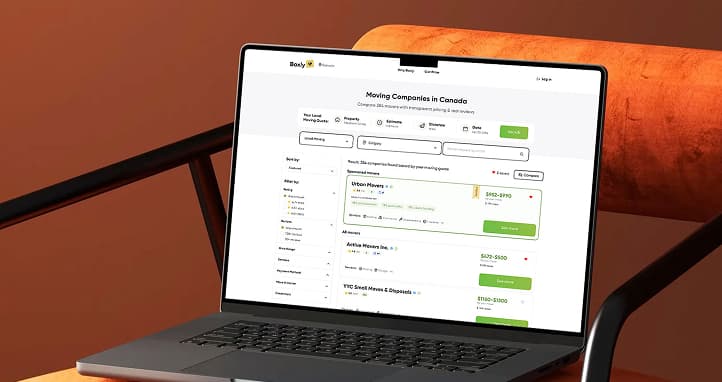
Instantly find and book trusted movers across Canada with Boxly.
Discover, compare, and book the best movers instantly.
Frequently Asked Questions
Can movers operate in -40°C temperatures in Winnipeg?
Yes, but with significant operational adjustments. Professional Winnipeg movers working through winter use block heaters to keep truck engines running, heated compartments to protect temperature-sensitive items, and insulated blankets for electronics and artwork. Crews work in insulated gear, reducing productivity by 30-40% compared to summer. Hydraulic truck lifts can freeze below -30°C, requiring manual override or heating. Not all 83 Winnipeg movers invest in winter equipment — ask specifically about cold-weather capabilities before booking a November-through-March move. The upside: demand drops sharply in extreme cold, and some movers offer 15-25% discounts to keep crews working.
Do Winnipeg movers charge a winter surcharge?
It depends on the company. Some Winnipeg movers add a 10-20% winter equipment fee from November through March to cover heated trucks, block heaters, and the operational slowdown that comes with -40°C conditions. However, many companies waive surcharges entirely because demand drops so dramatically in winter that they need to compete for the few moves available. The net effect is counterintuitive: winter moving in Winnipeg is often cheaper than summer despite the operational difficulty. Always ask upfront: "Is there a winter equipment or cold-weather surcharge?" and get the answer in writing. Manitoba's Consumer Protection Act requires movers to honour written estimates within 10%.
How does the Red River Floodway affect spring moves?
The Red River Floodway is a 47 km diversion channel that routes floodwater east of Winnipeg. When activated (typically late March through late May), it protects most of the city from flooding. However, neighbourhoods near the Floodway inlet — particularly St. Norbert — may experience restricted road access during high-water events. Riverview, Kingston Crescent, and parts of East St. Paul face similar risks to spring water. For movers, this means potential road closures, detour-driven delays (your mover's hourly rate keeps running during detours), and limited access to properties near the river. Check the province's flood forecast (released late March) before committing to April-May move dates in these areas.
What neighbourhoods are in the flood zone for moving purposes?
The highest-risk neighbourhoods for spring flooding are St. Norbert (near the Floodway inlet control structure), Riverview (at the junction of the Red and Assiniboine rivers), Kingston Crescent and nearby streets along the Red River south of the Assiniboine, and parts of East St. Paul outside the Floodway's full protection. Scotia Street in the North End also faces the risk of ice-jam flooding. The Floodway, expanded between 2005 and 2014 for approximately $665 million, protects most of Winnipeg against a 1-in-700-year event — but these specific areas remain vulnerable. For moving purposes, avoid scheduling April-May moves in these neighbourhoods without first checking river levels and road access.
Why are there zero long-distance movers listed for Winnipeg?
Geographic isolation is the core reason. Winnipeg is 575+ km from the nearest major city (Regina, which itself has zero movers on any platform). Saskatoon is 831 km away with only 4 movers. Calgary is 1,328 km. The distances make long-distance service unprofitable for local operators — a Winnipeg mover doing a Calgary run needs to either find a return load or drive back empty. National carriers (Atlas, United, Allied) handle interprovincial moves from Winnipeg, but they operate outside the marketplace platform. Winnipeg's 83 local movers built their businesses for local moves within the metro area, occasionally extending to Steinbach (58 km), Selkirk (35 km), or Brandon (215 km).
How much does it cost to move from Winnipeg to Calgary?
Winnipeg to Calgary is 1,328 km — the most popular interprovincial route from Winnipeg, driven by oil-and-gas sector migration. Since zero long-distance movers are listed in Winnipeg on Boxly, you'll source from national carriers or Calgary's mover market. National long-haul carriers typically price by weight and distance rather than by hourly rates. For a typical 2-bedroom household (~4,000 lbs), expect quotes ranging from $3,500 to $6,000 depending on the carrier, season, and service level (basic vs full-service packing). Get at least 3 quotes and confirm each includes insurance coverage for the full transit distance. Moving season (June-August) carries a premium; winter rates may be lower.
Is Winnipeg's geographic isolation an advantage for local movers?
Yes — from a business perspective, isolation creates a protected market. Winnipeg's 83 active moving companies don't face competition from Toronto discounters offering weekend runs or Calgary companies picking up moves on their way through. Every mover here lives and works exclusively in this market. The result: consistent pricing around the $125/hr median without the aggressive undercutting seen in Toronto (where 514 companies fight for business). For consumers, the disadvantage is reduced competitive pressure on pricing. The advantage is stability — Winnipeg movers aren't racing to the bottom, and the collective 4.65-star average across 9,848 reviews suggests that market insulation enables quality investment.
How do basement suite stairs affect moving costs in Winnipeg?
Basement suites are unusually common in Winnipeg — the city has among the highest rates of basement suite conversions in Canada. Most movers charge a stair fee of $50-$100+ per location involving basement access. The challenges: steep stairs with 90-degree turns, ceilings as low as 6'6", doorways that won't accommodate standard furniture without disassembly, and separate exterior entrances that become icy in winter. A move involving two basement suite addresses (common in Winnipeg's older neighbourhoods) adds $100-$200 in stair fees and 1-2 extra hours of labour. Ask your mover specifically: "How do you handle basement suite stairs?" and "What's your stair fee?" before booking.
What's the best month to move to Winnipeg, given the extreme weather?
September is the best strategic choice. Temperatures average about +17°C — comfortable for physical work. Peak-season pricing (June-August at +20-30% above average) has dropped to +15%. No flood risk. Reasonable daylight hours. The only caveat: The University of Manitoba starts in September, creating some demand in Fort Richmond and along Pembina Highway. October is the last comfortable window at 0% price variation. For budget-focused movers willing to tolerate cold, February offers the deepest discounts at -25% below average — but at -40°C windchill, you're trading comfort for savings. Avoid April if your move involves flood-prone areas (St. Norbert, Riverview) — road access is unpredictable.
Do movers need block heaters for their trucks in Winnipeg winters?
Yes — and this is a legitimate quality differentiator when choosing a mover. At -30°C to -40°C, diesel engines won't start without block heaters plugged in overnight. A moving truck that won't start at your loading dock at 8 AM delays your entire move by hours. Professional winter movers in Winnipeg plug in block heaters the night before, carry battery boosters, and keep trucks running during loading/unloading stops to prevent restarting issues. Air brakes can also freeze during extended parking. Ask your mover: "Do your trucks have block heaters?" and "What's your cold-start protocol?" A mover who doesn't have answers to these questions isn't prepared for the Winnipeg winter.
How does Winnipeg's flat terrain affect moving logistics?
Flat terrain is a genuine advantage for movers — especially for DIY movers. Winnipeg sits on the former bed of glacial Lake Agassiz at approximately 232 m elevation with almost zero topographic variation. No hills to navigate with a loaded truck, no sloped driveways to manage, and no elevation changes between neighbourhoods. Combined with the grid street layout, this means predictable routing and consistent travel times across the city. The practical impact: moves here tend to run faster than equivalent-sized moves in Calgary (hills, suburban sprawl) or Montreal (spiral staircases, steep streets). A 2-bedroom move that takes 6 hours in hilly terrain might take 5 hours in Winnipeg — saving you roughly $125 at the median rate.
What should immigrants know about hiring movers in Winnipeg?
Winnipeg receives approximately 18,000-20,000 new permanent residents annually through the Manitoba Provincial Nominee Program, with 75-80% settling in the city. For newcomers: Manitoba has no specific moving industry insurance requirements, making due diligence especially important. Get everything in writing; Manitoba's Consumer Protection Act requires movers to honour written estimates within 10%. Check insurance: only 30 of 83 (36%) carry verifiable coverage. Word-of-mouth within community networks (Filipino, South Asian, Eritrean communities) is valuable but should be supplemented with Google review data — look for 50+ reviews at 4.5+ stars. The Winnipeg community has strong settlement support through agencies like the Manitoba Interfaith Immigration Council (Welcome Place) that can provide referrals.
How do Exchange District loft moves differ from suburban moves?
Completely different moving experience. Exchange District warehouse conversions — in Winnipeg's National Historic Site — feature 12-16 foot ceilings, freight elevators large enough for any furniture, and industrial loading docks for direct truck access. These advantages mean large items (sectional sofas, pianos, king-size beds) that create challenges in suburban homes with standard 8-foot ceilings and 36-inch doorways move easily in loft spaces. The challenges are administrative and logistical: building management restricts move-in/out hours (often weekdays only, 9 AM-5 PM), narrow heritage streets create conflicts with truck parking, and some buildings have floor weight restrictions. Book your move during permitted hours and confirm freight elevator access with building management in advance.
Are River Heights character homes harder to move into?
Yes — and the difficulty is specific and predictable. River Heights homes (1920s-1950s) sit on narrow 25-33 foot lots with mature elm canopies that obstruct truck access. Most lack driveways or attached garages, extending the carry distance from the curb to the front door — especially challenging in winter when sidewalks are icy. Original floor plans have narrower doorways and staircases than modern construction, requiring furniture disassembly for large pieces. The Wellington Crescent area adds long walkways from the street to the entrance. Budget an extra hour compared to a comparable-sized suburban move. The upside: River Heights' desirable location and character charm mean you'll appreciate the home once you're in it.
How does CFB Winnipeg affect mover availability?
Canadian Forces Base Winnipeg (17 Wing) houses approximately 3,000-4,000 military personnel. The Annual Posting Season (APS) runs from June through August, when posted members relocate to new bases. This coincides with peak moving season, adding demand pressure. Military relocations are managed through the CAF Relocation Directive and typically handled by approved national carriers rather than local movers — but the indirect effect is real: crews, trucks, and scheduling slots are tighter during APS. Common military routes: CFB Winnipeg to CFB Edmonton, CFB Trenton, CFB Petawawa, and CFB Shilo (Brandon, 215 km). If you're a civilian booking a June-August move, the military posting cycle is one more reason to book 3-4 weeks ahead.
What parking restrictions affect moving trucks in Winnipeg?
Two major restrictions: Winter parking bans are declared after major snowfalls — residential streets operate on a rotating system (odd-numbered addresses then even-numbered) with $150+ fines and towing for non-compliance. Moving trucks parked on restricted routes during a declared ban face the same penalties. Check the City of Winnipeg's snow clearing schedule or call 311 before your move. Temporary parking permits for moving trucks are available through Public Works — contact 311 at least 48 hours in advance. Some neighbourhoods (Exchange District, Wolseley, Osborne Village) have resident permit parking zones. Downtown meters have time limits. Always confirm parking logistics with your mover before moving day.
Do I need a moving permit in Winnipeg?
Winnipeg does not require a general moving permit. However, you may need a temporary no-parking zone permit if street parking is the only option for a moving truck at either address. These are available through the City of Winnipeg's Public Works department — contact 311 at least 48 hours before your move. The city will place no-parking signs in advance to reserve space. This is especially important in older neighbourhoods without driveways (North End, Wolseley, parts of River Heights) and in the Exchange District, where street parking is limited. Winter moves add the complication of snow route restrictions — check whether a parking ban is in effect on your move date.
How does the July 1 moving tradition affect Winnipeg?
July 1 is Canada Day — and in Manitoba (as in Quebec), it's a traditional peak moving date. The cultural tradition of ending leases on June 30 and starting new ones on July 1 creates a concentrated demand spike. In Winnipeg, July shows a +30% seasonal variation — the highest premium month. The practical impact: movers book out weeks in advance for June 30-July 2, and last-minute bookings may be unavailable or cost a premium. If your lease aligns with this calendar, book 4+ weeks ahead. If you have flexibility, shifting your move to July 5-15 captures the same summer weather at slightly lower demand.
What's the Winnipeg-to-Toronto moving corridor like?
Winnipeg to Toronto is 2,100 km — a 3-4-day drive through northwestern Ontario's Canadian Shield, one of the most remote stretches of highway in Canada. No Winnipeg local movers handle this route. National long-haul carriers (Atlas, United, and Allied) are the primary option. Expect weight-and-distance pricing: a typical 2-bedroom household (~4,000 lbs) costs approximately $5,000-$8,000, depending on the season, service level, and carrier. Transit time: 5-10 business days for standard service, longer during peak season. Full-service packing adds $1,000-$2,000. Always verify that insurance covers the full transit, including the remote northwestern Ontario segment where roadside assistance is limited.
How do Winnipeg movers handle pianos in heritage homes?
Piano moves in heritage homes are among the most challenging moves in Winnipeg. Heritage North End and Wolseley homes have narrow staircases (often less than 36 inches), tight doorways, and no elevator access. Upright pianos may need to be tilted, covered, and carefully manoeuvred through tight angles. Grand pianos typically require leg removal, blanket wrapping, and specialized dollies. In winter, pianos face an additional risk: thermal shock. Moving a piano from a heated interior into -40°C air can crack the soundboard, split the pinblock, and permanently detune the strings. Professional piano movers use climate-controlled trucks and minimize outdoor exposure time. Not all 83 Winnipeg movers handle pianos—ask specifically about their experience with pianos and cold-weather piano protocols.
Is it cheaper to move to Winnipeg in winter despite the cold?
Yes — and significantly so. February's -25% seasonal variation is the deepest discount of any month in any city on the platform. A 2-bedroom move at the $125/hr median costs approximately $625-$750 in summer; the same move in February drops to roughly $470-$565. The savings are real — $155-$185 per move. The trade-offs: moves take 30-40% longer due to reduced crew productivity in extreme cold; equipment failures (frozen lifts, frozen ramps) can add delays; and thermal shock risks to electronics and fragile items require professional-grade protection. If budget is your primary concern and you can tolerate the logistics, winter moving in Winnipeg is genuinely the cheapest option.
What areas of Winnipeg are hardest for movers to access?
The North End is the most consistently challenging — heritage homes with narrow lots, no driveways, on-street-only truck parking, and narrow staircases. Wolseley adds back-lane access requirements and complications with heritage designation. Wellington Crescent in River Heights has long setbacks from curb to door, increasing carry distances. The Exchange District's narrow heritage streets create conflicts with truck parking and restrict manoeuvring. St. Norbert and Riverview face spring access restrictions during flood events (April-May). In winter, any residential street under a snow route parking ban becomes harder to access — sidewalks narrowed by snowbanks, reduced street width, and icy walkways from door to truck.
How does Winnipeg's grid street layout help movers?
Winnipeg's grid layout — streets running north-south and east-west, with Portage Avenue and Main Street as the primary axes — gives movers a predictable routing that cities with winding suburban layouts lack. GPS routing is straightforward, U-turn situations are rare, and cross-city transit times are consistent. Combined with flat terrain, this means Winnipeg moves tend to run faster than equivalent-sized moves in cities with topographic complexity (Calgary's hills, Montreal's plateaus). For customers, faster transit means fewer billable hours. The grid also simplifies logistics planning: movers can accurately estimate travel time between origin and destination without scouting routes in advance.
What should I know about moving to Transcona vs River Heights?
These two neighbourhoods represent the opposite ends of Winnipeg's mobility spectrum. Transcona: post-war and newer construction, wider streets, attached garages, excellent truck access, newer building standards with standard-width doorways and staircases. The fastest and cheapest moves in the city. River Heights: 1920s-1950s character homes on narrow lots; mature elm canopy obstructs truck access; most homes lack driveways; original-width doorways may require furniture disassembly. Budget an extra hour vs Transcona. The cost difference for the same amount of furniture: roughly $125 more for a River Heights move at median rates, purely due to access complexity.
How does Winnipeg's BBB accreditation rate (36%) compare?
Winnipeg's 30 of 83 Winnipeg movers with BBB accreditation (36%) is mid-range among the cities on Boxly's platform. For comparison, Kitchener-Waterloo has only 10.4% of companies with BBB accreditation (11 of 106). The identical numbers — 30 BBB-accredited and 30 insured — suggest significant overlap among companies that invest in formal credentials. The 53 companies without BBB accreditation aren't necessarily bad — BBB accreditation requires annual fees that smaller operators may not prioritize. However, in a market where Manitoba has no specific mover licensing (unlike Ontario), BBB accreditation serves as one of the few formal quality signals available. Cross-reference BBB status with Google reviews for a more complete picture.
What impact does Winnipeg's immigration boom have on the moving market?
Winnipeg is one of Canada's top immigrant-receiving cities — the Manitoba Provincial Nominee Program (MPNP) accounts for roughly 75–80% of Manitoba's 18,000–20,000 new permanent residents each year, who settle in Winnipeg. This creates consistent, year-round inbound moving demand that doesn't follow normal seasonal patterns. The largest Filipino community per capita in Canada, with growing Eritrean, South Asian, and Ukrainian populations. For the moving market, this means: steady demand even in winter months, a customer base that may be navigating Canadian moving norms for the first time, and concentrated demand in specific neighbourhoods (West End, Maples, Garden City). Several movers now offer multilingual services to serve this market.
How do Winnipeg's winter parking bans affect moving day logistics?
Winnipeg declares snow route parking bans after major snowfalls — all vehicles must be removed from designated snow routes within hours or face $150+ fines and towing. For moving day, this creates two problems: your moving truck may not be able to park on the street you need, and your own car may need to be relocated. Check the City of Winnipeg's snow-clearing schedule before booking a winter move. During active bans, residential streets become narrower (snowbanks encroach), truck manoeuvring space shrinks, and loading zones may be blocked by snow piles. Pro tip: call 311 for a temporary parking permit for your moving truck — this reserves curb space and protects against towing, even during ban periods.
What is the best neighbourhood in Winnipeg for an easy move-in?
For sheer moving logistics, Bridgwater and Sage Creek in the south end are the easiest — wide streets, attached double garages, modern construction with standard-width doorways, and no heritage restrictions. Transcona offers similar ease at lower price points, with post-war and newer homes that have excellent truck access. Amber Trails and Prairie Pointe in the northwest are newer developments with the same advantages. The hardest neighbourhoods for move-in: North End (heritage narrow-lots), Wolseley (back-lane access, heritage restrictions), Exchange District (freight-elevator-only loft access), and River Heights (character homes with original narrow doorways). If you're choosing between neighbourhoods and moving ease matters, suburban developments built after 2000 are consistently the easiest to move into.
Can I move to Winnipeg from another province using local movers?
Here's Winnipeg's biggest logistical quirk: there are currently zero long-distance movers listed on the Boxly platform. The nearest major city is 575+ km away (Saskatoon or Thunder Bay), and most Winnipeg-based movers focus exclusively on local service. For interprovincial moves, you'll typically need a national carrier (United Van Lines, Atlas, AMJ Campbell) or a freight/container service (PODS, BigSteelBox). Some local Winnipeg movers will handle short long-distance runs to Brandon (215 km), Steinbach (58 km), or Selkirk (35 km) — ask directly. For the Winnipeg-to-Calgary corridor (1,328 km) or the Winnipeg-to-Toronto corridor (2,100 km), expect $4,000–$10,000+ depending on volume, with 7–14-day transit times.
How does the University of Manitoba affect moving demand in Winnipeg?
The University of Manitoba (30,000+ students) and University of Winnipeg (10,000+ students) create a predictable September spike in moving demand — particularly around Fort Richmond, Pembina Highway, and the Spence neighbourhood near U of W. This student-driven demand adds roughly +15% to September pricing. The effect is smaller than in cities like Toronto or Kitchener-Waterloo because Winnipeg has a higher proportion of local students who don't relocate. However, international students (a growing segment) do create genuine moving demand. Red River College Polytechnic adds further demand in the Exchange District and Notre Dame campus areas. The best strategy: book by mid-August for September moves near any campus, or consider a late-September move after the initial rush subsides.
How does Winnipeg's extreme temperature swing (75°C annual range) affect packing?
Winnipeg experiences one of the most extreme annual temperature ranges on Earth — from -40°C windchill in January to +35°C humidex in July. That 75°C swing creates packing challenges that no other Canadian city matches. Winter moves: electronics need gradual acclimatization — bringing a cold TV into a warm house causes condensation inside the screen. Let electronics warm to room temperature for 2-4 hours before powering on. Vinyl records, musical instruments, and anything with wood or glue joints can crack in extreme cold during transit. Summer moves: candles, cosmetics, and anything with a low melting point can deform in a truck cabin that reaches 50°C+ in direct sun. For items in storage between seasons, avoid uninsulated garages—the freeze-thaw cycle can damage paint, wood finishes, and adhesives over time.
Do Winnipeg movers offer storage services for delayed moves?
Some do, but it's less common than in larger markets. Because Winnipeg's moving industry is predominantly local (zero long-distance movers listed), most companies are structured for same-day pickup and delivery rather than storage-and-forward logistics. A handful of larger operators offer short-term warehousing, typically at $150-$300/month for a storage vault or container. For longer-term or more flexible storage, dedicated facilities like BigSteelBox (portable containers) or self-storage chains are generally more cost-effective. The exception: if your move-in date is delayed by only 1-3 days, some movers will hold your items on the truck overnight for a daily fee ($75-$150) — ask upfront during booking.
Are there movers in Winnipeg that specialize in moving heritage homes?
No Winnipeg mover formally advertises heritage home specialization the way some Toronto or Montreal companies do — but experienced crews know the challenges intimately. Winnipeg has thousands of heritage and character homes concentrated in the North End (1890s-1920s), Wolseley (Arts and Crafts era), River Heights (1920s-1950s bungalows), and Armstrong's Point (Victorian-era mansions). The key challenges: narrow staircases under 36 inches wide, original doorways that won't accommodate modern furniture without disassembly, plaster walls that chip easily, and wood floors that scratch under heavy loads. When booking, ask specifically: "Have you moved in [neighbourhood] before?" and "Do you carry floor runners, door frame protectors, and banister pads?" Experience in these neighbourhoods is the best proxy for heritage capability.
What's the difference between a Winnipeg local move and a Manitoba provincial move?
A local move stays within the Winnipeg CMA (roughly a 50 km radius covering Winnipeg, East St. Paul, West St. Paul, St. Andrews, and Headingley). Pricing is hourly — typically $125/hr at the median for a 2-person crew. A provincial move extends beyond the CMA to destinations such as Steinbach (58 km), Portage la Prairie (85 km), Brandon (215 km), or Thompson (764 km). These are usually priced as flat-rate quotes rather than hourly, factoring in fuel, drive time, and crew accommodation for longer distances. The awkward middle ground: destinations 50-100 km out (Selkirk at 35 km, Steinbach at 58 km), where some movers charge by the hour with a travel surcharge, while others quote flat rates. Get quotes both ways and compare. For anything beyond Brandon, you're realistically looking at national carriers — Winnipeg's local movers rarely go that far.
Are Winnipeg movers available on weekends during the summer peak?
Weekend availability from mid-June through August is the tightest booking window in Winnipeg's calendar. With 83 companies serving a metro area of 834,000+ people, Saturday and Sunday slots during peak season can fill 3-4 weeks in advance — especially end-of-month weekends when most leases turn over. July 1 (Canada Day, Manitoba's traditional moving day) is the single hardest day to book. Strategies: book early (mid-May for a July weekend move), consider Friday or Monday moves, which are easier to secure, or choose mid-month dates when demand drops noticeably. Winter weekends are the opposite — most companies have wide-open weekend availability November through March, and some offer weekend discounts to fill otherwise empty slots.
How much do movers cost per hour in Winnipeg?
Winnipeg movers charge a median of $125/hr for a two-person crew and truck, with the full range spanning $100 to $175/hr. Only 1 company prices below $100, and 3 companies charge above $160. A 3-person crew (7 companies) runs at a median of $218/hr. These rates reflect a market of 83 active moving companies with a collective 4.65-star average across 9,848 Google reviews. Winnipeg's rates developed in geographic isolation — the $125 median matches Calgary's exactly despite being 1,328 km apart, suggesting independent market equilibrium rather than competitive influence.
How far in advance should I book movers in Winnipeg?
Summer (June-August): Book 3-4 weeks ahead. Peak season, combined with the July 1 moving tradition and military posting season (CFB Winnipeg), creates tight availability. September: 2-3 weeks — University of Manitoba start creates localized demand in Fort Richmond/Pembina Highway, but citywide availability is better. Winter (November-March): 1-2 weeks is usually sufficient — demand drops sharply in extreme cold. Spring (April-May): 2-3 weeks, with extra caution for flood-prone areas where scheduling flexibility is important. General rule: the deeper the discount, the shorter the booking lead time. February's -25% discount exists precisely because few people book, meaning last-minute availability is common.
What does moving insurance cover in Manitoba?
Manitoba has no specific moving industry insurance requirements — unlike Ontario, which has particular provisions. The Consumer Protection Act requires movers to honour written estimates within 10% and makes them generally liable for items in their care, but cargo insurance is voluntary. Only 30 of 83 Winnipeg movers (36%) carry verifiable insurance. Basic valuation (included with most movers) covers approximately $0.60 per pound per item — a 50-pound $2,000 TV would be compensated at just $30. Full value protection covers repair or replacement at market value but requires an add-on premium. Before your move: request the Certificate of Insurance directly, confirm coverage limits, and consider purchasing a moving insurance rider through your homeowner's or renter's policy for high-value items.
Should I tip movers in Winnipeg?
Tipping is customary but not mandatory. The general guideline: $20-$30 per crew member for a standard half-day move, $30-$50 per crew member for a full-day or particularly challenging move. Winnipeg-specific considerations: winter moves warrant higher tips — crews working in -40°C conditions face genuine physical hardship. Basement suites with steep, narrow stairs are physically demanding. Heritage home moves in the North End with tight access, adding complexity. A thoughtful alternative in winter: provide hot coffee, hot chocolate, or a warm indoor space for breaks. Whatever you tip, distribute directly to each crew member rather than handing a lump sum to the team lead.
How long does a typical Winnipeg move take?
Duration depends on home size and the complexity of access. Studio/1-bedroom: 3-4 hours. 2-bedroom apartment: 5-6 hours (the most common move type). 3-bedroom house: 7-8 hours. 4+ bedroom or large house with basement: 8-10 hours. Winnipeg-specific adjustments: add 30-60 minutes per basement suite (steep stairs, furniture disassembly), add 1 hour for heritage North End homes (narrow access), and add 30-40% to total time for winter moves (crew productivity loss in extreme cold). Subtract time for modern suburban homes (Transcona, Bridgwater) — wider streets and attached garages make these the fastest moves in the city. Winnipeg's flat terrain and grid layout generally make moves faster than those in equivalent-sized hilly cities.